
- Jeffrey Epstein had trumpet plants in his nursery according to a 2014 email he sent.
- Trumpet plants contain scopolamine, a drug that can cause memory loss and suggestibility.
- However in Hindu tradition, Datura flowers are sacred and associated with Lord Shiva and rituals.
Every day seems to bring a fresh revelation from the Epstein files. The latest claim circulating on X is that Jeffrey Epstein the American financier and child sex offender, grew "trumpet plants" in his nursery.
Screenshots of emails have been widely shared, suggesting that the financier had taken an interest in plants notorious for their powerful psychoactive properties.
Jeffrey Epstein grew "Trumpet Plants" which are also referred to as "Devil's Breath" because it contains scopolamine. Scopolamine is a drug that has historically been used by CIA and drug cartels. Under its influence a person does whatever one is told without EVER remembering.🔥 pic.twitter.com/AwQHuwGAyQ
— Kirby Sommers (@LandlordLinks) February 15, 2026
We checked the documents referenced in these X posts, and found that the emails do indeed contain multiple mentions of "trumpet plants".
What The Emails Say
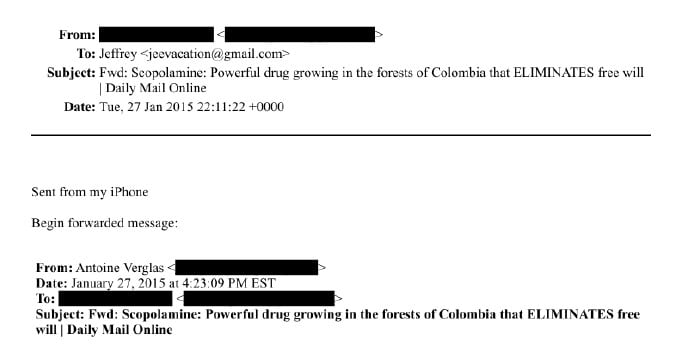
One of the emails is dated January 27, 2015. It appears to have been forwarded from photographer Antoine Verglas. The message, with the subject line "Scopolamine: Powerful drug growing in the forests of Colombia that ELIMINATES free will", was sent to Jeffrey Epstein.
The forwarded was a Daily Mail and Vice article that described scopolamine as a substance that could leave people 'highly suggestible'. Various striking line were highlighted from the article like, "You can guide them wherever you want. It's like they're a child."
A second email, dated March 3, 2014, was sent directly by Jeffrey Epstein to an individual named Ann Rodriguez. In that brief message, he wrote: "ask chris about my trumpet plants at nursery [SIC]?" The reference clearly shows he had trumpet plants in his nursery.

A third document is not an exchange with Epstein himself, but an email sent on February 7 2022 by Guillermo Farinas to Juan Antonio Gonzalez, with Joseph Manzaro copied in (please note it is not clear who these people are, as of now).
In what is described as a "victim impact statement," Manzaro recounts a disturbing incident from December 2014 in which he alleges he was drugged with scopolamine-a tropane alkaloid produced by various plants, including trumpet plants (more on that in a bit). The statement explicitly mentions scopolamine, claiming that two people who were driving him said, "I gave him a LOT of that scopolamine!" The writer then alleges memory loss and extreme drowsiness.

In short these "trumpet plants" appear in the emails three times, and that scopolamine is discussed in connection with these plants. That much, at least, is on record and are provided to us in these files.
The Plant Behind The Headlines
The trumpet plant commonly refers to species of Brugmansia or Datura, flowering plants known for their large, pendulous, trumpet-shaped blooms.
These plants are sometimes nicknamed "Devil's Breath" or "Devil's Trumpet "because they contain compounds 'tropane alkaloids' such as scopolamine, atropine and hyoscyamine.
According to the medical journals, these compounds act on the central nervous system.
Jeffrey Epstein's emails reveal him growing trumpet flowers in his greenhouse.
— TestDummy (@TestDummy04) February 13, 2026
Plants notorious for mind-altering, hallucinogenic effects.
Sound familiar?
In Blink Twice, a mysterious island flower (turned perfume) wipes victims' memories of abuse, letting predators reset the… pic.twitter.com/4ZhowsKecE
Scopolamine in particular has legitimate medical uses (if used the right way). It has been prescribed to treat motion sickness and post-operative nausea.
However, in high doses it can cause confusion, hallucinations, agitation, blurred vision and severe memory impairment. In extreme cases, ingestion can lead to coma or even be fatal.
Brugmansia is native to South America, and its species grow in many parts of the world, including India. The plants are ornamental and can be strikingly beautiful, but every part of them is toxic.
Accidental consumption, especially by children, has been documented in medical literature as causing severe poisoning.
The Flower In Hindu Tradition
In India, the trumpet-shaped Datura flower has a very different resonance. It is closely associated with God Shiva in Hindu mythology and ritual practice.
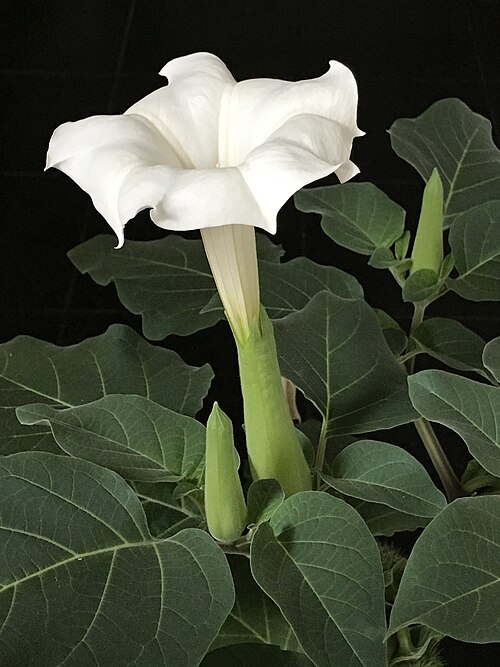
The trumpet plant is commonly refered to species of Brugmansia or Datura. Photo: WikiCommons/Flobbadob BY-SA 4.0,
According to legends, Datura emerged during the churning of the cosmic ocean, when poison surfaced before the nectar of immortality. In one widely told story, Shiva consumed the deadly poison to save the universe, holding it in his throat, which turned blue. Because Datura is a hardy, wild plant that thrives in harsh conditions, it came to symbolise endurance and asceticism, qualities closely linked with Shiva.
In many temples across India, Datura flowers and fruits are offered to Shiva as part of worship, especially during Maha Shivratri. The plant's toxic nature is acknowledged, but in ritual context it represents surrender, devotion and the paradox of poison transformed into protection.
Track Latest News Live on NDTV.com and get news updates from India and around the world
