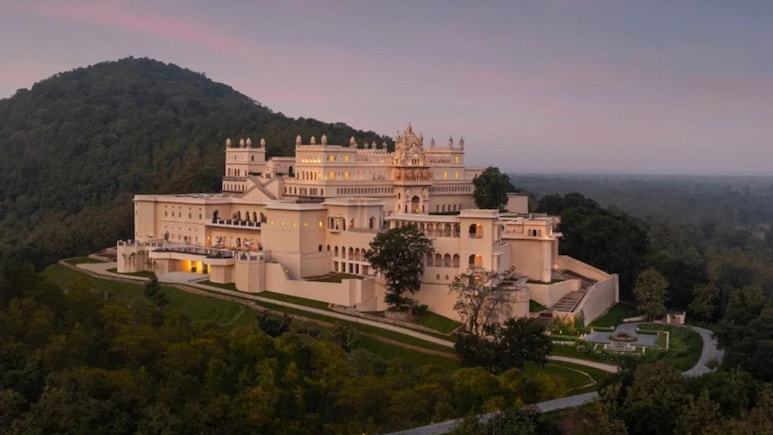
- The Oberoi Rajgarh Palace in Madhya Pradesh is named among the world's most beautiful hotels for 2026
- Originally a 350-year-old sandstone fortress built for military defense by Maharaja Hindupat Singh
- The fort evolved into a royal palace blending Bundelkhand and colonial architectural styles
The world's finest hotels are no longer judged only by thread counts, infinity pools, or Michelin-worthy menus. Today's travellers also want stories, history, culture, architecture, sustainability, and a genuine sense of place.
That shift is reflected in the prestigious Prix Versailles awards, which recently unveiled its list of the world's most beautiful hotels for 2026.
Among the celebrated properties from across the globe was one address from India: The Oberoi Rajgarh Palace in Madhya Pradesh.
Perched dramatically atop the Maniyagarh Hills near Khajuraho, the palace overlooks lush gardens, ancient forests and a rainwater-fed lake.
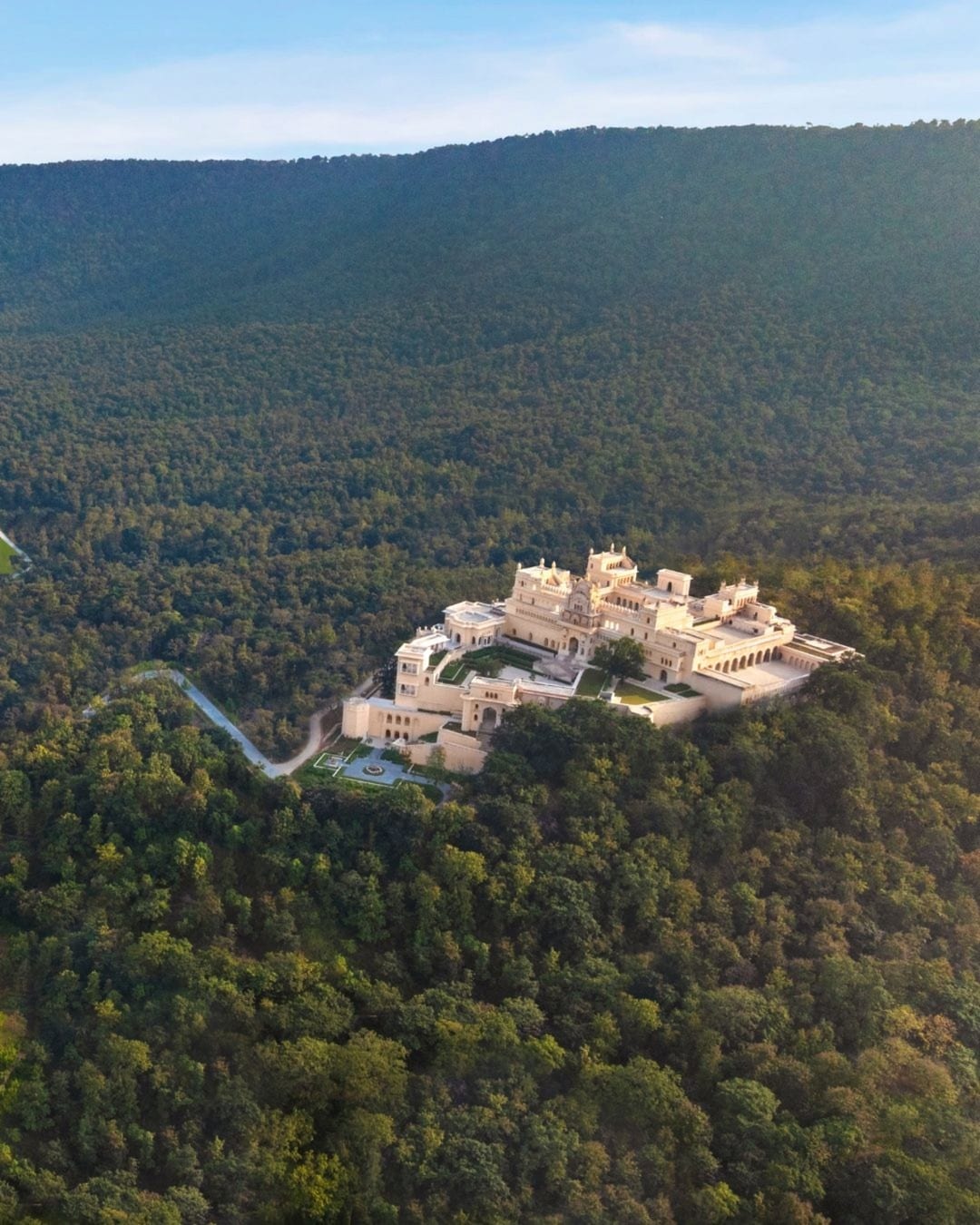
This 350-year-old palace was built by Raja Hindupat Singh Bundela of the Bundela Dynasty.
Just minutes away from Panna National Park, it is easy to understand why the restored royal residence has become one of India's most talked-about luxury destinations.
But long before it became a five-star retreat, Rajgarh was a fortress born out of war, political uncertainty and a ruler's determination to protect his kingdom.
A 350-Year-Old Fortress Built In An Age Of Conflict
The story of Rajgarh Palace begins more than three centuries ago, in the late 17th century.
At the time, central India was witnessing enormous political change. The Mughal Empire was expanding across the subcontinent, while regional Rajput kingdoms were struggling to preserve their autonomy, culture and power.
In Bundelkhand, one ruler sought to create a stronghold that would stand as both a military defence and a declaration of sovereignty.
The story of Rajgarh Palace begins more than three centuries ago, in the late 17th century.
Maharaja Hindupat Singh of the Bundela dynasty selected the rugged Maniyagarh Hills for a reason. The elevated terrain offered commanding views of the surrounding landscape and provided a natural defensive advantage.
What emerged was not originally a palace but a fort.
Built from sandstone and strategically positioned above the plains, the structure allowed its ruler to watch over vast stretches of territory. Even today, the palace's commanding position hints at its martial origins.
How It Became A Royal Residence
Rajgarh's second chapter began when Panna emerged as an important centre of power under the legendary Bundela ruler Maharaja Chhatrasal.
As political circumstances evolved, the fort gradually transformed into a palace. While it retained much of its original defensive character, it also acquired the grandeur expected of a royal residence.
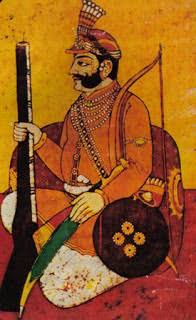
A painting of Maharaja Chhatrasal. Photo: Wikimedia Commons
Courtyards replaced military spaces. Decorative elements were added. Ceremonial functions became as important as strategic ones.
The result was a structure that reflected centuries of layered history. It was neither entirely a fort nor entirely a palace, but something uniquely its own.
This dual identity remains one of Rajgarh's most fascinating characteristics. Guests today can still sense the building's defensive past while walking through spaces designed for royalty.
The Long Years Of Decline
Like many historic royal properties across India, Rajgarh Palace faced an uncertain future after Independence in 1947.
The palace gradually slipped into neglect. Over the decades, sections of the property deteriorated and nature slowly reclaimed parts of the estate.
Though the structure was recognised for its historical importance and was at one stage protected by the state archaeological authorities, preservation remained a challenge.
Then came a turning point.
The Restoration
The restoration took nearly three decades.
In 1996, the Government of Madhya Pradesh entrusted the historic property to Prithvi Raj Singh Oberoi and The Oberoi Group.
What followed was not a quick hotel conversion but an ambitious heritage restoration, which stretched across nearly three decades.
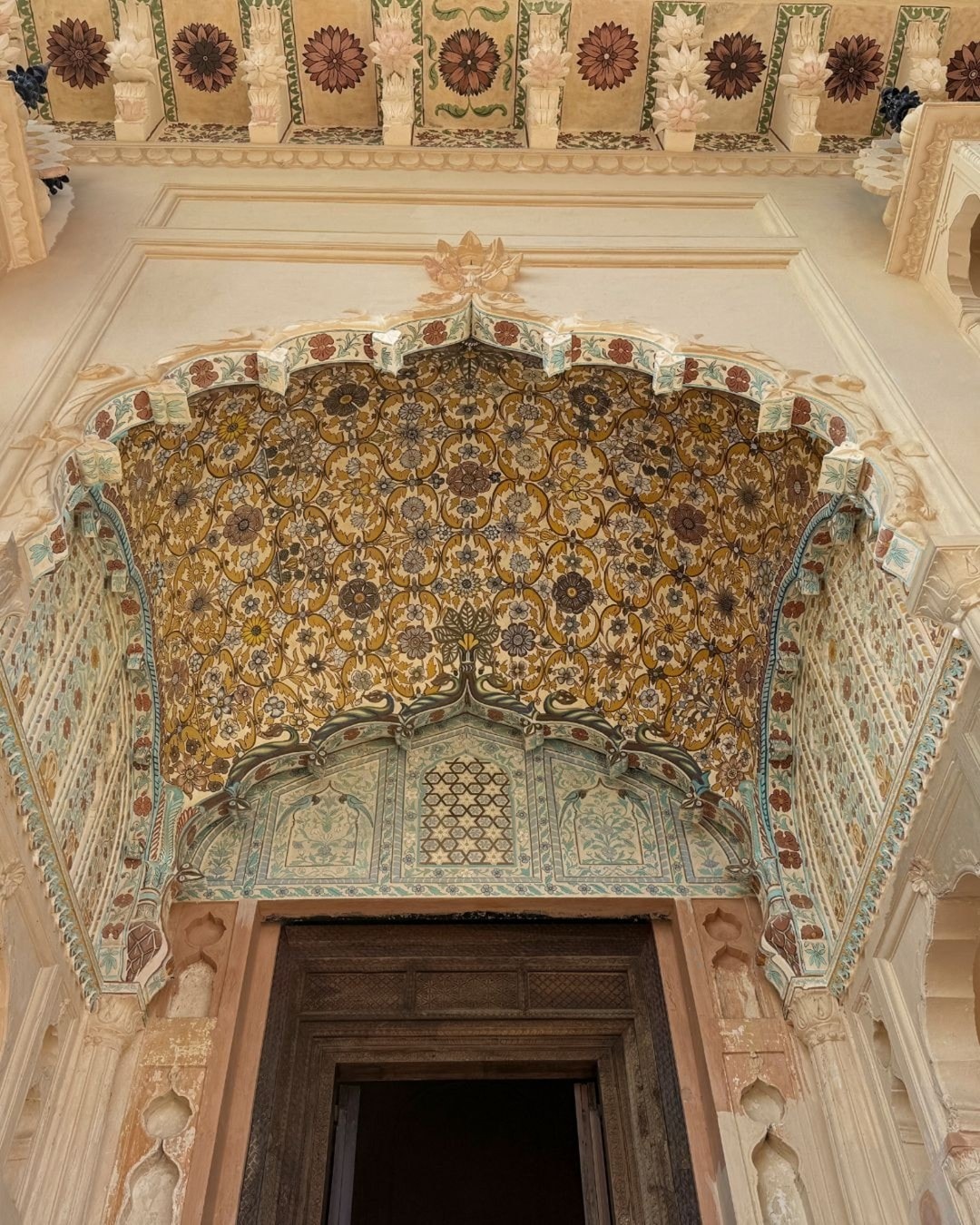
The restoration took nearly three decades.
Rather than simply transforming the palace into a luxury resort, the aim was to revive its original spirit while preserving every possible historical element.
Describing the project, Arjun Oberoi, Executive Chairman of The Oberoi Group, called it, "A journey of bringing history back to life."
The restoration team carefully protected original architectural features, centuries-old trees, hidden pathways, ancient shrines and the rain-fed lake that has existed on the estate for generations.
The objective was not to erase the passage of time but to allow visitors to experience it.
Architecture Shaped By Centuries
One of the palace's greatest strengths lies in its architecture, which reflects multiple eras of history.
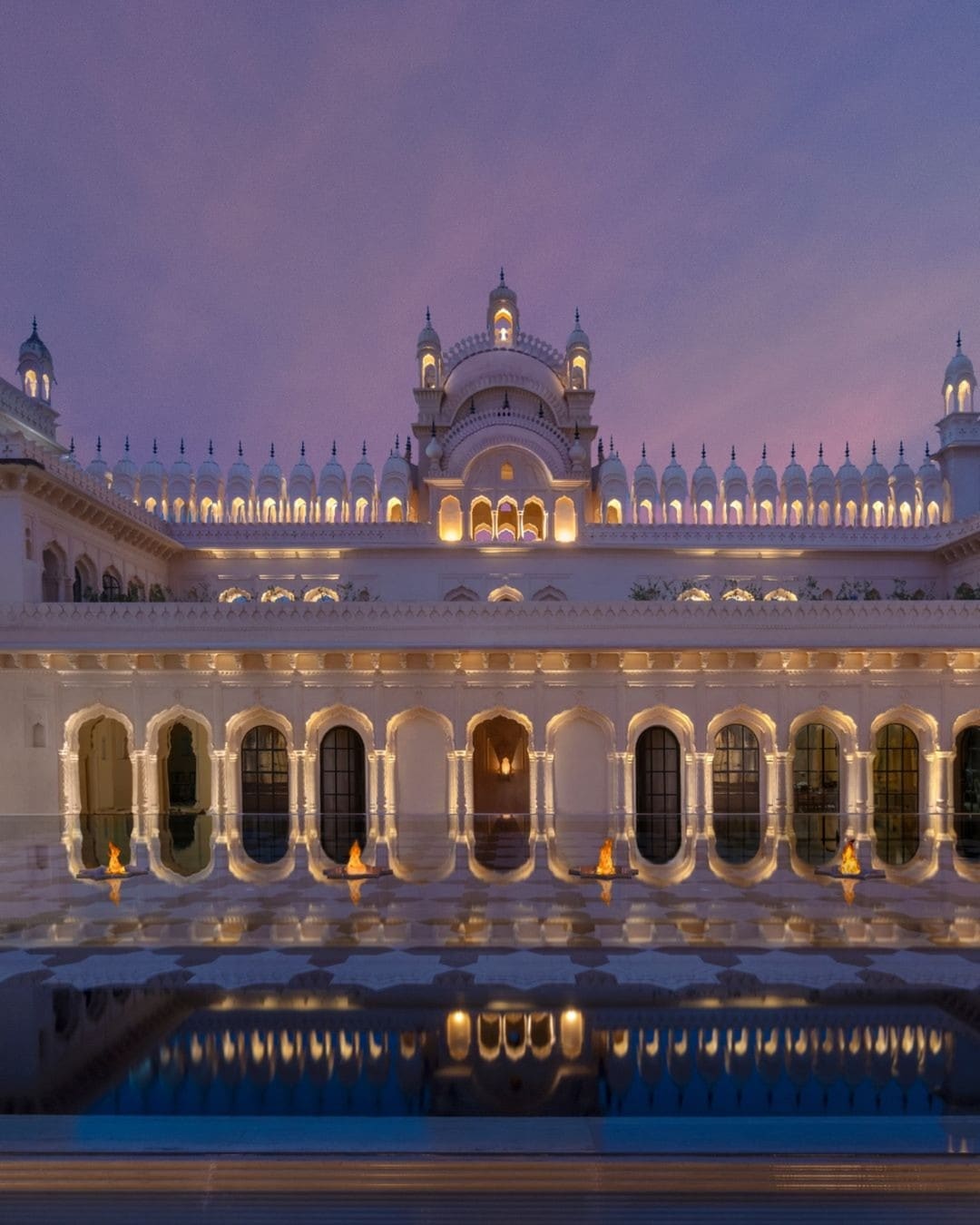
Traditional Bundelkhand elements remain visible throughout the property. Sandstone courtyards, hand-painted frescoes, carved pillars and vaulted ceilings showcase regional craftsmanship that has survived for centuries.
Natural light filters through clerestory windows, illuminating lime-plastered interiors and creating an atmosphere that feels both regal and intimate.
The palace also bears traces of later influences. Elegant French windows and colonial-style layouts sit alongside traditional Indian design, creating a layered architectural identity rather than a single aesthetic.
Outside, domed towers, arches and sandstone facades rise from the hillside, blending seamlessly with the surrounding landscape.
Where Wilderness Meets Royalty
The palace's location contributes significantly to its appeal.
Spread across roughly 76 acres, the estate is surrounded by ancient sal and palash forests and overlooks a private rainwater-fed lake.
Beyond the palace grounds lies Panna National Park, one of India's most important tiger reserves. Khajuraho's UNESCO-listed temples are just a short drive away.
This combination of royal heritage, wildlife and cultural history is unusual even by luxury travel standards.
Guests can spend the morning exploring medieval temple complexes, the afternoon tracking tigers through the forest, and the evening dining in a former royal residence.
Few destinations offer such a blend of experiences.
A New Chapter
The palace officially opened as The Oberoi Rajgarh Palace on November 20, 2025, with Madhya Pradesh Chief Minister Mohan Yadav inaugurating the property.
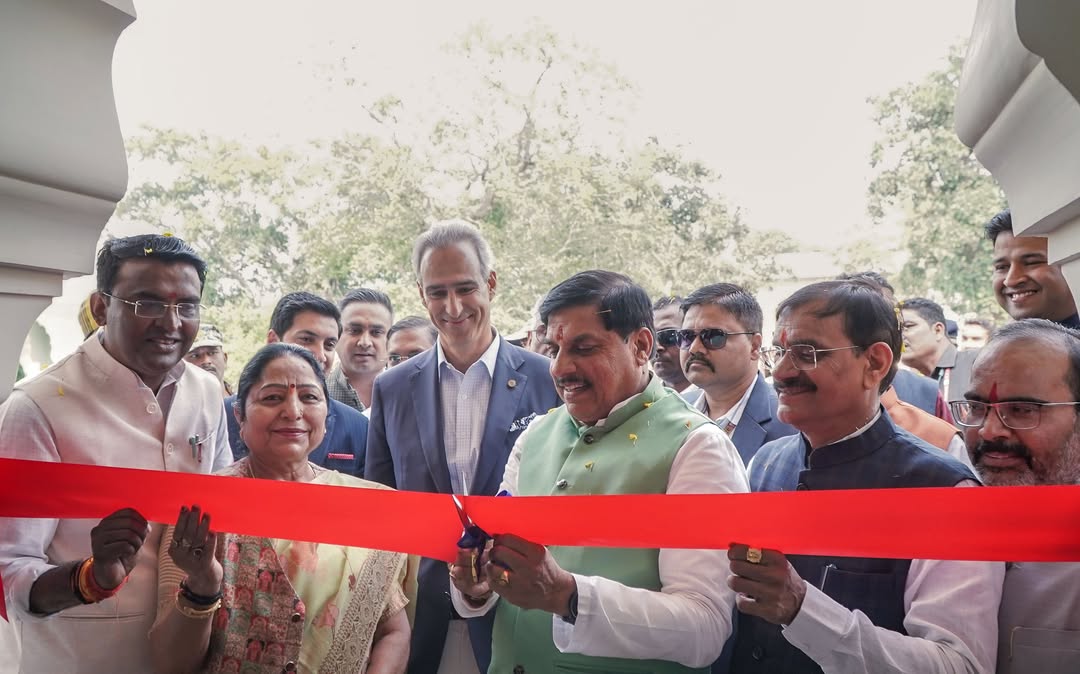
The palace officially opened as The Oberoi Rajgarh Palace on November 20, 2025
Speaking at the opening, he said, "The Oberoi Rajgarh Palace reflects the rich heritage of Madhya Pradesh while providing world-class hospitality. It is a remarkable addition to the state's tourism landscape."
The recognition has arrived quickly.
The palace earned a place among Luxury Travel Intelligence's best new luxury hotels in the world and has now been recognised by Prix Versailles as one of the world's most beautiful hotels.
Track Latest News Live on NDTV.com and get news updates from India and around the world
