
It began, as most beauty crazes now do, in glossy clinics and on celebrity skin. The so-called salmon sperm facial quickly earned a reputation for delivering glassy, luminous complexions. Soon, whispers of "fish DNA" and miracle glow treatments travelled from aesthetic clinics in Seoul to Instagram feeds, even in India.
Now, what started as an in-clinic procedure has spilled into bathroom cabinets. Serums, creams, and sheet masks boasting salmon sperm extract are selling at exorbitant prices, promising regeneration and radiance. But what exactly is in these bottles, and does the science support the hype? We asked experts.
What Is Salmon Sperm In Skincare, Really
Despite the eyebrow-raising name, no raw sperm is being applied to the face. The active ingredient is PDRN, short for polydeoxyribonucleotide, a compound derived from purified DNA fragments taken from salmon sperm cells.
Dr Manisha Mareddy, Founder of Shlok Dermatology & Wellness Clinic, explains clearly, "So, Salmon sperm facials are not really just pairing, sperm of Salmon on the face. It's actually DNA fragments purified from Salmon sperm cells. So, the ingredient used is called polydeoxyribonucleotide."
Dr Mareddy says this is an ingredient that has been extensively studied due to its properties related to tissue repair and wound healing, which can help in certain dermatological conditions.
"So, there is no raw sperm that's actually being used here. So, that is more of a marketing shorthand," she adds.
In simple terms, this is lab-processed genetic material designed to signal repair within the skin.
How The Salmon Sperm Facial Trend started
The treatment gained momentum in South Korea and Singapore, where regenerative aesthetics has long been mainstream. In clinics, PDRN is delivered into the skin using injections or microneedling. The idea is to place the molecule directly into the dermis, where tissue repair and collagen stimulation take place.
Dr Dhanraj Chavan, Dermatologist, Clear Skin Clinics, notes that this is far from a fleeting trend.
"PDRN, also called Polydeoxyribonucleotide, is not a social media trend. People have used it to help wounds heal and to get skin better after surgery for more than thirty years. This stuff is a lot like the DNA in your body. This is why it works well to fix skin, help more collagen grow, and cut down swelling. So, the science behind this is real."
Clinically, PDRN has been studied for wound healing and post-procedure recovery. Its role in reducing inflammation and encouraging tissue regeneration made it an attractive option for aesthetic medicine.
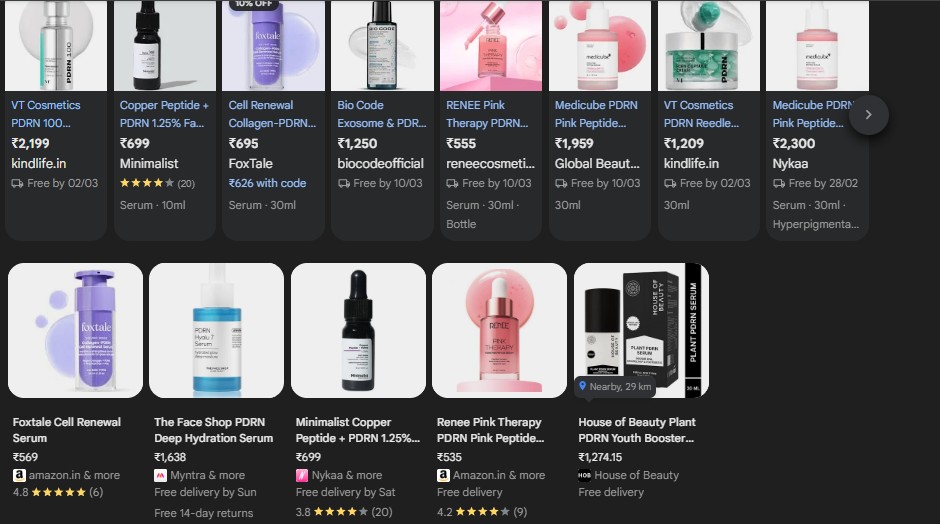
Brands selling PDRN-infused skincare.
Dr Gaurav Garg, Consultant Dermatologist and Founder of Dermalife Skin and Hair Clinic, explains that medical research has explored PDRN's ability to repair tissue, close wounds and refresh skin layers. Because of these effects, clinics use it in injections and advanced facials, particularly in countries focused on aesthetic recovery methods.
Soon, celebrities like Kim Kardashian and Jennifer Aniston started talking about the facial, and it went viral all over social media. Then, brands, including Indian ones, started jumping on the bandwagon, producing serums and moisturizers infused with PDRN.
What Science Says About The Glow
There is evidence that PDRN supports tissue regeneration, improves wound healing, and can stimulate collagen. In controlled settings, especially when injected or delivered through microneedling, patients may notice smoother texture, better hydration and improved firmness over time.
Dr Mareddy explains how it works biologically, "And it works mainly by signaling repair. So, it helps reduce inflammation and reduces the, you know, stresses in the skin. And studies have shown that it can improve tissue regeneration and wound healing, also."
"It helps repair the skin itself. So, there are areas where we apply it, where it can help in: stimulating collagen, repairing acne scars, working as an anti-aging treatment, also," she adds.
Dr Garg adds that some studies show PDRN helps skin retain moisture, appear smoother, and feel firmer when delivered appropriately. With regular sessions in a clinical setting, complexions often become more even and resilient after several weeks.
However, the keyword here is delivery.
Clinic Vs Cream
This is where the story shifts.
In India, regulatory rules do not permit PDRN to be injected in the same way as it is in some other countries. As Dr Chavan explains, there is a significant "delivery gap".
"Indian consumers need to know about the delivery gap. In places like South Korea and Singapore, doctors give PDRN as an injection in the skin or along with microneedling. This helps the molecule get to the layers where true repair happens. In India, you will mainly find serums and creams to use on the skin. These can help with some surface hydration and small fixes to the skin barrier, but they will not give the strong results you see in studies or on Korean stars. The molecule is just too big to go deep into the skin by itself," he says.
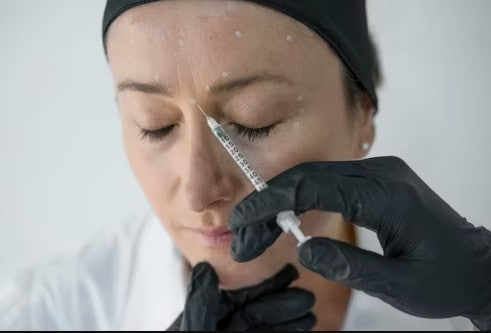
In India, regulatory rules do not permit PDRN to be injected in the same way as it is in some other countries. Photo: Unsplash+
He further clarifies that in India, doctors may use PDRN after microneedling or lasers to improve penetration, rather than as a direct injectable.
Dr Mareddy is equally firm on this point, "Why it cannot work is basically the creams, and not all are usually that effective because they might not get absorbed into the skin, through a cream or serum format. So, typically, the most effective form and the proven method is to inject PDRN into the dermis. And that is where you actually see results. Creams, sheet masks, or anything of that sort are not generally proven. So, I wouldn't recommend doing PDRN creams or anything at home because they are not that effective."
In other words, while the molecule may have regenerative properties, it struggles to penetrate intact skin when simply applied topically.
The Rise Of Salmon Sperm Skincare Lines
Despite these caveats, the market is booming. Luxury skincare brands are launching PDRN-infused serums and moisturisers, often priced at several thousand rupees per bottle. The marketing leans heavily on phrases such as DNA repair, skin regeneration, and glass skin.
Dr Garg says topical PDRN products may not deliver deep dermal repair, but they are not necessarily useless. Many formulations include hydrating agents, soothing compounds, and antioxidants that can improve surface texture and brightness.
What consumers often perceive as glow may be better hydration and a smoother outer layer rather than cellular regeneration triggered by PDRN.
Is It Safe?
Safety is less controversial than efficacy. Dr Mareddy says, "Safety-wise, they are safe in terms of using as a cream or moisturiser, but the question is more about efficacy than safety when it comes to using PDR in home care products."
Dr Chavan adds a note of caution for specific groups, "PDRN can be safe for most skin if the serum or moisturiser is well purified. People who have a seafood allergy should be careful. My advice is this. Do not spend a lot of money on at-home PDRN products and think you will get the same results you get from a clinic. If you are really interested in this approach, it is best to talk to your dermatologist about professional-grade options."
So while most well-formulated products are unlikely to cause harm, expectations need to be realistic.
Hype Vs Reality: Bottomline
The fascination with salmon sperm in skincare reflects a larger shift towards regenerative aesthetics. Ingredients once confined to operating theatres are now appearing in vanity kits.
The science behind PDRN is legitimate in medical contexts, particularly for wound healing and tissue repair. In clinics, when delivered through controlled procedures, it may support collagen production and improve skin quality over time.
But in over-the-counter creams and serums, the benefits are likely limited to surface-level improvements unless paired with procedures that enhance penetration.
For anyone tempted by the promise of fish DNA glow, the takeaway is simple. The molecule matters, but so does the method.
Track Latest News Live on NDTV.com and get news updates from India and around the world
