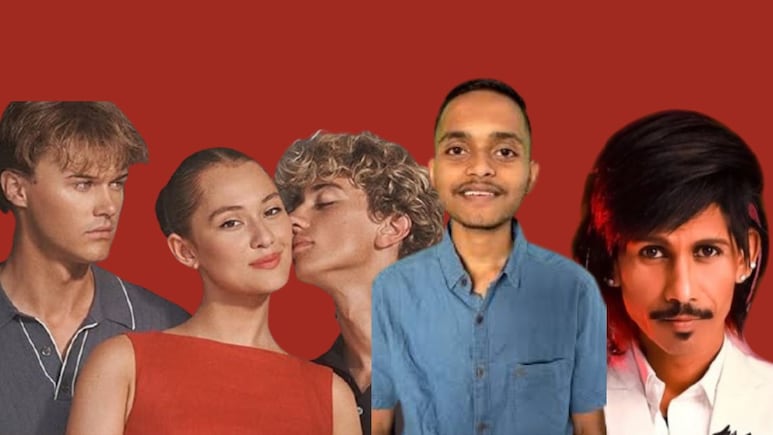
The word "cringe" has had a surprisingly long and dramatic journey. It began in Old English as cringan, meaning to bend, crouch, or yield, usually in fear or submission. Over time, the physical act turned emotional.
By the 16th century, cringe described recoiling from embarrassment or shame, and by the 19th century, it became firmly associated with feelings of discomfort, awkwardness, and humiliation.
The late 20th century gave the word a new cultural layer through cringe comedy, where humour was drawn from social missteps and painfully awkward situations.
Then came the Internet. By the early 2000s, online forums and social media platforms began circulating awkward videos and embarrassing images for laughs. Subreddits dedicated to "cringeworthy" content turned second-hand embarrassment into a shared digital experience.
By the 2010s, cringe had become a staple of meme culture. Entire trends, fandoms, and personalities were labelled cringe, often dismissively.
But by 2025 something changed. Cringe was not the feeling itself, but how creators responded to it. Instead of resisting the label, many embraced it and turned it into a brand.
How Cringe Became Cool
In 2025, cringe content was no longer something creators tried to explain away or apologise for. It became a full-blown genre, a business model, and in many cases, a shortcut to fame and fortune. From awkward singing reels to over-the-top chai serving styles and endlessly repetitive daily vlogs, content that once invited eye-rolls began commanding massive audiences and even bigger bank balances.
Here we would like to clarify that "cringe" itself is deeply subjective. What feels painfully awkward to one viewer feels authentic, funny, or oddly comforting to another. Somewhere between mockery and admiration, the Internet (social media) found a way to monetise discomfort.
Algorithms Thrive On Discomfort
Social media platforms reward strong emotional reactions, and awkwardness delivers exactly that. Second-hand embarrassment, shock, and discomfort are powerful scroll-stoppers and bring huge engagement (no matter negavtive).
In India's high-engagement, mobile-first ecosystem, where average daily social media usage exceeds two hours, short-form videos became the ideal format for cringe content.
Nearly all Indian users consume Reels or similar short videos daily, making emotionally intense moments more valuable than polished storytelling. The ambiguity of whether a creator is serious, ironic, or unaware further fuels comments, shares, reaction videos, and remixes. Cringe also stayed largely apolitical, making it algorithm-friendly and brand-safe, while still driving massive engagement.
Let's have a look at some "cringe" creators and how they have benefited them.
Darshan Magdum
Darshan Magdum emerged as one of the most recognisable faces of Internet "cringe" in India. Known for his unconventional English song covers, his slightly off-key, karaoke-style performances quickly became meme material.
His green-screen backdrops, cheerful expressions, and earnest delivery sparked constant debate about whether he was deliberately leaning into the joke.
Darshan now has built a loyal audience of supporters who found his performances charming and refreshingly unpolished. Today, he has over 7.6 lakh followers, global attention, and mainstream recognition.
Adam Levine acknowledged him during a Mumbai concert, while Rose from Blackpink and Bruno Mars has reposted his clips. He was also featured in Grazia Cool List 2025.
He is now part of a American 'boy band' called Boy Throb, aiming for international success, and an American O1 visa, with the group already crossing 6 lakh followers.
Dolly Chaiwala And Viral Spectacle Turned Business
Dolly Chaiwala, whose flamboyant tea-serving style, with red hair spikes, once drew laughter and disbelief, transformed virality into entrepreneurship.
Known for his distinctive look and theatrical chai preparation, he shot to fame after a viral interaction with Bill Gates.
By late 2025, Dolly had expanded "Dolly Ki Tapri" through franchising, appeared in luxury cars like a Defender SUV priced from Rs 98 lakh, and built a massive online following of nearly 5 million on Instagram.
Sourav Joshi Vlogs
Sourav Joshi's daily vlogs, already popular among Indian Gen Alpha, were suddenly labelled "cringe" after they gained even more visibility through his wedding videos. However, this so-called "cringe content" soon turned into something that even younger millennials and Gen Z started watching and describing as "addictive".
Comedian Aaditya Kulshreshth, aka Kullu, recently posted on Instagram that he has now become a Sourav Joshi fan and can watch all of his content, a sentiment widely echoed in the comments. Kullu too began watching Sourav's vlogs after people called the creator out for being embarrassing and for the way he behaved at his own wedding.
Now, Sourav is ranked among India's highest-earning YouTubers, with estimated monthly earnings ranging roughly between Rs 40 lakh and Rs 1 crore and a net worth of around Rs 45 crore.
What some viewers initially dismissed as cringeworthy domestic content has become deeply comforting for millions, who find familiarity and humour in it in an otherwise chaotic digital space.
Long Form Content Can Be Cringe Too
This "cringe fever" is not limited to just social media Reels. Sometimes series, movies which are "too cringe" to watch, often ends up getting a huge fan base (look practically the content of The Summer I Turned Pretty or Emily In Paris).
More "cringe" movie recommendations like these ?
byu/LilPutzi inmovies
Reddit is also filled with treads, where people are asking for "cringe movie suggestions." For instance, a viral reddit thread asks, "More "cringe" movie recommendations like these?", where people have shared their suggestions for "cringe movies."
Why Cringe Content Works On The Mind
According to Dr Priyanka Tiwari, Professor and Head of the Department of Applied Psychology at Manav Rachna International Institute of Research and Studies, cringe content delivers intense emotions without personal risk. Viewers experience second-hand embarrassment safely, often paired with relief that the situation is happening to someone else.
"Cringe is rarely experienced alone. It is shared through reactions, memes, and commentary, turning discomfort into humour and connection. This shared emotional response creates a feeling of collective participation a sense that 'we are all reacting together'".
She further adds that it also functions as low-effort emotional regulation, offering distraction without demanding sustained attention.
Child psychologist Rapti at Lissun, an RCI licensed counsellor and former NIPCCD and NIMHANS trainee, notes that cringe content has become a form of passive entertainment for Gen Z and millennials. Drawing heavily from everyday awkwardness, it operates on a mix of validation, comparison, and schadenfreude.
Watching someone else's social missteps often brings a quiet sense of superiority or relief, while also encouraging self-reflection. Neuroscience suggests that dopamine release reinforces this viewing behaviour, making cringe content both rewarding and habit-forming.
The Reason Behind The Rise Of "Cringe"
Dr Tiwari explains the rise of cringe content is closely tied to how social media platforms function today.
"Algorithms actively promote content that provokes strong emotional reactions because such content holds attention and drives engagement. Awkwardness, shock, and second-hand embarrassment are particularly effective at stopping the scroll."
Globally, patterns of use reveal clear contrasts. In India, average daily social media use is approximately 2 hours and 28 minutes, higher than in the United States at around 2 hours and 9 minutes, and Europe at about 1 hour and 48 minutes according to recent global usage data (2025). This high-engagement, mobile-first environment accelerates the spread of emotionally charged content such as cringe.

The rise of cringe content is closely tied to how social media platforms function today. Photo: Unsplash
For Rapti this rise of "cringe content", be it a meme, an Instagram Reel featuring males depicting female emotions, or simple "lolcow" audios, works because viewers are hooked on such content as it brings objective satisfaction through a mix of feelings like "Thank God, I'm not like this," a sense of validation. "I can do this, as media is showing it" or "I'm better than this," leading to a comfort binge.
"This can be considered a form of passive entertainment that consumes much of Gen Z's and millennials' day, and these contents derive inspiration to a great extent from daily life events," she adds.
"Humilitainment" is another form of entertainment where someone else's embarrassment and humiliation makes us laugh and keeps us fascinated and hooked onto Reels and short videos in digital media.
"Be it the movie Animal or Kabir Singh, cringeworthy dialogues of love have captured attention. Though it may seem "nonsensical" or "stupid," viewers still return to watch such content, as others' embarrassing and awkward acts bring amusement and satisfaction," Rapti says.
In simple terms, in this era of validation, "cringe culture" brings a sense of superiority, and an element of gossip arises in social contexts as a daily dose of amusement when it isn't happening to you.
The Awkward Truth Of 2025
Cringe content peaked in 2025 not because audiences lost discernment, but because the Internet learned how to monetise cringe.
In a digital world obsessed with polish, cringe proved that awkwardness still sells. Sometimes, it sells better than perfection.
Track Latest News Live on NDTV.com and get news updates from India and around the world
