





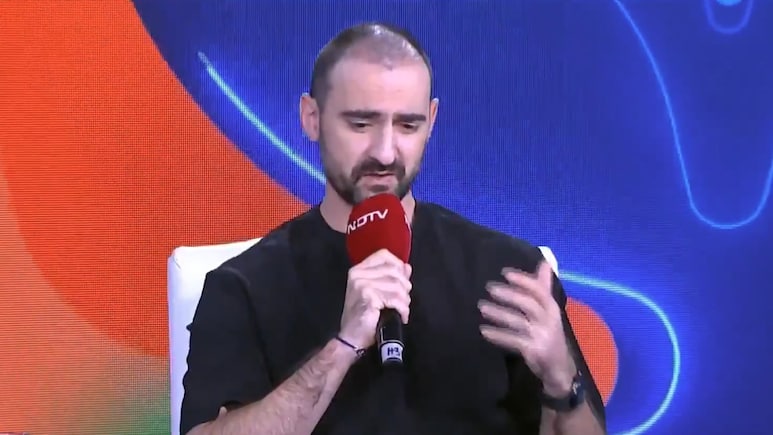
Smartphones will remain the "main gateway" to the next generation of operating systems, according to Akis Evangelidis, co-founder and President of Nothing India. Speaking at the NDTV Ind.ai summit in Delhi, Evangelidis emphasised that while AI will "revolutionize the way we interact with our smartphones," the hardware itself isn't going anywhere.
"Without a doubt, I think the smartphone will still be the main gateway to the next kind of operating system," Evangelidis said when asked if the devices would survive the next 5-10 years. "Purely from a distribution standpoint, the sensors a smartphone has, and the user context it holds-that's not going anywhere. We've seen other brands try to crack different kinds of hardware, and it didn't go so well."
He further noted that the smartphone's vast data, context, and integrated sensors make it an "essential device" that cannot be easily replaced by emerging AI-only gadgets.
#NDTVIndAISummit | Watch insightful discussion between Akis Evangelidis (@AkisEvangelidis), Co-founder & President - India, Nothing and NDTV AI editor @aayush_a6 on built-in intelligence - the new technology default @ShwetaRKohli @SPF_India pic.twitter.com/IatNOQFrj9
— NDTV (@ndtv) February 18, 2026
On Ethics and Regulation
When pressed on the ethics of AI, Evangelidis compared the current era to the birth of the internet. "We are on the verge of a big revolution. Like the internet, AI will drive a systemic shift, and with that comes some level of uncertainty."
To bridge the gap between innovation and safety, the Nothing chief urged governments to remain agile. He praised the Indian government's proactive stance, specifically citing new mandates for labeling AI-generated content.
"Last week, [the government] ordered that every piece of social media or AI content needs to be labeled. It proves that in India, the government is very reactive and switched on to what's happening," he said.
The "Trial and Error" of AI Hardware
According to recent government orders, social media platforms must now place prominent labels on AI-generated content. Furthermore, misleading or illegal AI content must be removed within three hours of a platform becoming aware of it.
Evangelidis believes this agile regulatory approach is vital for steering technology in the right direction. He also noted that many companies have "lost sight of the end user" in the rush to claim AI features.
"Last year, we saw a lot of brands trying new hardware. Quite a few of them failed," he said, adding that this "trial and error" is a necessary part of the technological churn before the industry finds the right balance.
Track Latest News Live on NDTV.com and get news updates from India and around the world

