





The political churn in Ladakh has taken a new turn with the formal launch of the Voice of Buddhist Ladakh (VBL), a socio-political platform that is expected to recalibrate the region's engagement with the Union Ministry of Home Affairs (MHA) amid continuing unrest, protests and stalled negotiations.
Since Ladakh was carved out as a Union Territory in August 2019, public disquiet has steadily grown over the absence of constitutional safeguards, lack of an elected legislative assembly, fears over land and environmental protection, and limited employment avenues for local youth.
These concerns have periodically spilled onto the streets, with mass protests, shutdowns and prolonged agitations in Leh and Kargil. At times, tensions have escalated into confrontations with the administration, including detentions of protest leaders and allegations of excessive use of force, deepening mistrust between the Centre and local stakeholders.
To defuse the situation, the Union government constituted a High-Powered Committee (HPC) to hold structured talks with Ladakh's representatives. The Leh Apex Body (LAB) and the Kargil Democratic Alliance (KDA) have since acted as the principal interlocutors. However, progress has been slow, and recent rounds of dialogue have failed to yield a breakthrough, keeping the region on edge.
Against this backdrop, the announcement of the VBL by senior Buddhist religious leaders and prominent citizens marks a significant development.
In a joint statement, they expressed dissatisfaction over what they described as inadequate representation of Buddhist interests within existing negotiating forums, including the HPC. The formation of the VBL is being seen as a bid to formally assert those concerns within the ongoing talks rather than leaving them subsumed under broader consensus-driven positions.
The move follows unease among sections of the Buddhist community over draft proposals prepared by LAB and KDA for submission to the MHA. While the documents aim to present a united regional stance, critics argue that certain long-term cultural, demographic and land-related anxieties of the Buddhist population risk being diluted in the process.
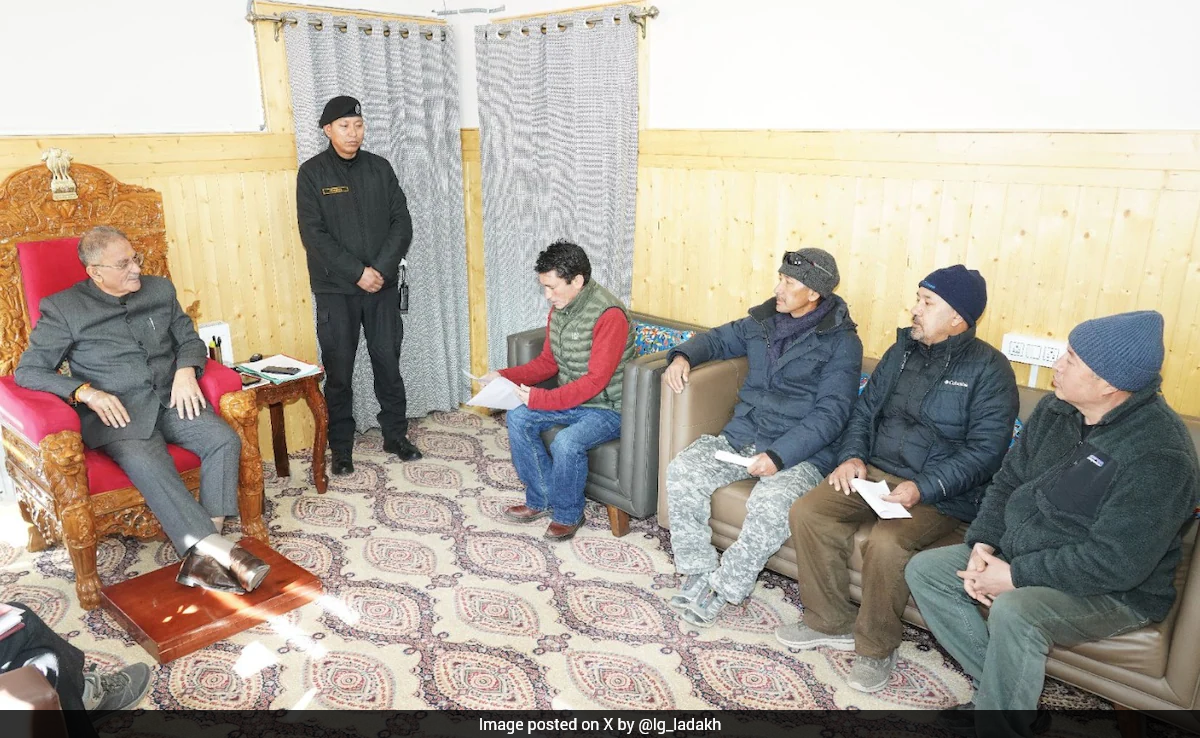
Signalling its intent to be an active player, the newly formed body wasted little time in reaching out to the administration. A day after its launch, VBL convenor Skarma Namtak and other members met the Lieutenant Governor of Ladakh, Kavinder Gupta, to formally place their demands and outline the group's objectives.
A delegation from Voice of Buddhist #Ladakh, led by Shri Skarma Namtak, called on Lt Governor Shri @KavinderGupta at the LG Secretariat, #Leh. pic.twitter.com/6XHUlsy1dW
— Office of the Lt. Governor, Ladakh (@lg_ladakh) January 2, 2026
The outreach suggests that the organisation seeks engagement through institutional channels rather than street mobilisation, at least for now.
Political observers say the emergence of the VBL could have a dual impact.
While it may add another layer to an already complex negotiation process, potentially slowing consensus, it could also enhance the legitimacy of any eventual settlement by ensuring wider community participation.
The creation of the VBL also highlights subtle shifts within Ladakh's socio-political landscape, reflecting a growing emphasis on identity-based representation amid prolonged uncertainty. Whether the new body strengthens Ladakh's collective bargaining power or leads to fragmentation remains to be seen.
What is certain is that the Centre-Ladakh dialogue has entered a more crowded and consequential phase. With the Voice of Buddhist Ladakh now at the table, the scope and the stakes of the negotiations have unmistakably widened.

