





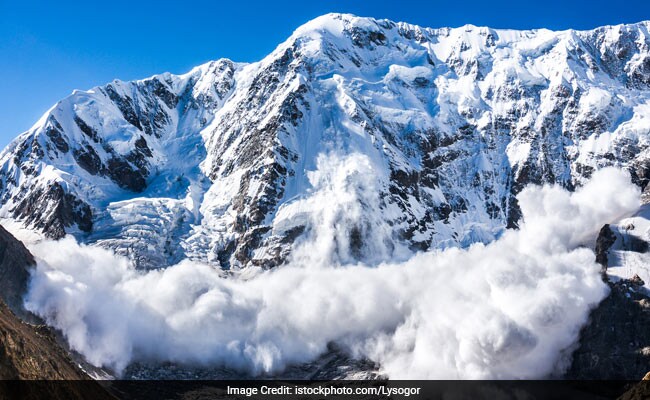
A study has mapped nearly 220 glaciers perched dangerously in Uttarakhand's Alaknanda basin, the first time this has been done. It warns that the region is warming faster than the rest of the world, which could cause sudden ice collapses with serious knock-on effects downstream.
A total of 219 "hanging glaciers" have been found clinging to steep slopes in Uttarakhand's Alaknanda basin, according to a new study that warns rising temperatures are making the region riskier.
The findings come from a paper titled "Basin-scale inventory and exposure assessment of hanging glaciers, Central Himalaya," published in the journal Natural Hazards in April 2026.
What Are Hanging Glaciers?
Hanging glaciers sit on steep slopes instead of valley floors, which makes them naturally more unstable. The study says the Himalayan region is warming faster than the global average, and this is making these glaciers even less stable.
The researchers said, "Rapid warming and climate change are increasing instability in Himalayan glaciers. This instability has led to the formation of 'hanging glaciers' on steep slopes, posing a significant risk of ice collapse and severe impacts on downstream areas. While these glaciers have been extensively studied in the Alps, basin-scale assessments in the Himalayas remain limited."
Read: 93 Workers Went Missing In This Nepal Tunnel. Thermal Drone Found No One
How The Glaciers Were Mapped
To build the inventory, researchers used the GlabTop2 model to study the Alaknanda basin in the Garhwal Himalayas. They found:
219 hanging glaciers across the basin
A combined area of 71.7 ± 3.5 square kilometres
A total ice volume of about 2.39 ± 0.42 cubic kilometres
Of this, 0.74 ± 0.14 cubic kilometres is hanging ice, meaning roughly a third of all the ice is considered unstable
Speaking exclusively to NDTV, Ashim Sattar, co-author of the study and Assistant Professor at IIT Bhubaneswar, said, "Climate change is significantly impacting a large part of the Himalayan region. Our study indicates the presence of 219 'hanging glaciers' in Uttarakhand. This is one of the first inventories of hanging glaciers in the state."
With this new data, experts say Uttarakhand needs to step up monitoring of its melting glaciers and plan better for the risks this creates.
Read: Drone Accidentally Captures Moment Glacier Collapsed Before Nepal Flash Floods
Citing the Geological Survey of India's "Inventory of Himalayan Glaciers," Raj Bhushan Choudhary, Minister of State for Jal Shakti, said India has 9,575 glaciers in total.
On Uttarakhand specifically, the minister told the Lok Sabha, "The Uttarakhand State Disaster Management Authority (USDMA), in collaboration with the Wadia Institute of Himalayan Geology (WIHG), is assessing the risks associated with 13 glacial lakes across the districts of Pithoragarh, Chamoli, Tehri, Uttarkashi, and Bageshwar. The WIHG specifically monitors Vasundhara Tal, located in the Dhauliganga basin of Chamoli district. Situated at the terminus of the Raykan Glacier, this pro-glacial lake expanded from an area of 0.14 square kilometres in 1968 to 0.59 square kilometres in 2021. Several supra-glacial lakes located in the ablation zones (areas of ice melt) of the Raykan and Purvi Kamet glaciers are also linked to Vasundhara Tal. To mitigate potential hazards, the WIHG continuously monitors these lakes for risk assessment purposes."
The Wadia Institute of Himalayan Geology also keeps watch on three other glaciers in the state: the Dokiyani Glacier in the Bhagirathi basin since 1991, the Chorabari Glacier in the Mandakini basin since 2003, and the Dunagiri Glacier in the Alaknanda basin since 2012.
Read: Before The Nepal Flood, A Glacial Fall: Tracing The Trigger, And A 100-km Killer Surge
Uttarakhand and Sikkim have already seen three major Glacial Lake Outburst Flood disasters in the past 13 years: the 2013 Kedarnath disaster, the 2021 Chamoli disaster, and the 2023 South Lhonak glacial lake outburst in Sikkim.
The findings are alarming considering just days earlier a devastating flood hit the Nepal-Tibet border near Rasuwa, when a mass of glacial ice and rock broke away high in the mountains and surged down the Bhote Koshi river system. The flood travelled nearly 100 kilometres, destroying bridges, roads and buildings, and left more than 900 people dead, with over 5,000 still missing across Nepal and Tibet, including hundreds of foreign tourists.
Track Latest News Live on NDTV.com and get news updates from India and around the world

