




The world order is changing and many multilateral organisations are falling behind, Prime Minister Narendra Modi said today, naming the United Nations in this context. Delivering the keynote address at the NDTV World Summit in the national capital this evening, PM Modi said trade, technology and the emergence of new powers are changing the world every day.
Dubbing this period a "World Between Orders," he said, "We have to understand two things: First, why is the world's order changing, and why is the old global order unable to provide solutions to today's challenges? And second, what is India's role in this changing world".
-

-
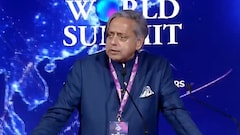 'The Balance Of Global Power Is Shifting': Shashi Tharoor At NDTV World Summit
-
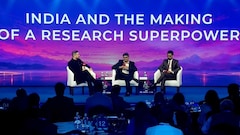 NDTV World Summit 2026: India's Push To Become A Global Research Superpower
-
 Trump's H-1B Curbs Could Be A Big Opportunity For India: Shivkumar Kalyanaraman
-
 How Far Is India In High-Speed Flight? IISc's Duvvuri Subrahmanyam Answers
-
 'US Is Weakest Country': Mojtaba Aide's Swipe At Trump Over 'Failed Goals'
-
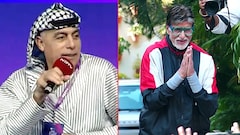 At NDTV World Summit, Palestinian Envoy's Amitabh Bachchan Reference For India Visit
-
 'When Are We Going To See Flying Ubers?' Dominic Taylor Answers
-
 At NDTV World Summit, Palestinian Envoy's Amitabh Reference For India Visit
-
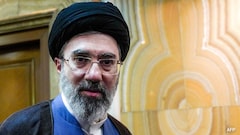 Why "Healthy" Mojtaba Can't Appear In Public, Reveals Iranian Diplomat
-
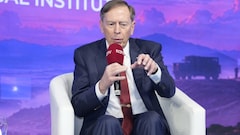 'Needs Very Rapid New Concept Of Warfare': Ex-CIA Chief's Advice To India
"The Second World War taught the world a big lesson," he said.
Read: "Some Dreaming Of Disorder": PM's "Failed Product Of Congress" Jibe At Rahul Gandhi
"The world understood that world systems cannot run solely on the basis of power and interests. Dialogue is necessary, cooperation is necessary, and the resolution of disputes is also necessary. This sentiment laid the foundation of the United Nations (UN). For decades, the UN played its role in promoting global cooperation and peace. But with time, the world kept changing. New aspirations emerged, new economies and new powers arose. The challenges before the world became much more complex than before," he said.
In this backdrop of rapid changes, the limitations of certain organisations are showing, he said.
"The United Nations and other global institutions have had their historical role, but in the face of today's challenges, their limits are clearly visible. Now new powers are emerging, new voices are demanding their place, and new challenges are demanding new solutions," he said.
"The changing world order calls for stronger global institutions, a greater voice for the Global South and international cooperation that stands firm in times of crisis," he said.
"When the reality of the world changes, but the ways of making decisions do not change, the distance between the system and reality starts increasing. This is what we are seeing happening today," he said.
This is not the first time India has called for reforms in the global body. Earlier, foreign minister S Jaishankar had strongly insisted that the organisation is "gridlocked".
The UN, he recalled, started with 51 members and has now grown almost four times. "If you have grown four times and you want to keep the old board of management, it is not going to work. It is common sense," he said.
But the trouble is that there are a few players who are resistant to the reform of UN, Jaishankar said, who are "using the name of Africa" to block reforms.
Track Latest News Live on NDTV.com and get news updates from India and around the world

