





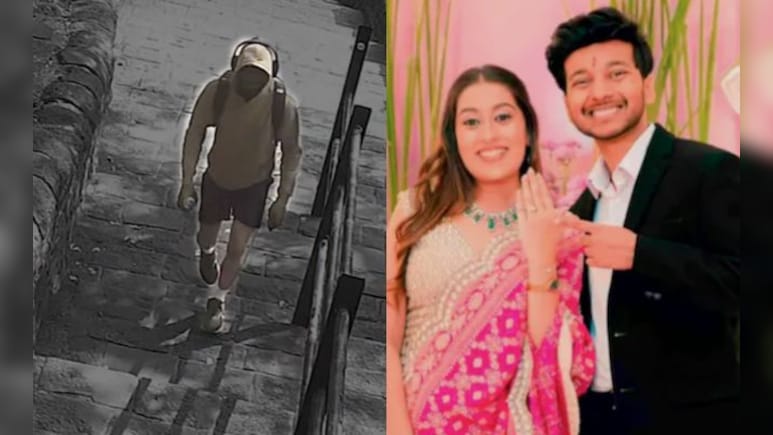
- Gait analysis identifies individuals by their unique walking patterns in forensic cases
- Accused in Pune case tried to eliminate digital and visual identification methods
- AI advancements have enhanced the accuracy and automation of gait pattern analysis
The ongoing investigation into the Pune murder case has brought renewed focus on gait analysis, a forensic technique that identifies individuals based on their unique walking pattern. Investigators believe the technique can play a significant role in cases where conventional methods of identification, such as facial recognition and mobile phone tracking, are ineffective.
Speaking on the relevance of gait analysis in the Pune case, Sambhal Superintendent of Police Krishna Kumar Bishnoi said the accused had allegedly attempted to eliminate the usual digital and visual clues that investigators rely upon.
"Conventional identification tools such as facial recognition and phone triangulation are of no use as the accused tried to neutralise these elements and planned it carefully. The best way for police to prove the case is through gait pattern analysis, one of the strongest forms of forensic evidence. Every person's walk is unique," KK Bishnoi said.
Gait analysis examines an individual's walking pattern by studying characteristics such as stride length, walking speed, posture, arm movement, foot placement and overall body mechanics. These features are then compared with CCTV footage and controlled recordings of a suspect to determine whether the movement patterns match.
Bishnoi said advances in Artificial Intelligence have significantly improved the reliability of gait analysis.
Earlier, forensic experts manually analysed surveillance footage frame by frame, making the process time-consuming and dependent on human observation. AI-powered computer vision systems can now automatically extract biometric characteristics, including stride duration, posture and body movement, to create a unique gait profile for comparison.
"Each person exhibits a repetitive and distinctive gait pattern, making it possible to identify someone from a distance based solely on the way they walk," he said.
The forensic technique has been used in several high-profile criminal investigations in India.
One of the most prominent examples is the 2017 murder of journalist and activist Gauri Lankesh in Bengaluru. Since the assailant's face was concealed by a helmet, investigators could not rely on facial identification. The Karnataka Special Investigation Team recreated the crime scene after the arrest of accused Parashuram Waghmore and recorded his movements while wearing clothing similar to those seen in CCTV footage. Forensic experts later compared his gait with the surveillance footage, and the findings became an important piece of corroborative evidence during the investigation.
Gait analysis was also used during the investigation into the 2021 Saki Naka rape and murder case in Mumbai, further highlighting its increasing role in complex criminal investigations where suspects attempt to conceal their identities.
Experts, though, point out that gait analysis is generally treated as a corroborating evidence rather than standalone proof.
It is used alongside CCTV footage, forensic examination, witness statements and other scientific evidence to strengthen an investigation.
However, as criminals increasingly use masks, avoid carrying mobile phones and attempt to erase digital footprints, gait analysis is becoming an increasingly valuable forensic tool for investigators.
With improvements in artificial intelligence and computer vision, law enforcement agencies are expected to rely more on gait analysis in cases where traditional identification techniques are unable to establish a suspect's identity.
Track Latest News Live on NDTV.com and get news updates from India and around the world

