



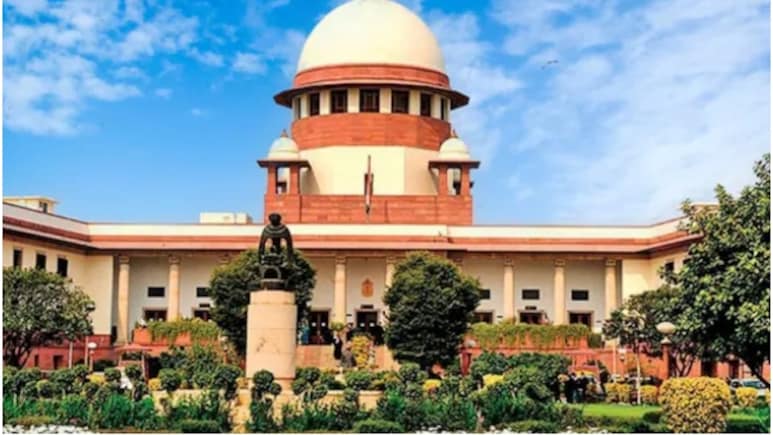
The Supreme Court on Tuesday gave a split verdict on whether the law that protects public servants from inquiry or investigation for decisions or recommendations made by them while on duty.
Section 17A of the Prevention of Corruption Act, introduced in July 2018, bars any "inquiry or investigation" against a public servant for recommendations made in discharge of official duties without prior approval from the competent authority.
While Justice BV Nagarathna in her verdict found that this section protects the "corrupt", Justice KV Vishwanathan upheld the law as constitutional, provided it is routed through Lokpal and Lokayukta.
While referring the matter to a larger bench, Justice Nagarathna today made a scathing observation on the validity of this section.
"Section 17A is unconstitutional, and it ought to be struck down. No prior approval is required to be taken." She observed.
Saying that this verdict protects the corrupt officials and it is an attempt by the legislature to serve old wine in a new bottle, she held that it is unconstitutional.
"This provision is an attempt to resurrect what has been earlier struck down in the Vineet Narain and Subramanian Swamy judgments. The requirement of prior sanction is contrary to the object of the Act, and it forecloses inquiry and protects the corrupt rather than seeking to protect the honest and those with integrity who really do not require any protection," Justice Nagarathna observed
Justice Nagarathna further observed that this law "essentially protects public servants above a certain level".
"It is the higher-level officers that make the recommendation or take the decision...There is a select class wrt whom the prior sanction has to be taken...It is a violation of Article 14 as it creates a classification without any nexus to the object of the Act." She noted.
She went on to quote Solicitor General Tushar Mehta's argument to observe that without approval for preliminary inquiry, the truth will be hanging in balance.
"SG Mehta has submitted that in today's world it is difficult to gauge truth from false narratives. Then should all such complaints not be proceeded with?" she asked.
"If decisions are taken post-inquiry, it will not lead to any policy paralysis," Justice Nagarathna said.
Calling this section a violation of Article 14, Justice Nagarathna said that there is a select class wrt whom the prior sanction has to be taken, which makes this law discriminatory and unconstitutional.
"The requirement of prior sanction is contrary to the Prevention of Corruption Act, forecloses inquiry and protects the corrupt," Justice Nagarathna said.
Justice Viswanathan, however, disagreed and said striking down section 17A will be akin to throwing the baby out with the bathwater, and the "cure will be worse than the disease".
Justice Viswanathan held that an independent agency, which is free from the executive, must decide the question of sanction. Therefore, he directed that the sanction must be decided by the Lok Pal/Lokayukta. Section 17A was read down to that extent.
"Section 17A is constitutionally valid subject to the condition that the sanction must be decided by the Lok Pal or the Lok Ayukta of the State," Justice Viswanathan observed
The top court's split judgement came on a PIL filed by NGO 'Centre for Public Interest Litigation' (CPIL) against the validity of amended section 17A of the Prevention of Corruption Act.
Now the matter will be placed before Chief Justice of India Surya Kant so he can constitute a larger bench to address the issue.
Track Latest News Live on NDTV.com and get news updates from India and around the world

