






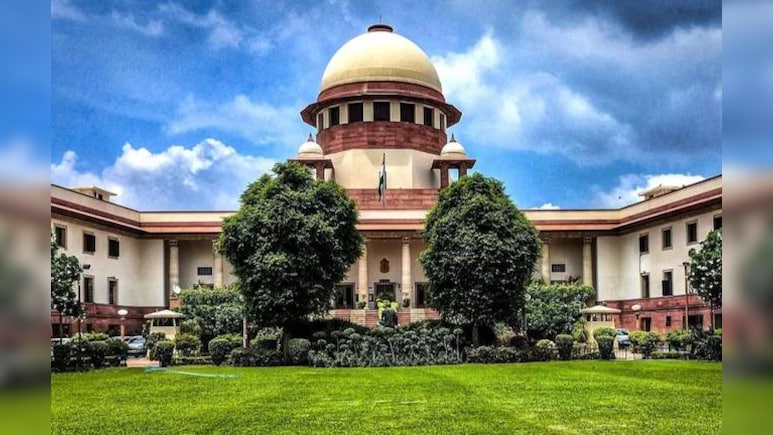
When the doors of Sabarimala were opened for all women, a question rang across the corridors of the Supreme Court and the country: Will the courts open gates of all religious institutions to women? There are many mosques that restrict the entry of women, also temples where women are not allowed in the sanctum sanctorum while men can.
The ideal answer to this question would be yes, open the gates of all religious institutions to all individuals belonging to the faith or denomination, to men and women equally. The Centre, however, has argued before the nine-judge Supreme Court Bench that this shall be antithesis to plurality within faiths and denominations and disproportionate judicial interference in religious institutions.
A court should not interfere in any religious practices, the Centre has argued. The moment a country realises something is a religious practice, it must not adjudicate upon the correctness or the essentiality of the practice. The denial of entry to women of child-bearing age in Sabarimala temple is part of 'diversity' within religion, the Centre maintained, citing instances of temples where men are not allowed.
But the matter before the nine judges is bigger than Sabarimala.
Two crucial petitions have been tagged with this matter. The first pertains to the Dawoodi Bohra community and the other is about the rights of Parsi women. The case of Parsi women was an appeal against the Gujarat High Court order where it was held that a Parsi woman loses her religious identity when she marries outside the community. The Dawoodi Bohra matter was a Public Interest Litigation before the Supreme Court. In both cases, the communities claimed immunity from judicial review citing denominational autonomy.
The challenge to Muslim practices like polygamy and Nikah Halala is not before the bench directly but the judgment will have ramifications for all pending petitions where rights to equality and dignity of women are infringed upon by community or customary practices.
The Case Of Dawoodi Bohra Women
Female Genital Mutilation, as defined by the World Health Organisation, comprises procedures that involve partial or total removal of the external female genitalia, or other injury to the female genital organs for non-medical reasons. It is usually performed on girls between the age of three years and 15 years and occasionally on adult women.
The practice has no health benefits for women and can result in severe bleeding. Other problems surface later, including trouble urinating, cysts, menstrual difficulties, infections, complications during childbirth and increased risk of newborn deaths.
According to available data from 31 countries where FGM is practiced - including western, eastern, and north-eastern regions of Africa, and some countries in the Middle East and Asia -- more than 230 million girls and women alive today have been subjected to the practice.
More than 4 million girls are estimated to be at risk of FGM annually and the matter is of global concern.
In India, it is mostly practiced within the Dawoodi Bohra Community.
The Bohras are a small, close-knit, prosperous sect of Shia Ismaili Muslims based primarily in Gujarat. The community has a diaspora population in many countries, including the US, Canada, Australia and in countries of Europe and Africa. The Bohra population has been estimated to be about 1.5 million total worldwide. There are several sects within it - Dawoodi, Suleimani and Alvi, with the Dawoodi Bohras being the largest group.
The community has submitted before the Supreme Court that their practice is of female circumcision or Khafd, and should not be termed mutilation since it comprises only a nick and not removal of any part of the genitalia.
The Indian Medical guidelines do not permit this procedure, which has added risks -- being conducted in unhygienic conditions by quacks or unauthorised personnel. Various resolutions of the United Nations term FGM as violative of right to life, dignity and health.
The Case Of Parsi Women
Within the Parsi community, a clear asymmetry has long existed.
A Parsi man who marries outside the faith does not lose his right to enter the fire temple or to participate in the funeral rites of his parents at a Parsi crematorium.
The position of women, however, has been markedly different.
The case of Goolrukh Gupta brings this disparity into focus. It raises a fundamental question: does a Parsi woman forfeit her religious identity upon marrying under the Special Marriage Act? Traditionally, Parsi women who marry non-Parsis have faced the prospect of excommunication, effectively losing their religious identity and being denied access to fire temples (Agiaries) and Parsi burial grounds.
These practices stem from conservative interpretations of Zoroastrian doctrine, which tend to impose stricter consequences on women than on men, who typically retain their religious identity despite marrying outside the community. In 2012, the Gujarat High Court held that a Parsi woman's religious identity ceases upon such a marriage. This ruling has since been challenged before the Supreme Court.
In Goolrukh's case, the consequences were immediate and deeply personal as she was denied the right to attend her parents' cremation, having been treated as excommunicated from the community. The Supreme Court gave her interim relief in 2017 when she and her family were allowed to attend the funeral of her parents.
Ripple Effect
The outcome of the issues concerning Dawoodi Bohra women, Goolrukh Gupta case, and the broader questions before the nine-judge bench, will travel far beyond the confines of any one community.
At its core lies a Constitutional tension between the protection of religious autonomy and the guarantee of equality, dignity, and non-discrimination for women.
The resolution of this tension will determine not only the status of women within their faith, but also set a precedent for how far personal laws and community practices can withstand scrutiny under the lens of fundamental rights.
In that sense, this case is about the constitutional promise made to women in India. Its implications will resonate across gender restrictions, shaping the trajectory of women's rights jurisprudence for years to come.
A ruling that affirms the right of women to retain their identity and access to religious spaces would mark a decisive step towards dismantling gender-based exclusions embedded in customary practices across religions. Conversely, deference to such practices in the name of essential religious freedom risks entrenching systemic discrimination under constitutional protection.
As the Court adjudicates, it is effectively called upon to answer a larger question: Can equality be negotiable when it encounters faith, or must constitutional morality ultimately prevail?
(This is Part 2 of a 5-Part Series)
(The author is Contributing Editor, NDTV)

