



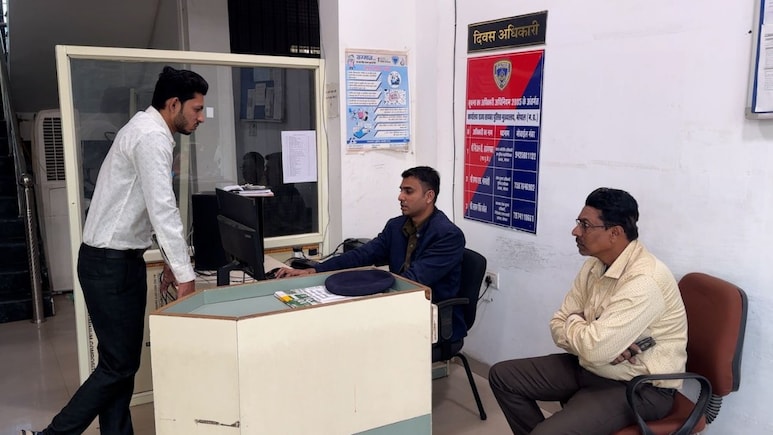
A disturbing network of crime, fraud, and potential terror financing is emerging at the intersection of the Nuh district in Haryana and Madhya Pradesh. The district of Nuh, located in southeastern Haryana, has long struggled with unemployment, porous policing structures, and socio-economic deprivation. But over the last few years, it has transformed into the country's most dangerous cyber crime hotspot, a successor to Jamtara, with far more reach, sophistication, and risk.
The Madhya Pradesh police earlier this year uncovered the state's biggest-ever cyber crime racket, worth more than Rs 3,000 crore. As the probe deepened, it became clear that the masterminds of the operation were not from Madhya Pradesh – they were operating from Nuh. Most of them were school dropouts in their early twenties, yet they ran a highly efficient digital empire from a flat in Gurugram, where an illegal call centre functioned as the control room for pan-India cyber crimes. Fraud calls related to job scams, investment schemes, cryptocurrency trading and fake law enforcement threats were made from this apartment every day.
Haryana-Madhya Pradesh Cyber Crime Nexus
What makes the case more alarming is its connection to Madhya Pradesh. Over 1,000 mule bank accounts, mostly belonging to poor villagers from the Vindhya and Mahakoshal regions, were exploited to channel fraud money. These account holders were told that they would receive benefits from government schemes, but instead their accounts became conduits for laundering crores.
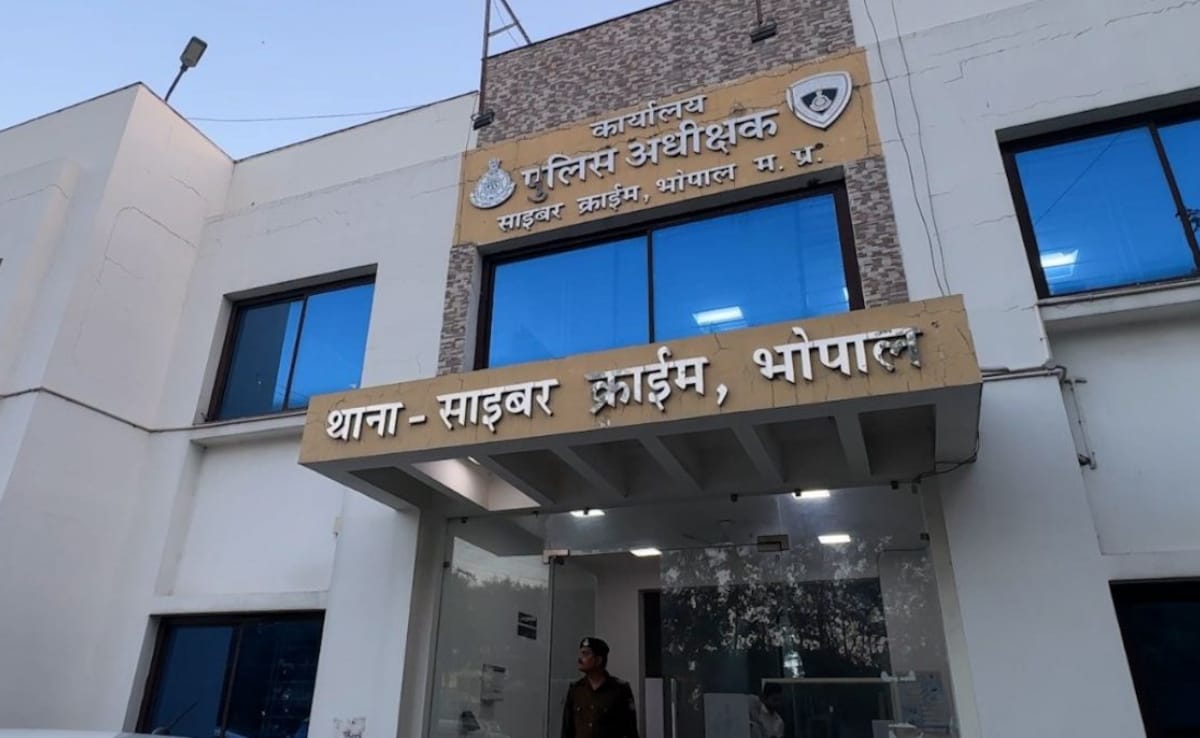
In less than two years, more than Rs 3,000 crore moved across these accounts in a complex pattern, routed to cities across India and, in many cases, further transferred abroad. Investigators have confirmed that significant amounts eventually reached the Middle East. Whether these transfers were purely related to cyber fraud or tied to something more sinister, like religious funding, hawala networks, or terror financing, remains part of an ongoing and highly sensitive inquiry.
Alongside these mule accounts, hundreds of SIM cards were procured from Madhya Pradesh through a second set of operatives. The SIM cards moved from Madhya Pradesh to Patna, where middlemen packaged and transported them to the masterminds in Nuh. These SIMs became the backbone of the cyber crime calls made to thousands of Indians. The Nuh operators also controlled shell companies in Hyderabad and parts of Maharashtra, through which illicit funds were circulated to mask their origins. Every layer of the racket, whether recruitment, SIM sourcing, mule account management or fund routing, ultimately linked back to Nuh.
SP Pranay Nagwanshi, who heads Madhya Pradesh's Cyber Cell, recalls the moment the scale began to reveal itself. "A large number of fake SIM cards were being sold in Jabalpur, Katni, Rewa, Sidhi, Satna and surrounding areas," he said.
"When we launched an operation last month, we discovered new centres in Damoh, Dindori, Shivpuri, Gwalior and even around Indore," he added.
Madhya Pradesh - A Supply Base
The picture was clear: Madhya Pradesh was being hollowed out from within, used as a raw-material supplier for one of the country's largest criminal networks.
The complicity extended deeper than local agents.
"In some cases, bank employees were involved in opening accounts. Many mule accounts were opened through their references. We have taken action against them too," Nagwanshi said.

Villagers who barely understood digital systems found their names tied to transactions worth crores. Their accounts were often rented out for as little as Rs 5,000 a month.
"Sometimes the rent went up to Rs 10,000 if people realised their accounts were being misused," Nagwanshi explained, adding, "But the amounts were never high enough to call them part of the nexus. They were simply exploited for commission."
The consequences have been devastating. The state is witnessing an unprecedented surge in cyber crime.
Cases Of Cyber Fraud
In Indore, a retired medical officer was kept under "digital arrest" for a month, threatened by callers posing as Telecom Regulatory Authority of India (TRAI) officials and even a Supreme Court judge. Terrified, the man transferred Rs 4.32 crore - his entire life's savings - to accounts controlled by the fraudsters.
In Bhopal, a 67-year-old retired bank manager and his wife were terrorised by criminals impersonating police officers, who claimed their bank accounts had funded terrorists involved in the Delhi bomb blasts. The couple was locked inside their home for 24 hours on the criminals' instructions, during which the fraudsters syphoned off Rs 67 lakh.
Another chilling case emerged in Katni, where a doctor was threatened by someone posing as an NIA officer, who claimed the doctor was linked to the Red Fort bombing case. The fraud was stopped only when the victim's son recognised the trap and alerted cyber police.
Police acknowledged how national tragedies become tools for criminals. "Since the Delhi bombings and the Jammu and Kashmir incident, threats of this nature have surged," Nagwanshi said.
"Cybercriminals exploit every new development. They weaponise fear instantly, using it to intimidate and extort people," he added.
Shell Companies
What investigators found next shook them even further. In one portion of the network, thousands of crores had moved through a cluster of mule accounts opening into shell companies across Hyderabad and Maharashtra.
"A key finding was that many of these accounts were used to open shell companies, and large amounts of money were being transferred or deposited in the name of these companies," Nagwanshi said.
The human cost reached a tragic peak when a 68-year-old senior advocate, Shivkumar Verma, died by suicide in Bhopal after receiving a call claiming that a fake bank account opened in his name was being used to fund terrorists in Pahalgam. In his final note, he wrote that he could not bear the stigma of being called a traitor. His death exposed the horrifying psychological violence of cyber crime.
According to figures tabled in the Madhya Pradesh Assembly, the situation is spiralling. From May 2021 to July 2025, over Rs 1,054 crore was stolen from residents of Madhya Pradesh through cyber fraud, while the police have recovered less than one per cent - Rs 19.4 million.
Additionally, more than four lakh cyber-crime complaints were filed each year from 2020 to 2022. Out of 13 cases registered during this period, only 585 cases reached the chargesheet stage, while hundreds remain pending.
Current Status
MLA Jaivardhan Singh, who raised the matter in the Assembly, said the figures reflect a disturbing lack of readiness.
"This is extremely serious," he said, adding, "Over one thousand crore rupees were stolen from Madhya Pradesh, and the recovery is negligible. The police neither have the resources nor the seriousness to tackle cyber fraud."
Amid this chaos, the state's cyber cell has already arrested over 25 individuals connected to the interstate cyber network. All have been charge sheeted. However, the police believe they have only scratched the surface. The real masterminds, who controlled every thread of the web, are still in Nuh.
Cyber crime police acknowledged that Nuh, along with adjoining parts of Rajasthan, has now become India's leading cyber crime hotbed, surpassing older centres like Jamtara.
He emphasised that years of crackdowns in Jharkhand and West Bengal pushed cybercrime networks to migrate into newer geographies, particularly Nuh, with its combination of mobility, anonymity and criminal networks.
As Madhya Pradesh grapples with this digital onslaught, a larger question looms over national security agencies. If money from the mule accounts was routed to foreign destinations, if the same networks appear in both cyber fraud and terror financing investigations, and if Nuh serves as a common intersection for extremist modules and financial crime, then is India now witnessing the evolution of a cyber-terror corridor?
Track Latest News Live on NDTV.com and get news updates from India and around the world

