





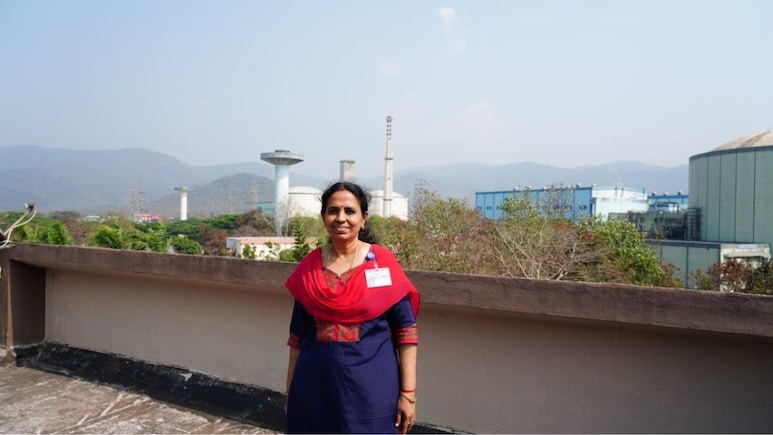
In a landmark moment for India's nuclear power program, RM Nachammai has created history by becoming the first woman chief superintendent looking after the operations of a functional nuclear power plant under the Nuclear Power Corporation of India Ltd (NPCIL).
Her appointment marks a breakthrough not only for the organisation but also for India's broader push to expand clean, reliable nuclear energy as the country targets 100 gigawatts of nuclear capacity by 2047.
Nachammai takes charge as Chief Superintendent of Karnataka's Kaiga Generating Station Units 3 and 4, effective March 15, placing her at the helm of the Operations, Maintenance and Engineering Support divisions of the operational nuclear reactor complex. The role is considered one of the most technically intense and responsibility-laden positions in the nuclear power ecosystem, involving round-the-clock oversight of reactor operations, safety systems and plant performance.
Speaking to NDTV on her elevation, NPCIL Chairman and Managing Director BC Pathak underscored both the professional significance and the symbolic value of the moment. Pathak said, "Nachammai embodies Nari Shakti, her elevation as a leader in the crucial and demanding operations sector of a nuclear power plant is thanks to her technical capability and this certainly opens the door for younger women to join the Indian nuclear industry as India ramps up to 100 gigawatts of nuclear energy by 2047. A great achievement for the 10,000 strong work force of NPCIL to get a woman leader as the chief superintendent of an operational reactor. India certainly needs more women leaders in the nuclear sector as New Delhi embraces cleaner energy goals."
The timing of the appointment comes close to the International Women's Day, giving it added resonance. In an organisation of nearly 10,000 employees, only about 900 are women, highlighting the structural gender imbalance that continues to exist in highly specialised engineering and operations roles. Nachammai's rise to the top of reactor operations is therefore being widely seen as a powerful signal that the doors are opening for greater female participation in India's nuclear journey.
Nachammai's career spans more than 35 years in nuclear power plants, marked by technical excellence, operational depth and sustained leadership. An Electrical and Electronics Engineering graduate from Madras University, she secured a University rank in 1990. She joined NPCIL in 1991 and quickly distinguished herself, receiving the Vikram Sarabhai Award for topping the second batch of NPCIL's engineer trainees.
Over the decades, she has served in a wide range of critical roles at the Madras Atomic Power Station and at Kaiga Generating Station Units 1 and 2, gaining hands-on experience across operations, maintenance and engineering functions. Her contributions have been formally recognised with the NPCIL Special Contribution Award in 2010, 2014 and 2017, reflecting sustained impact rather than isolated achievement.
Beyond plant operations, Nachammai has also played an important role in nuclear safety advocacy and public outreach. She has made presentations at national-level forums on nuclear power safety, participated in public awareness programs, and represented NPCIL in multiple international programs, helping project India's nuclear safety culture and operational standards on global platforms.
The Kaiga Nuclear Power Station in Karnataka, one of India's key nuclear hubs, currently operates four 220 MWe Pressurized Heavy Water Reactors, with a total installed capacity of 880 MW. With Units 5 and 6 under development, Kaiga's capacity is expected to rise to 2,280 MW, significantly strengthening India's clean energy base and underscoring the importance of experienced leadership at the operational level.
Track Latest News Live on NDTV.com and get news updates from India and around the world

