





- The Supreme Court declined immediate relief for IPS officer Urvashi Sengar to join ongoing Phase-II training
- The court noted three of nine training weeks were completed, making partial training ineffective
- The Centre cited mandatory 95% attendance and essential modules already completed at the police academy
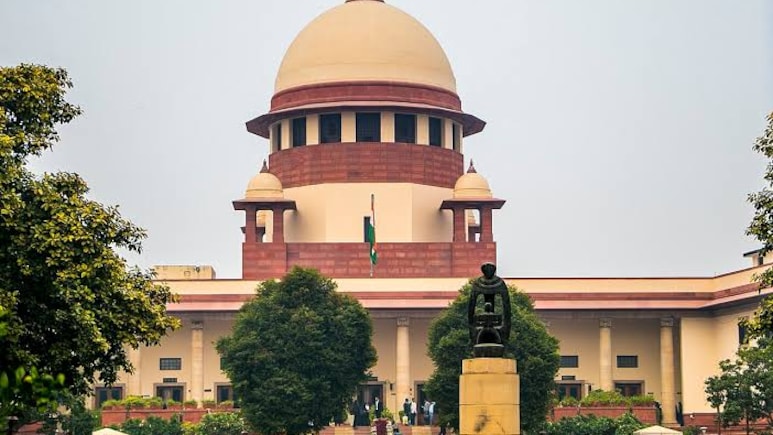
The Supreme Court on Friday declined to grant immediate relief to IPS officer Urvashi Sengar, observing that allowing her to join the ongoing Phase-II training at this stage would not serve its intended purpose as a substantial portion of the programme has already been completed.
The top court, however, expressed an oral agreement with Sengar's submissions against a 1993 Ministry of Home Affairs Office Memorandum (OM) governing maternity-related interruptions in IPS probationary training.
"We agree with your submission on the merits. But we cannot implement it. Three out of nine weeks are already over. You will not be able to be trained properly. It will be to your detriment," the bench observed.
The court disposed of the petition and directed the Central Administrative Tribunal (CAT) to decide Sengar's original application on its own merits, without being influenced by any observations made in the order.
Centre Cites Attendance Shortfall
The matter was taken up after the Supreme Court, on July 8, asked the Centre to clarify whether Sengar could be permitted to join the second phase of training, which commenced on June 22 at the Sardar Vallabhbhai Patel National Police Academy in Hyderabad.
Appearing for the Centre, Additional Solicitor General Anil Kaushik informed the court that the Phase-II training lasts nine weeks and that three weeks had already been completed.
He submitted that several essential components, including field visits, physical training and cadre-specific modules for Madhya Pradesh cadre officers, had already concluded. Since the academy mandates a minimum 95 per cent attendance, allowing Sengar to join now would leave her with a significant attendance shortfall and incomplete training.
When the bench asked what had been covered during the first three weeks, the ASG said the missed modules were integral to the programme and could not be replicated individually.
"We Cannot Implement It"
Counsel appearing for Sengar urged the court to allow her to attend the remaining portion of the training, arguing that whatever had already been missed could not now be recovered.
The bench, however, declined the request, remarking that permitting an officer to undergo only part of the programme would be "absurd". It observed that while her seniority could be protected by the court, incomplete training would ultimately be against her own interests.
Recording the Centre's submission regarding the progress of the training, the Supreme Court disposed of the petition.
The court also noted the Centre's statement that it would withdraw its writ petition from the Delhi High Court challenging a CAT interim order which had allowed Sengar to attend training. The Delhi High Court had stayed the interim relief to Sengar, following which she had to move the Supreme Court.
Supreme Court Had Earlier Questioned 1993 MHA Rule
During earlier hearings, the Supreme Court had made significant observations on the 1993 Office Memorandum, which mandates that a pregnant IPS probationer must discontinue training immediately and resume it only one year after childbirth.
The bench questioned whether such a blanket ban policy could continue to operate without considering the individual medical fitness of an officer.
"This is a beneficial provision under law for protecting women and not to take away the right to undergo training if they are fit for it," the court had observed.
It had also asked the Centre why a medically fit officer should be prevented from attending training merely because of the Office Memorandum.
The bench further observed that recovery after childbirth differs from person to person, noting that some women may be fit to resume training within nine months while others may require a longer period. It indicated that such decisions ought to be made on a case-by-case basis rather than through a blanket prohibition.
The Centre, however, argued that making an exception could open the floodgates for similar claims. Sengar's counsel countered that exemptions had been granted in previous cases.
Background
Sengar, a 2023-batch direct recruit IPS officer allotted to the Madhya Pradesh cadre, delivered a child on September 20, 2025. She sought permission to join Phase-II training that began on June 22, 2026, citing medical fitness nearly nine months after childbirth.
Her request was declined by the National Police Academy on the basis of the 1993 Office Memorandum, under which pregnant IPS probationers are required to take a one-year break from training after delivery.
She challenged the decision before the Central Administrative Tribunal, which allowed her to participate in the training subject to medical clearance. However, the order was stayed by the Delhi High Court just before the training commenced, prompting her to move the Supreme Court.
In her petition, Sengar has challenged the constitutional validity of the 1993 Office Memorandum, arguing that it imposes a blanket exclusion on pregnant women IPS probationers without any individual assessment of their medical fitness or capability. She has contended that the policy fails to account for modern medical science, contemporary training practices and the constitutional principle of substantive gender equality.
Track Latest News Live on NDTV.com and get news updates from India and around the world

