Opinion | By Trump, For Trump: Inside The Murky Election Crisis America Is Sleepwalking Into
Trump has learnt that overturning an election after losing is extraordinarily difficult. This time, he is shaping the battlefield before America votes.
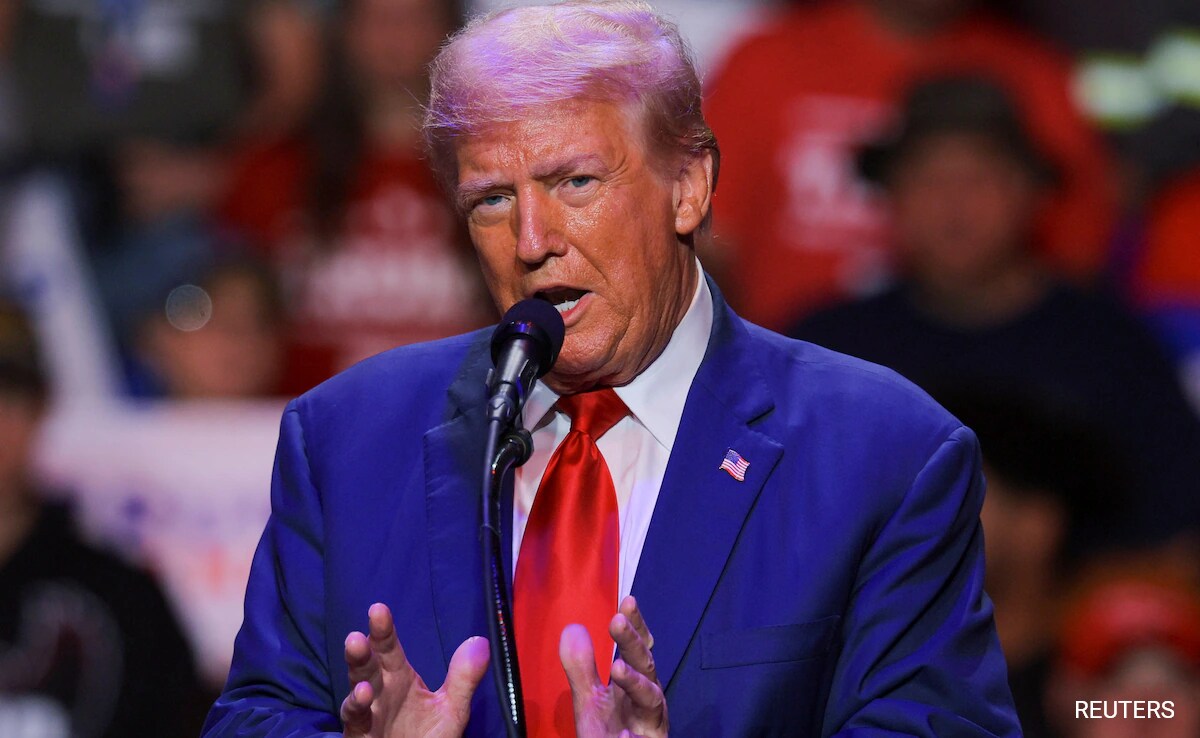
On July 9, President Donald Trump removed the remaining leadership of the US Election Assistance Commission, the bipartisan federal agency that supports the administration of American elections. The two Democratic commissioners learned of their dismissal through an email from the White House Presidential Personnel Office; the sole Republican commissioner resigned. With less than four months before the November midterm elections, the commission was left without commissioners.
Two days earlier, the Justice Department had warned election officials in all 50 states and Washington, DC, that they could face criminal prosecution if they knowingly retained non-citizens on voter rolls or facilitated their voting. The administration has also begun using federal funding to pressure states to change election practices, while continuing its attempts to obtain state voter data.
These actions form part of a four-pronged strategy. The first seeks to shape who can vote, through citizenship requirements, access to voter rolls, and pressure on registration officials. The second seeks to shape how votes are cast and counted, through interventions in mail voting, voting machines, and election administration. The third seeks to shape how votes translate into political power, most visibly through mid-decade redistricting. The fourth creates the institutional and political conditions for contesting an adverse result.
In 2020, Trump tried to reverse the election after Americans had voted. In 2026, the effort has moved to precede the contest.
His administration is acting before the election to shape its rules, institutions, and administrative environment, while preparing the ground from which an unfavourable result can later be challenged.
Deciding Who Gets to Vote
The campaign began soon after Trump returned to office. On March 25, 2025, he signed an executive order titled "Preserving and Protecting the Integrity of American Elections". Among other measures, it sought documentary proof of citizenship for the federal voter-registration form, changes affecting mail ballots received after election day, and greater federal access to state voter information.
Federal judges struck down key provisions, and the administration shifted to other instruments. The Justice Department sought non-public voter-registration data from states and went to court when some refused, arguing that the data was required to identify non-citizens and other ineligible voters. Several courts rejected its demands.
The campaign then became more coercive. On July 7, 2026, Harmeet Dhillon, head of the Justice Department's Civil Rights Division, wrote to election authorities in every state and the District of Columbia, warning officials of possible criminal liability if they knowingly retained non-citizens on voter rolls or facilitated their voting.
Non-citizen voting in federal elections is already illegal. The significance of the letters lies in the pressure they place on those maintaining voter databases. Voter rolls contain millions of records and require continuous updating for deaths, migration and duplicate registrations. Officials facing the possibility of federal investigation have an incentive to remove doubtful registrations rather than retain them pending verification.
The effort to acquire state voter data matters for a related reason. The United States has no single national electoral roll controlled by Washington. Compiling and analysing state-level data would give the federal executive a new capacity to identify and challenge voter categories. The database matching produces errors due to common names, outdated records, and changes in citizenship status. The issue is not whether ineligible people should vote. It is who identifies them, using what information, under whose authority, and with what protection for eligible citizens wrongly flagged.
Changing How Votes Are Cast and Counted
Mail voting has been Trump's earliest target. His March 2025 executive order attempted to change rules affecting ballots arriving after election day. Courts held that the president could not unilaterally rewrite rules belonging to Congress and the states, but pressure for changes in mail-voting procedures has continued.
In a close election, such rules matter. A change in the deadline by which mailed ballots must arrive can determine whether thousands of otherwise valid votes are counted. Repeated attacks on mail voting also have a political effect: if late-counted postal ballots erase an apparent election-night lead, the argument that these votes are suspicious has already been established.
Voting technology has also come under pressure. In May 2026, Reuters reported that Trump election adviser Kurt Olsen had explored using national security powers against voting systems used in more than half the states. The administration has separately pressed states towards hand-marked paper ballots. Further, in July, it attached conditions to certain federal antiterrorism grants requiring citizenship verification and movement towards particular ballot systems.
There are legitimate arguments for auditable paper ballots and stronger election security. The problem is the timing and the concentration of political pressure. Election machinery must be purchased, tested and certified, and election workers trained; major changes months before voting create administrative disruption.
This context makes the July 9 removal of the EAC leadership particularly significant. The commission accredits the laboratories that test voting systems, certifies voting equipment and maintains the national mail voter-registration form. The administration is demanding changes to the election machinery while emptying the leadership of the institution responsible for its technical infrastructure.
Changing How Votes Become Seats
In 2025, Trump personally pressed Texas Republicans to redraw congressional districts in the middle of the decade, rather than wait for the normal post-census cycle. The political objective was explicit: to create as many as five additional Republican seats in the House of Representatives.
Partisan gerrymandering is neither new nor exclusively Republican. What made the Texas initiative significant was direct presidential pressure for a mid-cycle redrawing before a critical congressional election. This triggered a wider arms race, with Democratic-controlled states pursuing countermeasures.
Redistricting changes the result without changing a single vote. The same voters casting the same ballots can produce a different distribution of seats in Congress. For Trump, the stakes are considerable: the November midterms will determine whether Republicans retain control of Congress or whether the president faces two years of investigations, subpoenas, and legislative obstruction.
Preparing to Contest Defeat
The fourth prong may prove the most consequential. Trump has never abandoned his claim that the 2020 election was stolen, despite failed court challenges, recounts, and the absence of evidence of fraud sufficient to alter the result. The difference today is that these claims are made by the federal government itself, which is investigating alleged fraud, demanding voter data, and putting election officials under pressure.
The reach of these investigations was demonstrated in Fulton County, Georgia, the Democratic stronghold at the centre of Trump's efforts to challenge the 2020 result. In April 2026, the Justice Department issued a grand jury subpoena seeking the names and personal contact information of every county employee and volunteer poll worker involved in the 2020 election. These are largely retirees, teachers, and municipal clerks who staff polling stations for modest stipends. On July 7, a federal judge, himself appointed by Trump, rejected the demand and described its scope as "staggering".
The effect extends beyond one county. American elections depend upon thousands of local officials, temporary workers, and volunteers. If election administration creates the risk of federal investigation and political harassment, recruiting and retaining this workforce becomes harder. The administration has simultaneously weakened the cooperative election-security architecture built to help state and local authorities respond to cyberattacks. Washington's protective relationship with election administrators has weakened while its investigative relationship with them has grown.
The Lesson Trump Learned From 2020
There are limits to what Trump has achieved.
Courts have blocked important measures, states have resisted federal demands, and judges, including Trump appointees, have rejected parts of the administration's campaign. American election administration remains decentralised and difficult for any president to control.
That decentralisation defeated Trump in 2020. There was no single election authority he could order to change the result. Republican state officials resisted pressure, local administrators certified their counts, courts rejected unsupported claims, and Congress certified the result.
The actions of 2025 and 2026 need to be understood in light of that failure. The administration has tried to influence every part of the system at once: voter eligibility, registration databases, mail voting, voting technology, election officials, congressional districts, and federal election institutions. Each action has its own legal justification and political explanation. Their cumulative direction is towards greater presidential influence over a system designed to disperse electoral authority.
India watches this with its own stakes. The American system survived 2020 because electoral authority was dispersed among thousands of officials whom no president could command. India concentrates that authority in a single Election Commission, and the independence of its three commissioners is absolutely critical.
The mistake would be to wait for another January 6 before recognising an election crisis. Trump has learnt that overturning an election after losing is extraordinarily difficult. This time, he is shaping the battlefield before America votes.
(The author is a Research Fellow in the Geostrategy Program at the Takshashila Institution)
Disclaimer: These are the personal opinions of the author
-
Blog | Amaira, And The Daily Goodbye Every Parent Takes For Granted

I kept thinking about that moment every parent knows so well. The one where you watch your child disappear through the school gate, believing they will come home.
-
Opinion | Satluj To Santosh To Padmaavat, How Getting Offended Became India's Favourite Hobby
There are three reasons why films based on real incidents or beloved myths depart from the truth
-
NDTV Investigation: Why Did 8 New Mothers Suddenly Fall Ill At A Jodhpur Hospital?
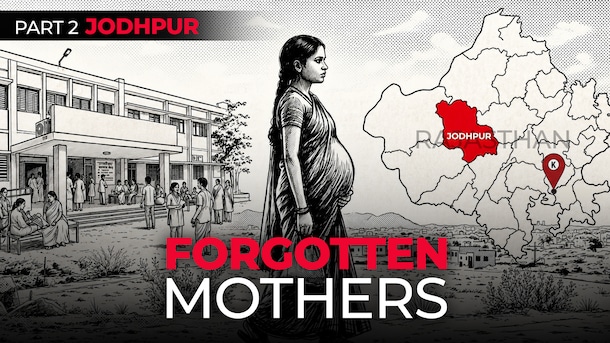
Part 2 of NDTV's investigation into the series of maternal deaths and severe post-delivery complications reported across government hospitals in Rajasthan focuses on Jodhpur.
-
Opinion | Thanks To Trump, Saving The US-Iran Islamabad Deal Is Now Harder Than Ever
Neither side wants more war. But neither side seems able to stop itself from marching towards one.
-
Opinion | After US-Iran, Why Is Pakistan Suddenly 'Brokering' Peace In Libya Now? Hint: $4 Billion
According to reports, Pakistan became one of the interlocutors alongside the US, Saudi Arabia, Qatar, and Turkey.
-
NDTV Investigation: Search For Answers As Several Women Die After C-Section In Kota
In this three-part series, NDTV investigates maternal deaths and severe post-delivery complications reported across government hospitals in Rajasthan.
-
Opinion | Prashant Kishor Is Now Facing The Hardest Test Of His Entire Career
The strategist who once told parties how to win must now prove that he knows how to do that himself.
-
How Batman: The Animated TV Series Predicted Modern AI In 1992
Long before ChatGPT and AI agents, Batman was already asking the questions the world is debating today.
-
How 'Chitta' Took Over Himachal Pradesh, One Drainpipe Drop At A Time
'Chitta' has become dangerously common across Himachal Pradesh. The numbers are staggering and underscore that drug abuse is no longer limited to cities