





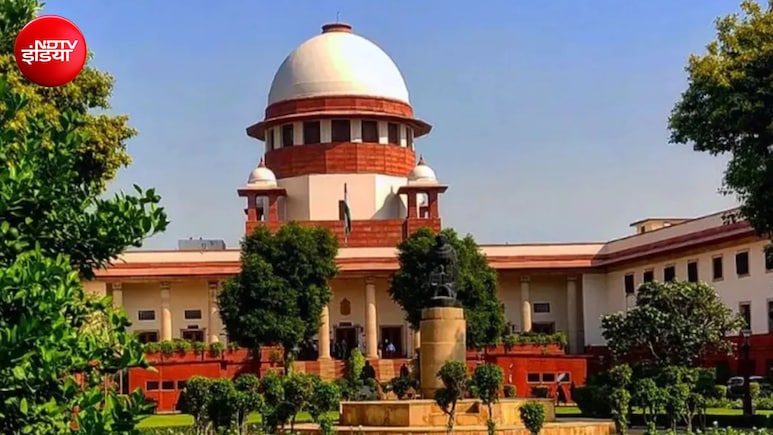
The Supreme Court has refused to interfere with a Delhi High Court order permitting a wife to summon her husband's hotel records and call detail records to support allegations of adultery in ongoing divorce proceedings.
A bench of Justices Manmohan and K Vinod Chandran dismissed the husband's appeal, observing that "no interference is called for" with the findings of the Family Court and the Delhi High Court. The records will be produced before the Family Court in a sealed cover.
The case stems from a divorce petition filed by the wife, who accused her husband of cruelty and adultery. She alleged that he stayed at the Fairmont Hotel in Jaipur with another woman in April 2022.
Initially, the wife had sought preservation of CCTV footage from the hotel. However, by the time she approached the court, the footage had already been erased under the hotel's data retention policy.
She subsequently moved Family Court seeking the hotel's booking records, identification documents of the occupants, payment details relating to the room, and her husband's call detail records for the relevant period.
The Family Court allowed the request, directing that the records be submitted in a sealed cover. Challenging the order before the Delhi High Court, the husband argued that disclosure of the records would infringe on his fundamental right to privacy.
Rejecting the plea, the High Court observed that the wife was "only trying to seek production of evidence which she reasonably believes will prove her charge of adultery, which by its very nature can be inferred only from circumstances".
The High Court further held that when a spouse seeks evidence that could help establish allegations of adultery, "the Court must step in," adding that such an approach is in line with the powers vested in Family Courts under the law.
The Supreme Court's refusal to interfere reinforces the High Court's view that courts may permit the production of relevant evidence in matrimonial disputes, subject to appropriate safeguards such as sealed-cover proceedings.
The order comes in the backdrop of another Supreme Court ruling delivered last year, in which the court held that secretly recorded conversations between spouses can be admitted as evidence in matrimonial disputes, including divorce proceedings.
In that case, a bench of Justices BV Nagarathna and Satish Chandra Sharma held that such recordings are admissible despite the protections available under Section 122 of the Indian Evidence Act governing spousal communications.
Track Latest News Live on NDTV.com and get news updates from India and around the world

