





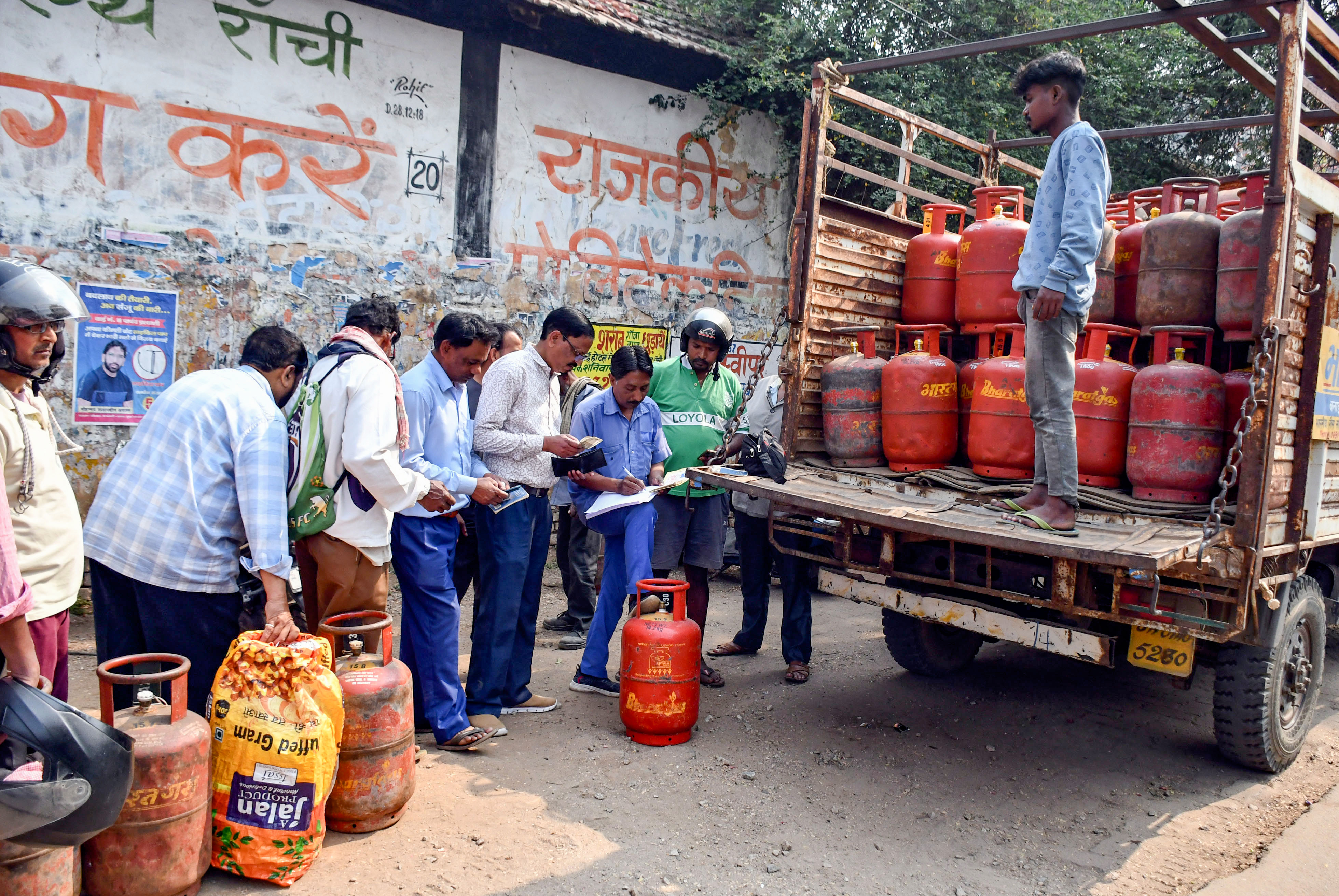
Prime Minister Narendra Modi held high-level discussions today with Petroleum Minister Hardeep Singh Puri and External Affairs Minister S Jaishankar to address the shortage of Liquefied Petroleum Gas (LPG) triggered by the escalating conflict between Iran, Israel, and the United States.
The government has activated a strategic plan to shield domestic consumers from the impact of the Middle East war.
The current crisis stems from the closure of the Strait of Hormuz following military actions involving the US, Israel, and retaliatory strikes by Tehran. This maritime passage is vital for India's energy security, as the country imports 62 per cent of its total LPG requirements.
Specifically, between 85 per cent and 90 per cent of these imports --sourced from nations such as Saudi Arabia -- pass through the now-blocked strait. While the government is currently scouting for alternate supply sources, the immediate deficit has forced a strict prioritisation of available stocks.
India consumes approximately 31.3 million tonnes of LPG annually.
The Ministry of Petroleum and Natural Gas has segmented the distribution as follows:
Domestic Sector (Households): Accounts for 87 per cent of total consumption.
Commercial Sector (Hotels, Restaurants, Industry): Accounts for the remaining 13 per cent.
To protect voters and general households, the government is prioritising domestic cooking gas. Consequently, the commercial sector, which relies on market-priced cylinders, is facing a severe supply crunch.
The shortage has already disrupted operations in major hubs, including Mumbai and Bengaluru. The India Hotels and Restaurant Association has expressed concerns over the situation.
In response to the crisis, the Petroleum Ministry has implemented several emergency measures. Refineries have been ordered to maximise LPG output by curtailing petrochemical streams.
The LPG refill booking cycle for domestic users has been extended to 25 days, up from the previous 21 days, to prevent hoarding and black marketing.
Beyond households, imported LPG is being directed toward essential non-domestic sectors, specifically hospitals and educational institutions.
A committee comprising three Executive Directors (EDs) from Oil Marketing Companies (OMCs) has been formed. This body will review representations from hotels, restaurants, and other industries, distributing gas based on "merit, necessity, and product availability."
Confirming these steps, Hindustan Petroleum Corporation Limited (HPCL) issued a statement noting that while geopolitical disruptions are significant, steps are being taken to enhance production. The ministry echoed this on social media, reiterating that the committee of EDs will be the final arbiter for non-essential commercial supplies during this period of "geopolitical disruption."
Track Latest News Live on NDTV.com and get news updates from India and around the world

