





The water crisis in parts of Maharashtra has deepened, with women in the villages of Arni tehsil, Yavatmal district, facing severe challenges in accessing water for daily use.
Villagers are forced to walk 2 to 3 kilometres each day to fetch water as the wells and handpumps are running dry. Often made on foot and across rough terrain, the journey has become a daily struggle, especially for women who bear the brunt of household water collection duties.
While speaking to ANI, Pooja, a resident of one of the affected villages, said, "We are scared of slipping and falling. The paths are uneven, and it's a long walk. But we have no choice. We need water."
-

-
 Who Is Rajiv Mehta? Lilavati Hospital Trustee To Speak At NDTV World Summit 2026
-
 Ex-CIA Director To Decode 'War In Times Of AI' At NDTV World Summit
-
 From Call Centre To Billion-Dollar Disruptor: Nikhil Kamath At NDTV World Summit
-
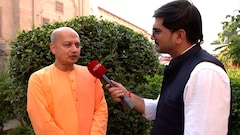 'Every 5 Years, You'll See A New India': Swami Sarvapriyananda Ahead Of NDTV World Summit
-
 AI Can Think, But Can It Be Conscious? Swami Sarvapriyananda Weighs In
-
 Alain Ebobisse, Africa50 CEO, To Attend NDTV World Summit 2026. All About Him
-
 Kriti Sanon At NDTV World Summit: A Look At Her Career And Business Ventures
-
 Ex-CIA Director To Decode 'War In Times Of AI' At NDTV World Summit
-
 Who Is Vikram Rai, CEO, South Asia GE Aerospace, Set To Attend The NDTV World Summit 2026
-
 Rahul Kanwal: The World Is Changing. What Comes Next? | NDTV World Summit 2026
The water crisis has also affected the women of Borichivari village in Taluka Peth of Nashik district, who are bearing the brunt of the hardship, walking over two kilometres daily under the scorching sun to fetch water, often unsafe and insufficient for their families' needs.
Women from Borichivari village descend into a deep, narrow well to fetch water, and above them, other women stand in quiet anticipation, holding earthen pots, or ghadas, waiting for their turn.
With no accessible water source in the village, the women take turns lowering themselves into the well, often with nothing more than a rope for safety.
This act, repeated day after day, with no water source in the village, forces residents to make multiple walks to distant wells, risking their health and safety.
While speaking to ANI, a woman from the village said, "We face a lot of difficulties in securing drinking water. We have to travel 2 kilometres to get water. Women get sick, and sometimes they fall while carrying water back and forth. Our village doesn't have any source of water."
Another woman added, "Even after walking all that distance in the heat, we manage to get just one vessel of water. It's not enough. We boil the water, but our children still fall sick. We've raised the issue multiple times, but no help has come.
Water scarcity has not only affected the daily lives of villagers but also imposed additional financial burdens.
On this issue, deputy Sarpanch of the village explained, "Women have to walk almost 2 kilometers to get water. Those who can't make the journey end up paying Rs 60 to others just to get a small quantity of water."
As the crisis deepens, residents are calling on local authorities for immediate intervention -- from installing water tanks to setting up a sustainable water supply --before the situation worsens further.
Similarly, Dhangaon village in the Nandurbar district of Maharashtra, a predominantly tribal area, is also facing a water crisis, with locals highlighting the lack of facilities.
With the onset of summer, women in the area said that they are forced to find water for themselves and their families by travelling multiple kilometres.
A woman reported that she was forced to walk for 7-8 kilometres in the scorching heat, without access to paved roads or a vehicle.
The villagers claimed that they had repeatedly urged officials and demanded some facilities for their remote village, but their requests had not been listened to.
(Except for the headline, this story has not been edited by NDTV staff and is published from a syndicated feed.)
Track Latest News Live on NDTV.com and get news updates from India and around the world

