





Madhya Pradesh's Rs 4,38,317 crore budget for 2026-27 has ignited sharp political debate, as the Mohan Yadav government unveiled a welfare-heavy financial plan layered with strong religious symbolism and ambitious spending commitments.
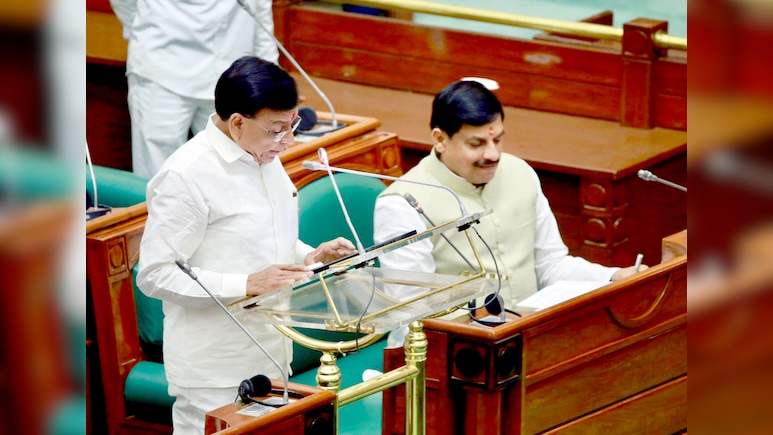
Presented by Finance Minister Jagdish Deora in a 90-minute speech inside a charged Assembly, the budget attempts to blend infrastructure expansion, social schemes, and cultural messaging but the opposition says the numbers tell a more troubling story.
One of the most talked-about announcements is the Dwarka Dwar Yojana, with Rs 5,000 crore earmarked over the next three years for urban infrastructure. Housing projects, road repairs and city upgrades will be undertaken under the broader Dwarka Nagar Yojana framework. The naming has drawn attention for its clear reference to Lord Krishna's legendary city of Dwarka. Supporters call it a vision-driven urban renewal push; critics question whether symbolism is overshadowing structural governance reforms.
Equally prominent is the Yashoda Milk Supply Scheme, with Rs 700 crore allocated this year as part of a Rs 6,600 crore five-year commitment. The scheme promises free tetra-pack milk for students up to Class 8, to be distributed alongside mid-day meals. Nearly 98.37 lakh schoolchildren and around 48 lakh Anganwadi children aged 3 to 6 are expected to benefit. Government officials describe it as a major nutritional intervention.
The Chief Minister linked the initiative to the idea of ensuring every child grows strong and healthy. However, critics argue that long-term improvements in public health require deeper investment in systemic healthcare infrastructure.
The budget also announces Rs 1,27,555 crore for women's welfare schemes, including Rs 23,882 crore for Ladli Behna. Plans include the construction of 5,700 hostels for working women and recruitment of 15,000 teachers. Farmers are promised 1 lakh solar pumps, Rs 12,690 crore has been set aside for road repairs, Rs 4,454 crore for the Jal Jeevan Mission, and Rs 40,062 crore for Panchayat and Rural Development significant allocations ahead of the 2027 local body elections.
The government has also provided Rs 3,060 crore for the Simhastha 2028 preparations and maintained that no new taxes will be imposed.
Finance Minister Deora described the document as Madhya Pradesh's first "rolling budget," structured in a three-year cycle that continuously adds a forward financial year.
He called it a "GYANII" model focused on the poor, youth, farmers, women, infrastructure, and industrialization, claiming nearly Rs 3 lakh crore has been directed toward these core priorities.
But even as the speech unfolded, protests erupted inside the Assembly. Congress MLAs disrupted proceedings over the lack of increase in MLA funds and alleged rising debt levels. The opposition entered the House carrying empty cans and piggy banks, accusing the government of pushing the state deeper into financial strain while projecting confidence.
Speaking to NDTV, Leader of Opposition Umang Singhar delivered a scathing critique.
He said the fiscal deficit has crossed Rs 74,000 crore and questioned why the budget remained silent on youth employment and pending dearness allowance demands of government employees.
Singhar also raised concerns about a reported Rs 50,000 crore reduction in the state's projected share of central taxes over the next five years, asking what strategy the government has to offset the shortfall.
According to the opposition, several thousand crores under centrally sponsored schemes remain unpaid during the current financial year, which they say reflects neglect of the state's financial interests.
Assembly Speaker Narendra Singh Tomar had to repeatedly intervene to restore order as slogans and counter-slogans filled the chamber.
Whether the Krishna-themed urban and nutrition initiatives deliver tangible outcomes or remain politically symbolic gestures will depend on execution and fiscal discipline.
For now, Madhya Pradesh's budget has sparked a larger question can expansive welfare commitments coexist with rising deficits without long-term economic strain?
Track Latest News Live on NDTV.com and get news updates from India and around the world

