





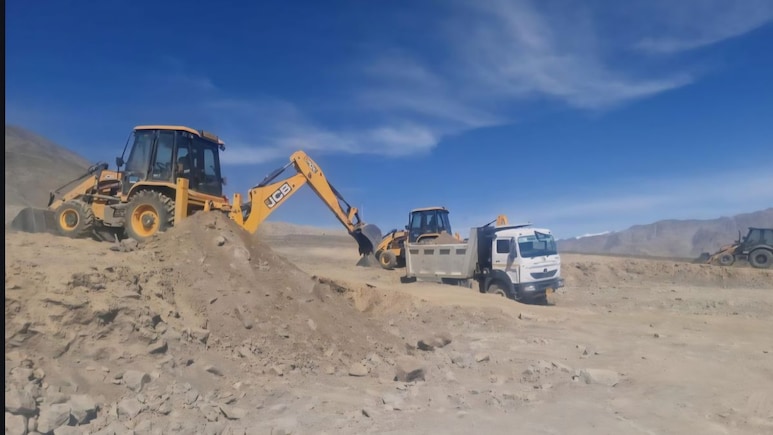
Ladakh has begun building village reservoirs to store snowmelt and glacial water, in a new push to tackle its growing water stress. In this high-altitude cold desert, water arrives in a rush during summer and disappears just as quickly. Much of the seasonal melt flows past villages and is lost downstream, even as shortages persist for most of the year.
Under 'Project Him Sarovar', launched on April 10, the administration is now attempting to capture and store that water for year-round use. The initiative is being implemented by Lieutenant Governor VK Saxena with support from the army, ITBP, BRO, and local communities, including religious leaders.
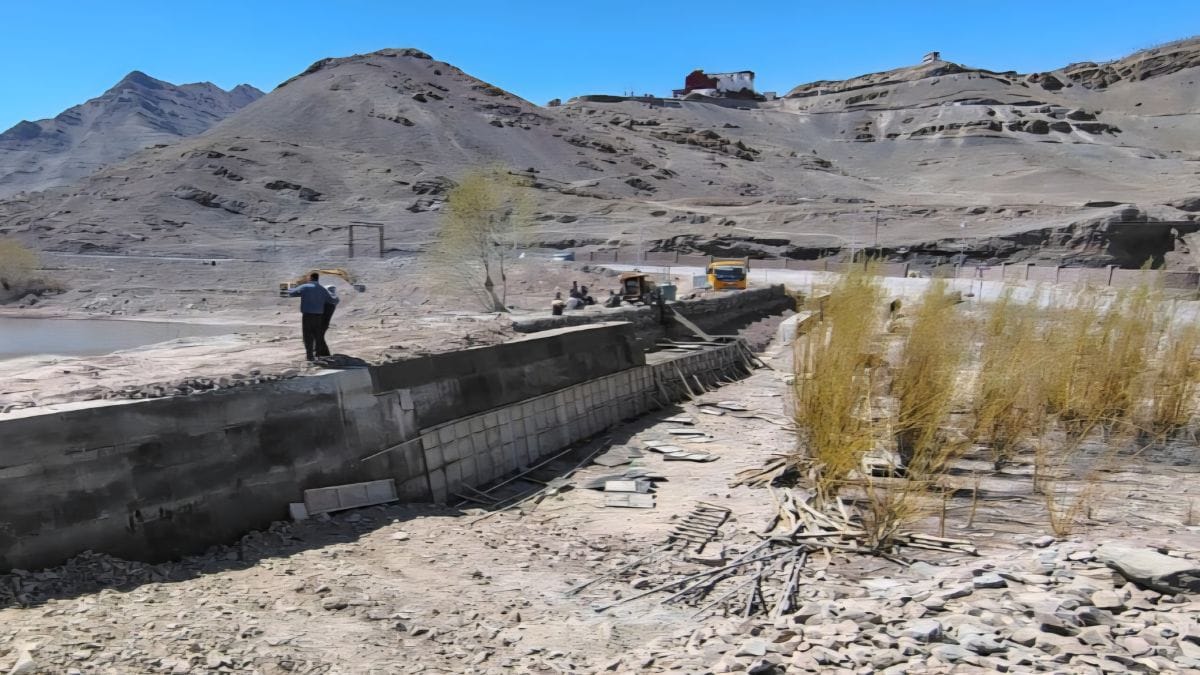
The plan is to build 100 water bodies within a year, with 50 already underway in the first phase - 30 in Leh and 20 in Kargil, according to officials familiar with the rollout.
Each reservoir measures roughly 40 x 30 metres and is about 2 metres deep, designed to store rainwater, snowmelt, and glacial melt that would otherwise go to waste.
These structures are scientifically designed, cost-effective, and draw on traditional water conservation methods, a combination seen as critical in Ladakh's fragile cold desert, where water availability is highly seasonal.
At Stok village near Leh, the first water body created, inaugurated, and operationalised under Project Him Sarovar is already in use.
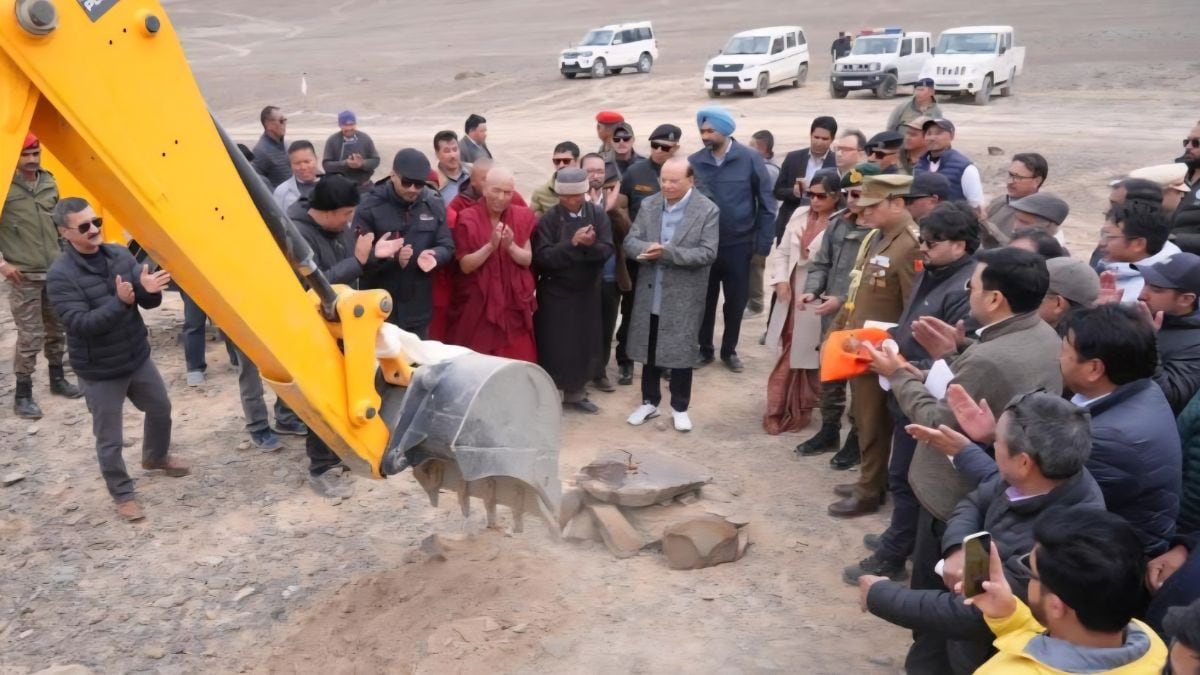
On April 17, glacier water was released into the reservoir. Built in just three weeks, since the first site visit on March 26, the structure spans 1,824 square metres and can store nearly 35 lakh litres of water, enough to irrigate around 150 hectares of land.
The reservoir was developed by restoring a heavily silted natural depression, which was cleaned, dredged, stone-pitched, and reinforced by multiple departments, with active support from local residents.
Work is underway across several locations in Leh. At Spituk Pharka, construction of four water bodies began on April 10, while at Matho village, cleaning, dredging, and construction of retaining walls are in progress, officials said, pointing to coordination between multiple departments.
Ladakh's water challenges are not new. The region receives minimal rainfall and depends heavily on glaciers and snowmelt. But in recent years, erratic snowfall and shrinking glaciers have begun to disrupt water availability.
In many areas, there is now a widening gap between when water is available and when it is needed, affecting sowing cycles and crop yields.
Efforts to store water, such as artificial glaciers and ice stupas, have existed for years in Ladakh, but have largely remained small, local solutions.
What sets Project Him Sarovar apart is the scale and speed: an attempt to build 100 reservoirs within a year, backed by multiple agencies as well as community participation.
Track Latest News Live on NDTV.com and get news updates from India and around the world

