





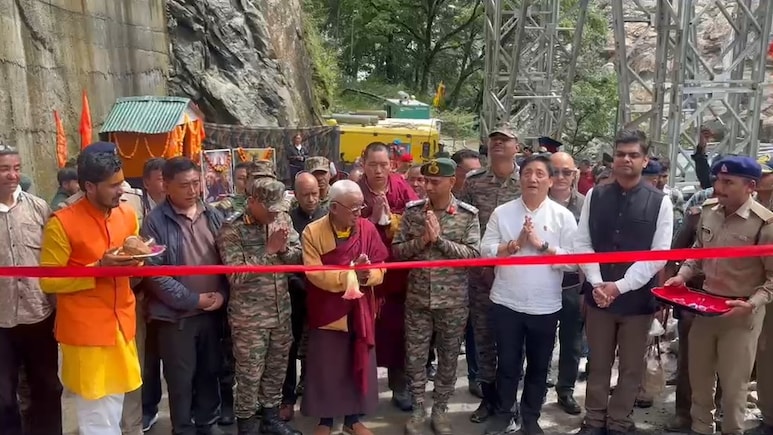
The vital road stretch near Taramchu Bridge in North Sikkim was reopened to the public on Saturday after four months of renewed disruption, restoring a crucial link to Lachen and bringing relief to residents, transporters and tourism stakeholders.
Social Welfare Minister and Lachen-Mangan MLA Samdup Lepcha inaugurated the reconstructed road stretch in the presence of Mangan District Collector Anant Jain, Project Swastik Chief Engineer Brigadier Amit Sakhre, GREF officials and local representatives. A brief religious ritual was also held at the site.
The road had earlier been restored on February 26, 2026, following extensive damage caused by the October 2023 Glacial Lake Outburst Flood (GLOF). However, the route was cut off again on April 5 after a major formation failure washed away nearly 30 metres of the road.
Restoration work began on April 18 and continued for four months amid monsoon rains, rockslides, difficult terrain and challenging geological conditions.
"The work was carried out under very difficult conditions, and it is commendable that it was completed without any loss of life. I thank the BRO, GREF personnel, Lachen Dzomsa and the local people for their cooperation," the minister said.
Lepcha said the government would continue to work towards maintaining connectivity to Lachen despite the recurring impact of natural calamities.
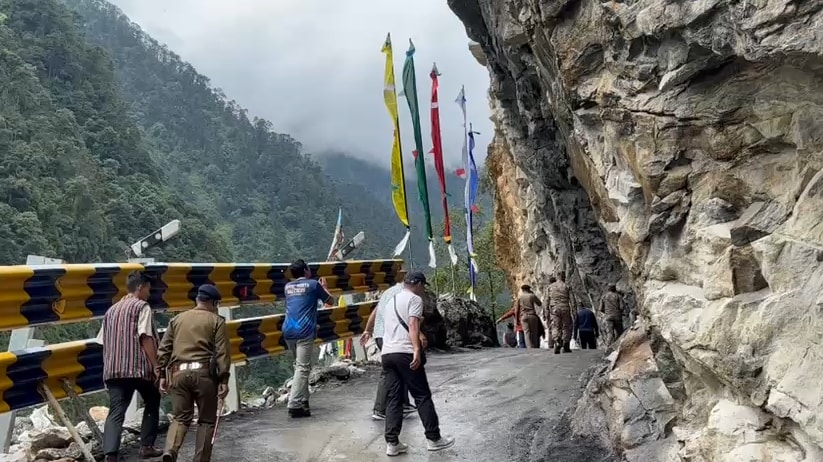
Restoration work began on April 18 and continued for four months
The technical challenges involved in restoring the road were significant, according to Project Swastik Chief Engineer Brigadier Amit Sakhre.
"On April 5, there was a major formation failure and nearly 30 metres of the road was washed away. We immediately started restoration work, and for four months the work continued despite the monsoon and other challenges," Sakhre said.
The geological conditions, Sakhre said, made the work particularly demanding.
"This is predominantly a hard-rock area. We had to undertake controlled blasting and use specialised techniques because the damaged portion was very close to critical structures, including the bridge abutment and an anchor block," Sakhre said.
Additional vulnerabilities were identified during the restoration itself.
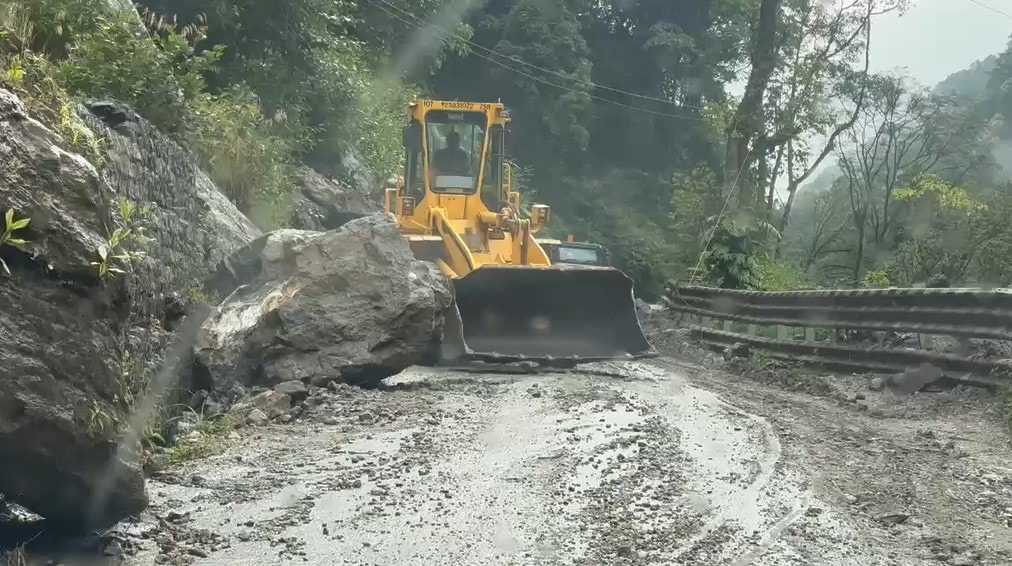
The work continued despite the monsoon and other challenges
"During the final stages, we detected major cracks behind the road and underneath the bridge abutment. Because of this, we had to undertake additional slope-stabilisation work," he added.
Sakhre said the restoration of the carriageway was only the immediate step and that a larger slope-protection programme was planned.
"From October, comprehensive slope stabilisation will be taken up along an approximately 80 to 100-metre vulnerable stretch. This will include anchor and rock bolting, high-tensile ropes, retaining walls and rockfall barriers. We will also strengthen the Taramchu Bridge abutment," he said.
Mangan District Collector Anant Jain said the damaged stretch required extensive rock cutting and careful assessment before restoration could proceed.
"The section involved extensive rock cutting and required detailed assessment. Since the damaged portion was close to existing structures, controlled blasting was necessary to ensure that the bridge and other critical structures were not affected," Mangan District Collector said.
He added that additional measures were taken after cracks were detected.
"After cracks were observed during the restoration work, additional rock bolting was carried out to strengthen the vulnerable portion," he said.
For the local community, the reopening is particularly significant after repeated disruptions since the 2023 disaster.
Lachen Pipon Chobundu Lachenpa said the prolonged road closures had taken a heavy toll on the local economy.
"The repeated closure of the road since the 2023 disaster has severely affected our economy. Transportation costs increased substantially because vehicles had to take the longer alternative route," Lachenpa said.
He welcomed the reopening but stressed that maintenance would remain crucial.
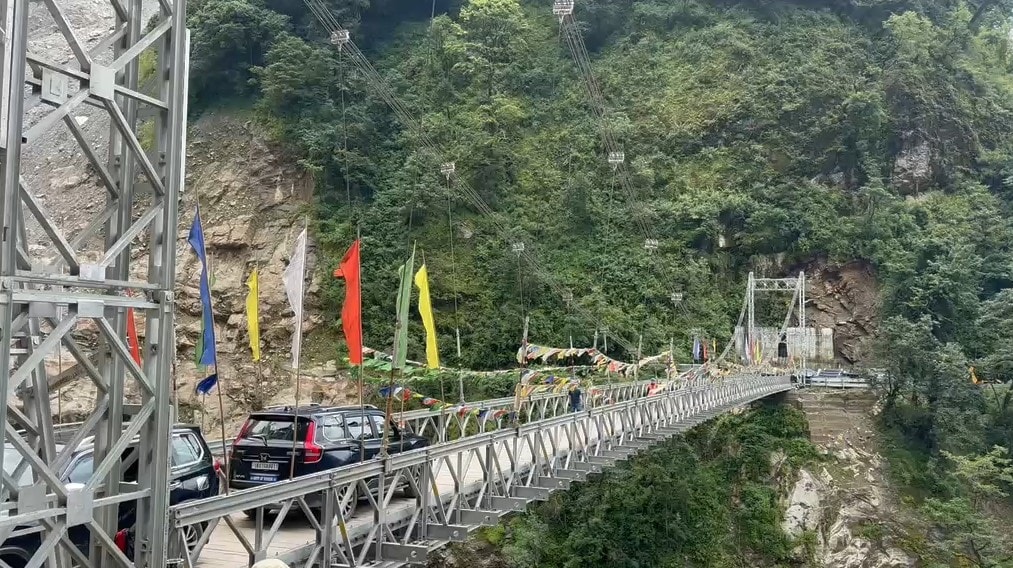
The reopening is particularly significant after repeated disruptions since the 2023 disaster
"The reopening is a great relief for the people of Lachen, but we need regular maintenance and proper preventive measures so that the road does not keep closing during every monsoon," he said.
Hotelier Dhathup Lachenpa also welcomed the reopening, saying it had restored a sense of hope among residents and businesses.
"For the people of Lachen, this reopening brings hope after months of uncertainty. Our businesses and livelihoods depend heavily on connectivity," the hotelier said.
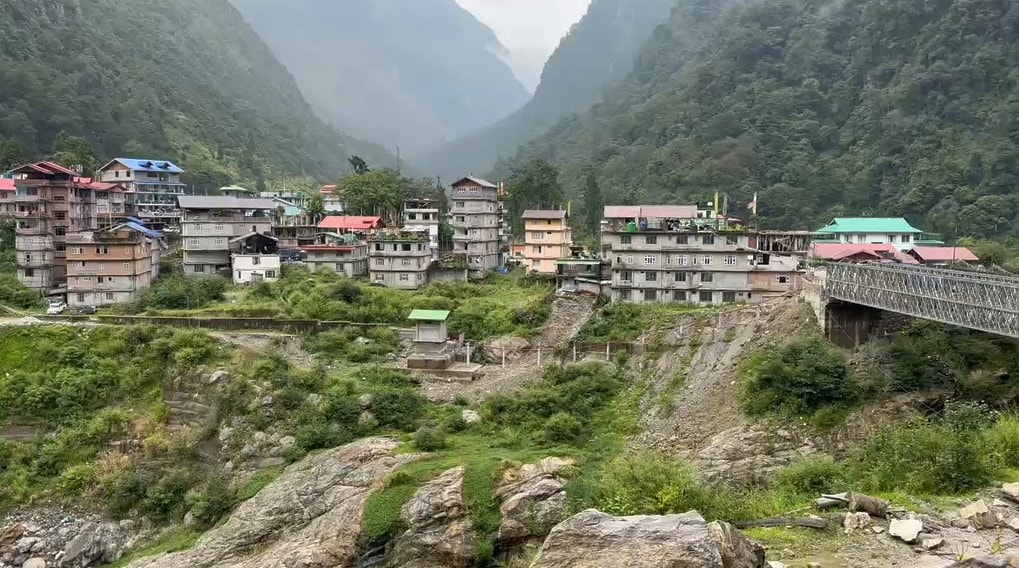
The Taramchu stretch is a lifeline for Lachen, where difficult terrain and recurring natural calamities often disrupt connectivity with the rest of the district
Referring to recent disasters in the Himalayan region, he added, "The recent disaster in Nepal is another reminder that communities across the Himalayas are increasingly vulnerable to natural calamities. We need to be prepared and make our infrastructure more resilient."
The reopening restores direct road connectivity to Lachen, a key gateway to Gurudongmar Lake and one of Sikkim's major high-altitude tourism destinations. The prolonged disruption had affected tourism, transportation and local businesses.
With comprehensive slope stabilisation and protective works scheduled to begin in October, officials now face the larger task of ensuring that the newly restored stretch remains safe and functional through future monsoons.
(With input from Pankaj Dhungel)
Track Latest News Live on NDTV.com and get news updates from India and around the world

