





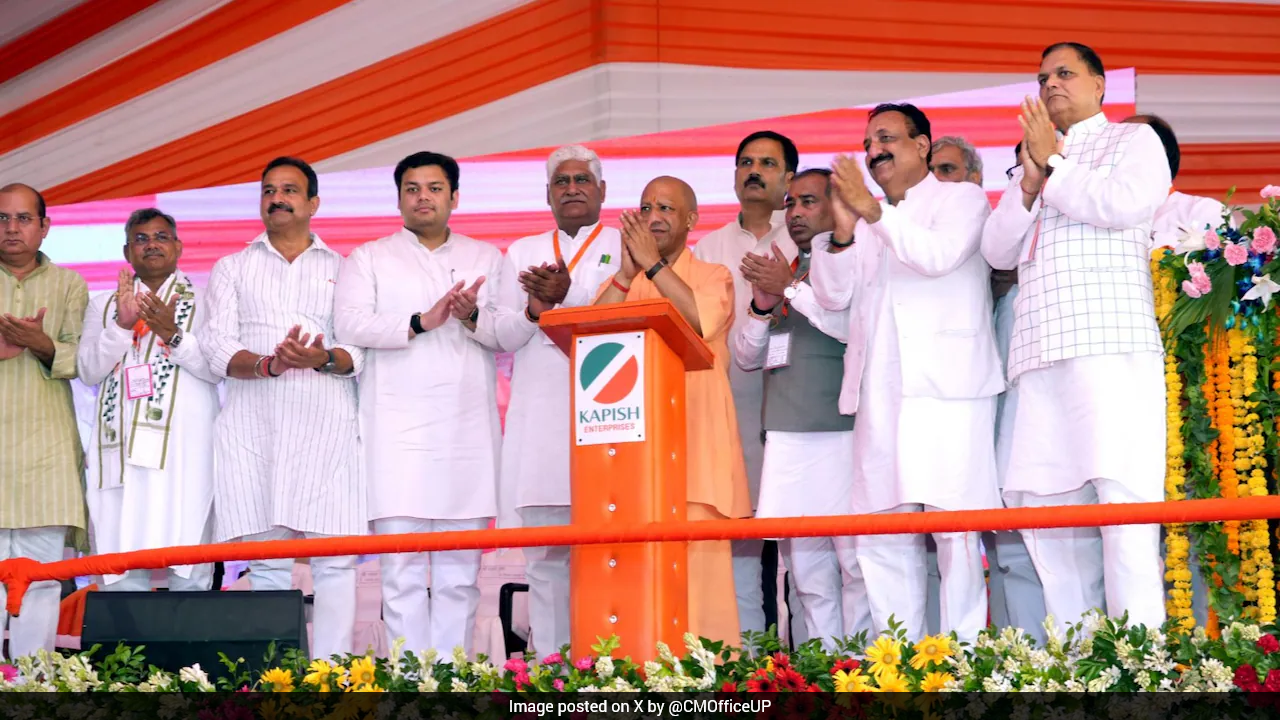
The Uniform Civil Code, or UCC, a key promise of the BJP, has become a lightning rod for political brouhaha.
Home Minister Amit Shah, concluding the discussion in the Rajya Sabha on the 75 years of adoption of the Constitution in 2024, promised that the BJP will bring a Uniform Civil Code in every state under its rule as the party did in Uttarakhand.
Over the past 12 years, the party has taken significant strides to usher in the controversial law - which aims to establish a single, secular set of personal laws - governing marriage, divorce, and inheritance - for all Indian citizens regardless of religion.
The BJP insists that the code promotes gender justice and national integration, critics fear it threatens the distinct customs of minorities.
Article 44 in the Directive Principles of State Policy, found in Part IV of the Constitution, states that "the State shall endeavour to secure for the citizens a uniform civil code throughout the territory of India".
The Constitution explicitly states that the state can only "endeavour" to achieve a common code among its citizens, rather than enforce it.
How It Began
It began in 2024 with Uttarakhand, a BJP-ruled state, which became the first state in independent India to implement the Uniform Civil Code.
As recently as this week, Suvendu Adhikari-led Bengal Cabinet approved the formation of a committee headed by retired Supreme Court judge Ranjana Prakash Desai to examine the draft Uniform Civil Code, taking the BJP government's flagship social reform agenda a step closer to becoming law in the state.
So far, measures have been initiated in eight states: Uttarakhand, Gujarat, Bengal, Maharashtra, Madhya Pradesh, Rajasthan, Chhattisgarh, and Assam.
The question remains: why has no step been taken yet in Uttar Pradesh - the country's largest state - where the BJP has been in power for the last nine and a half years?
According to BJP leaders, the party decided to implement it first in a smaller state like Uttarakhand to study its impact, the public reaction, and the legal aspects.
The central leadership anticipated that the Uttarakhand law might be challenged in court. They believed it prudent to observe the judicial stance before proceeding in other states. Indeed, the Uttarakhand law has already been challenged in the High Court. The central government holds the view that it is best to move forward only after judicial scrutiny.
Wait and watch and an incremental approach was BJP's strategy going forward.
The UP Question
The BJP did not explicitly promise the UCC in the manifesto released for the 2022 Assembly elections. Nor has the Yogi Adityanath-led government moved forward on the UCC by constituting a committee, as other BJP-ruled states have done. The Chief Minister, in his second consecutive term, has not made any direct statement regarding its implementation, although several of his remarks concerning the UCC have garnered significant attention.
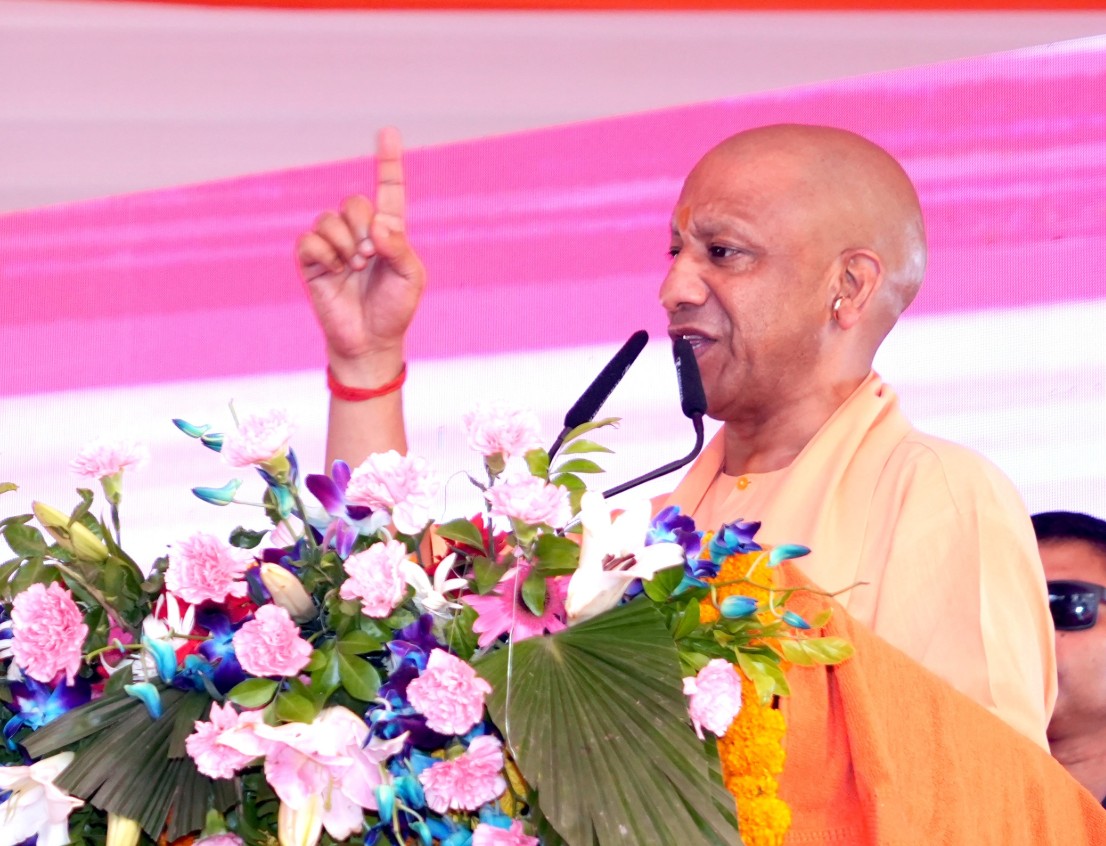
One such statement, made in January last year, was widely discussed. He remarked that the UCC was already in effect in UP - a comment believed to refer to provisions regarding marriage registration and other related matters.
Just one month after assuming office as Chief Minister, during an event in Lucknow in April 2017, Yogi Adityanath advocated for the UCC while speaking on the issue of 'Triple Talaq'.
Comparing Triple Talaq to "cheer-haran (the disrobing of Draupadi in the Mahabharata)", he noted that some people remained silent on this burning national issue. He emphasised that "a Uniform Civil Code is essential for the country's development and for ensuring equal rights for women. When the nation is one, the law should also be one."
In July 2023, Yogi Adityanath linked the UCC to social justice. Taking a dig at the opposition parties' slogan regarding social justice, he remarked, "True social justice must begin within the family, regardless of religion. You cannot speak of social justice while depriving half the population (women) of their rights." He also expressed confidence that "sooner or later, the Uniform Civil Code will certainly be implemented in the country".
When the Law Commission sought suggestions on the UCC from the public and religious organisations nationwide, the Uttar Pradesh State Law Commission also expressed its in-principle agreement with the proposal.
What Explains The Delay?
According to BJP leaders, there are several reasons for this.
They deny that internal differences are the cause. The reasons, they say, are practical, social, and political.
First, as the UCC was not promised in the 2022 election manifesto, the BJP faces no electoral obligation to fulfill it. At the time, the party had highlighted issues such as 'Love Jihad' (a term used by radical Hindu groups to accuse Muslim men of converting Hindu women by marriage) and women's empowerment but had not explicitly mentioned the Uniform Civil Code.
According to party leaders, the implementation of the Uniform Civil Code was initiated in a smaller state like Uttarakhand as part of a deliberate strategy to gauge its impact and the public reaction.
Had it been implemented in a vast state like Uttar Pradesh, predicting the consequences would have been difficult. Uttar Pradesh has a population of approximately 250 million, with Muslims constituting about 20 percent of the total. Additionally, the state is home to Dalits, backward classes, and various communities that follow distinct tribal or regional customs. Implementing such a major measure without adequate preparation could potentially lead to law-and-order issues.
According to sources, the party has not yet decided whether to make this an issue in the upcoming assembly elections next year. They stated that it is premature to discuss including the Uniform Civil Code in the manifesto, and a decision regarding this will be taken at the appropriate time. They dismissed as baseless the speculation that the BJP is reluctant to introduce the Uniform Civil Code because it is trying to win over the Pasmanda Muslim community. They noted that polarization in the state is stark, making it highly unlikely that any section of the Muslim community would support the BJP.
National-Level Legislation?
A question also arises regarding the BJP's efforts to secure a two-thirds majority in both houses of Parliament: is the underlying intention to pass a Uniform Civil Code bill?
Prime Minister Narendra Modi has frequently advocated for a "secular civil code" - essentially a nationwide Uniform Civil Code. Rather than enacting a separate law for a large state like Uttar Pradesh, the UP government is waiting to see if the central government introduces a common civil code for the entire country through parliament.
If the Centre does so, UP would not need to enact separate legislation.
Currently, the UP government's primary focus is on further strengthening law and order and implementing the three new criminal laws introduced by the central government at the grassroots level.
It appears, therefore, that the Yogi government is prioritising one major legal reform at a time.
Track Latest News Live on NDTV.com and get news updates from India and around the world

