- Union Education Minister Pralhad Joshi ordered enhanced security for national exams by NTA
- NTA revamped its team, removing 600 experts and adding new personnel to improve credibility
- A four-tier question paper checking system will be implemented to reduce errors and leaks
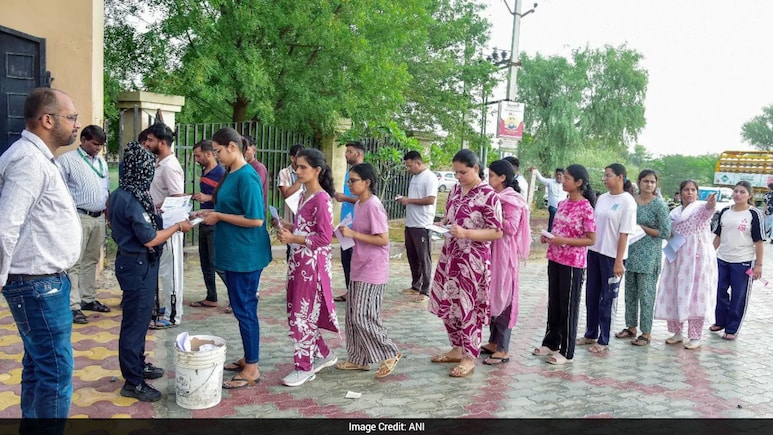
In a follow-up review meeting focused on the National Testing Agency (NTA), Union Education Minister Pralhad Joshi has directed that all necessary security measures and related infrastructural facilities be put in place to ensure the smooth and credible conduct of national-level examinations. The Director General of NTA briefed the Minister on a series of concrete actions already underway, signalling an intensified push to restore public confidence in India's high-stakes testing system.
According to the update provided by the DG, NTA, a major revamp of the examination team has been completed, with 600 experts removed and new experts onboarded. A four-tier question paper checking system is being introduced to significantly strengthen the scrutiny of examination papers and minimise errors or vulnerabilities. In addition, 20-25 officials are scheduled to be inducted within the next two to three weeks, with a broader induction plan also reviewed during the meeting. NTA offices will be shifted to new premises on a war footing, where security will be reinforced through the deployment of Central Industrial Security Force (CISF) teams.
These steps form part of a wider overhaul of the agency, which has faced sustained scrutiny in recent months. The NTA, established in 2017 as an autonomous body under the Ministry of Education, was created to conduct efficient, transparent and technology-driven entrance and eligibility examinations such as NEET-UG, JEE Main, UGC-NET and CUET. Its mandate was to professionalise testing processes that were earlier handled by multiple boards and reduce the scope for malpractices.
However, the agency's record has been marked by repeated controversies. The NEET-UG 2024 paper leak and subsequent irregularities drew widespread criticism. The NEET-UG examination held in May was cancelled after evidence of a paper leak involving subject experts, prompting a Central Bureau of Investigation probe, student protests and the eventual resignation of the then Education Minister.
More recently, the NTA announced the re-conduct of UGC-NET papers for Sociology, Commerce and English following multiple errors in the original question papers. These incidents have underscored gaps in confidential operations, paper-setting protocols and internal oversight.
Against this backdrop, Prahlad Joshi, who assumed charge of the Education portfolio in late July, has prioritised structural reforms. An earlier high-level meeting on August 17 had already directed a comprehensive audit of all examination processes, strict adherence to established protocols, and a complete overhaul of the Confidential Operations (CONOPS) architecture.
That included secluded rooms, air-gapped systems and device-deposit protocols. Officials had also reported the removal of more than 50 staff members and the advertisement of ten new professional leadership positions, including Chief Technology Officer, Chief Finance Officer, Chief Information Security Officer, and General Managers for Test Security and R&D & Psychometrics. Domain specialists from the private sector are being brought in for cybersecurity, psychometrics and question-paper design.
The latest directives build on these measures by focusing on both human resources and physical security infrastructure. The large-scale replacement of experts aims to address past vulnerabilities identified in investigations, where insiders with access to question papers were implicated. The four-tier checking mechanism is expected to introduce additional layers of independent verification before papers are finalised. The induction of new officials and the relocation of offices under enhanced CISF protection are intended to create a more secure operational environment.
By combining personnel changes, multi-layered quality control and fortified physical security, the NTA and the Ministry of Education are seeking to rebuild trust among the millions of aspirants who depend on these examinations for their academic and professional futures.
