




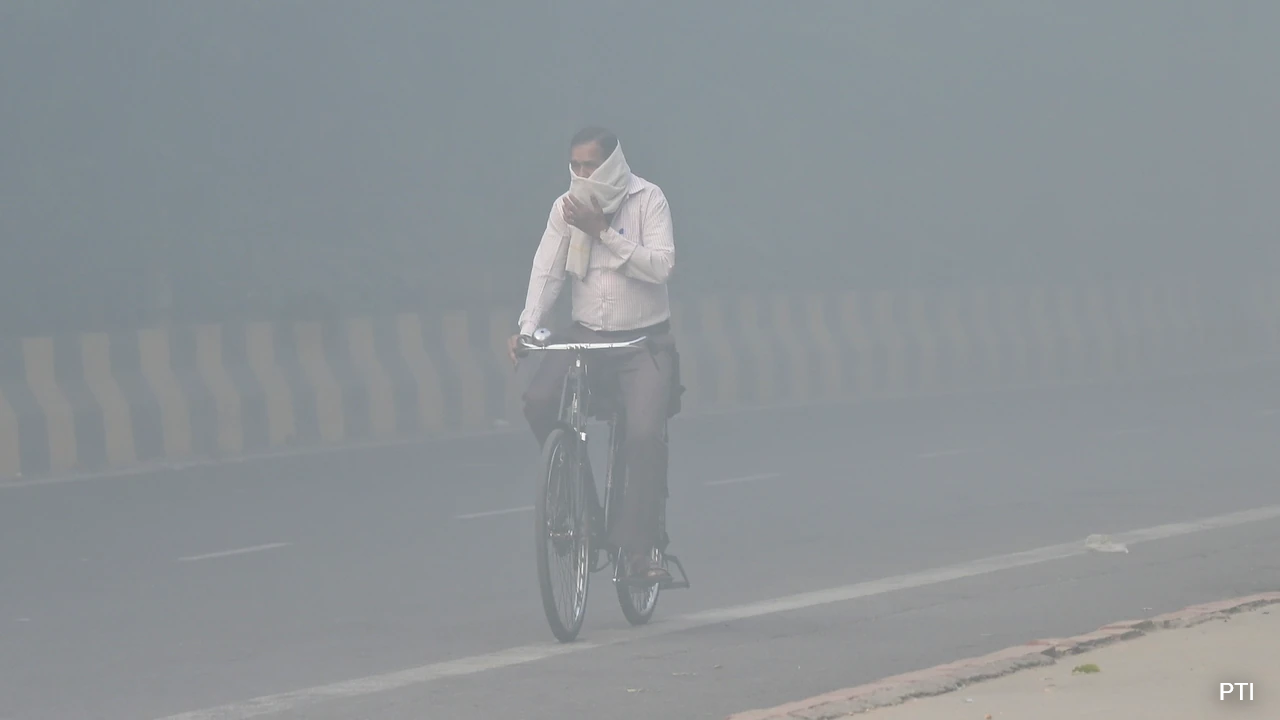
India's oldest and largest industry body, the Federation of Indian Chambers of Commerce and Industry (FICCI), has issued one of its strongest warnings yet on the country's worsening air pollution crisis, painting a grim picture of a public health emergency that is costing millions of lives, shortening lifespans and imposing a massive burden on the economy. In its report, 'Clean Air, Healthy India', FICCI argues that the country can no longer treat air pollution as merely an environmental issue and must instead place it at the heart of India's healthcare agenda.
Experts say India is grappling air pollution-related emergency, and the government seems to be in policy paralysis. The Air Quality Index is breaking records, and out of the 100 most polluted cities of the world, 99 are from India. Nearly a billion Indians are breathing toxic air.
The report's findings are stark. More than two million deaths in India in 2023 were attributable to air pollution. Exposure to polluted air is estimated to cut the average Indian's life expectancy by about 3.5 years. More than 660 million Indians live in areas where fine particulate pollution exceeds national safety standards. It is alarming that an industry body is throwing up these numbers while many of New Delhi's air pollution monitors went silent on Diwali night.
Rarely does FICCI, which represents more than 2.5 lakh companies across India, issue such alarming assessments. The report amounts to an unmistakable warning that the country's struggle with dirty air has reached a level that demands urgent action from governments at every level.
The industry body argues that existing responses remain fragmented and largely reactive. While measures such as the National Clean Air Programme, Graded Response Action Plan (GRAP), Bharat Stage emission norms and clean cooking initiatives have yielded some benefits, FICCI says these alone are insufficient to deal with a challenge that crosses city and state boundaries. The report calls for a comprehensive "air shed" approach, recognising that pollution moves across regions and cannot be tackled city by city.
According to the study, Delhi itself contributes only a fraction of the particulate pollution that residents breathe. Local sources account for approximately 36 per cent of Delhi's PM2.5 pollution during winter and about 26 per cent during summer. The rest comes from sources outside city limits, underscoring the futility of limiting solutions to municipal boundaries.
The report describes air pollution as a whole-body health risk rather than merely a respiratory problem. Fine particulate matter known as PM2.5 can penetrate deep into the lungs, enter the bloodstream and affect nearly every organ system. Long-term exposure is linked not only to asthma and chronic lung disease but also to heart attacks, stroke, heart failure, neurological disorders, cognitive decline, dementia risk, adverse pregnancy outcomes and even accelerated biological ageing.
The findings are especially worrying because the burden falls disproportionately on vulnerable groups including children, the elderly, outdoor workers, low-income communities and people already suffering from respiratory or cardiovascular illnesses.
The report's economic assessment is equally troubling. Air pollution is not merely a health burden but a drag on economic productivity. The study points to lost work days, reduced productivity, healthcare costs, and premature mortality. It notes that approximately 1.3 billion working days are lost annually and productivity can decline by 8 per cent to 10 per cent during heavily polluted periods. The 76-page report prepared in partnership with EY highlights that air pollution-related losses could be as high as $95 billion a year or a loss of about 3 per cent of GDP annually.
Speaking about the report, Dr. Ashutosh Raghuvanshi, Chair of the FICCI Health Services Committee and Managing Director and CEO of Fortis Healthcare, said clean air must become central to India's healthcare agenda rather than being viewed solely through an environmental lens. He stressed that healthcare institutions have a significant role in creating awareness, tracking pollution-related illnesses, and improving preparedness. He called for stronger collaboration among government, industry and healthcare providers so that clean air commitments translate into measurable public health improvements.
Dr. Arun Agarwal, Chair of FICCI's Working Group on Air Pollution and former Dean of Maulana Azad Medical College as well as former Additional Director General of Health Services, argued that India must move beyond seasonal responses that focus only on winter smog episodes. He said reducing exposure to pollution must become a year-round public health priority supported by stronger monitoring, health surveillance and targeted interventions tailored to local pollution sources.
One of the report's most important recommendations is a shift in how success is measured. FICCI says the National Clean Air Programme currently relies heavily on PM10 levels, whereas PM2.5 is the more dangerous pollutant from a health perspective. The report recommends explicit PM2.5 reduction targets, expanded monitoring, and public health indicators linked directly to pollution reduction efforts.
The report also lays out ten practical solutions to tackle emissions. These include controlling dust at construction sites, deploying hyperlocal monitoring networks, using smart traffic systems to reduce congestion, cleaner technologies for industries, converting traditional brick kilns to cleaner models, replacing diesel generators with battery-based systems, turning crop residue into useful products rather than burning it, and promoting circular use of waste in construction.
But the central message running through the report is clear. India already has many of the policies needed to combat air pollution. The challenge is implementation, enforcement, and coordination. FICCI argues that clean air should no longer be treated as a seasonal issue that triggers emergency responses only when pollution levels become unbearable. Instead, it should become a measurable public health objective backed by science, governance and accountability.
Coming from an industry organisation that has traditionally focused on economic growth and business interests, the report carries added significance. Its warning is that the costs of inaction are becoming too high, measured in lost lives, shorter lifespans, poorer health and reduced productivity. The message to policymakers is stark: India cannot afford to treat air pollution as business as usual any longer. The country faces an air quality crisis that has evolved into a public health emergency, and the time for piecemeal solutions has passed.
Track Latest News Live on NDTV.com and get news updates from India and around the world

