





India and the European Union have agreed to grant each other "Most Favoured Nation" (MFN) status for five years from the date the free trade agreement (FTA) between the two sides comes into force, according to the draft text of the pact released on Friday (February 27).
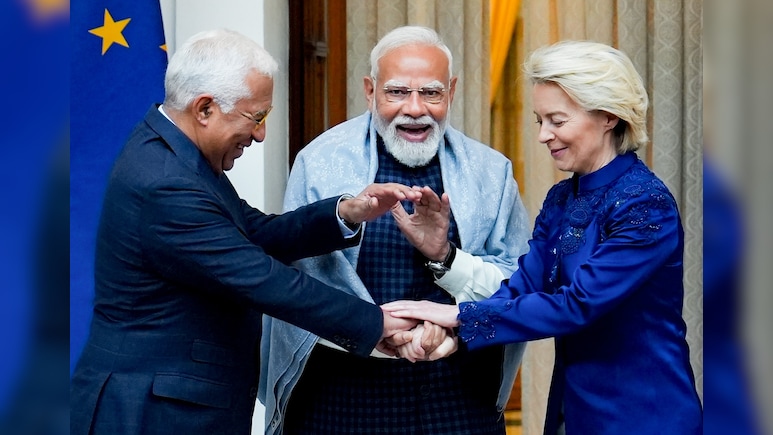
Talks between New Delhi and Brussels began in 2007 but were suspended in 2013 over differences on market access and regulatory standards. However, the trade negotiations resumed in June 2022. The trade deal was announced after high-level discussions in New Delhi between Prime Minister Narendra Modi and European leaders, including Ursula von der Leyen and Antonio Costa.
Some weeks ago, the 🇪🇺 & 🇮🇳 concluded a historic Free Trade Agreement.
— EU Trade 🇪🇺 (@Trade_EU) February 27, 2026
Today, we're publishing the provisional text of the deal, offering a first detailed look at its scope and ambition.
Tariff schedules will follow at a later stage.
More info: https://t.co/P7iJ103a1v#EUTrade pic.twitter.com/VxoapS3Vf4
What 'Most Favoured Nation' Status Means?
In practice, this means neither India nor the EU can extend more favourable tariff concessions to other World Trade Organization (WTO) members without offering the same to each other during the five-year window.
The MFN commitment is embedded within the broader India-EU trade agreement, negotiations for which concluded on January 27 after nearly two decades of intermittent talks.
It is important to mention that the provisions of the trade deal will become legally binding once the agreement is ratified by both sides.
Key Highlights Of India-EU Trade Deal
The proposed FTA is expected to allow 93 per cent of Indian exports to enter the 27-member European bloc duty-free. On the other hand, tariffs on products such as luxury cars and wines from Europe are set to decline, making them more competitive in the Indian market. Sensitive agricultural segments, including dairy, rice, sugar and beef, have been kept outside the scope of tariff liberalisation.
The draft also outlines steps to align food safety with international benchmarks, alongside simplified certification and audit procedures. Customs cooperation is another key pillar of the agreement. The text proposes quicker clearance of goods, streamlined documentation processes and fair appeal mechanisms for decisions concerning imports, exports and goods in transit. Annual import data will be shared beginning one year after the agreement takes effect to monitor utilisation of tariff concessions and ensure transparency in implementation.
In the digital domain, India and the EU have pledged to reduce unjustified barriers to online trade while supporting an open and secure digital ecosystem. The commitments are intended to facilitate cross-border e-commerce and data-enabled trade without undermining regulatory autonomy.
India-EU FTA: Mediation Mechanism for Disputes
The draft of the FTA also includes an annexure outlining a structured mediation process to resolve trade disputes. Either side may request mediation concerning measures it believes adversely affect bilateral trade. The request must clearly identify the contested measure and explain its potential trade impact. However, mediation proceedings can begin only with the mutual consent of both parties.
The inclusion of a model mediation framework signals an attempt to provide a faster and less adversarial alternative to formal dispute settlement channels.
Track Latest News Live on NDTV.com and get news updates from India and around the world

