Decoding India's EU, US Trade Deals And A Likely $150 Billion Boost
India announced two mega trade deals - one with the European Union and another with the United States - in the space of a week.
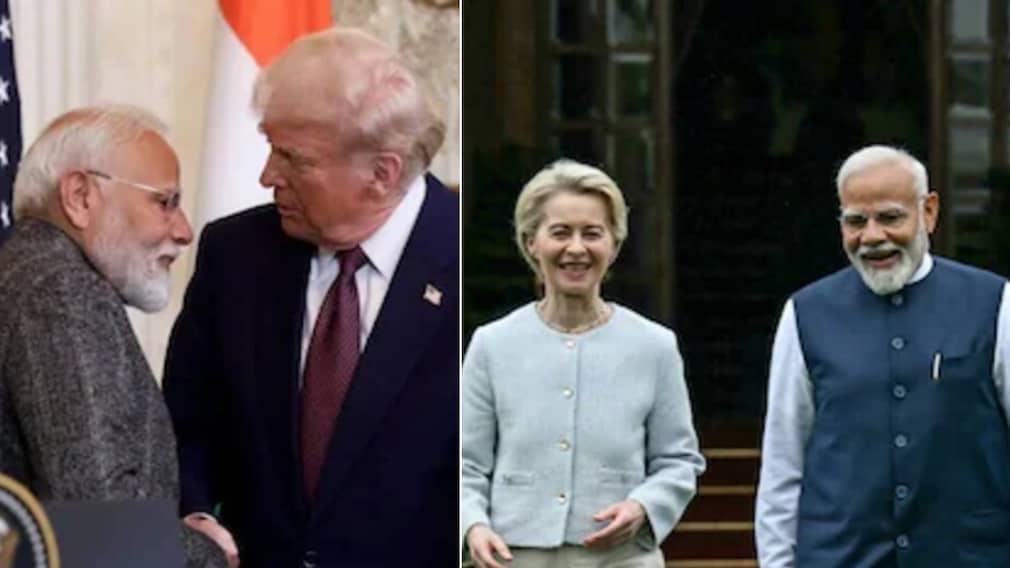
Back-to-back trade agreements with the European Union and the United States - one hailed as the "mother of all trade deals" and the other to slash tariffs on Indian goods to 18 per cent - are widely expected to boost the economy, adding a potential US$150 billion in exports over a decade.
The agreements will drop tariffs and ease market barriers, while also turbocharging India's manufacturing sector, including the labour-intensive textile space that will likely benefit from lower tariffs than that on rivals like Bangladesh and Vietnam, though implementation timelines could limit gains.
Pending ratification by the European Parliament and signing of accords by the Indian and American sides, the agreements are also expected to reduce some trade frictions, while also underlines continued, albeit uneven, economic cooperation. Simultaneously they negate the risk of India being sidelined in global trade blocs, particularly in the face of geopolitcal challenges and US-China tension.
The India-US trade deal
The headline figure here is 18 per cent, i.e., the reduced tariff on Indian imports.
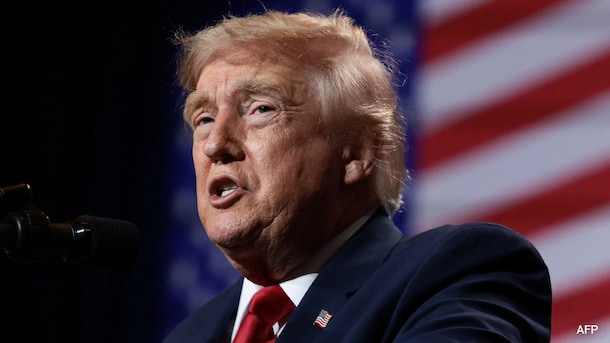
Indian goods paid the highest duties in the world after Trump imposed a 50 per cent tax that included a 25 per cent 'penalty' over the purchase of Russian oil. That 'penalty' is to be scrapped.
The tariffs affected multiple sectors, including steel, textiles, and pharmaceuticals.
Steel shipments to the US, for example, plummeted 40 per cent after the tariffs.
The sector could recover at least US$2 billion in reduced expenses and restored export margins, which should mean higher revenues and more profits, although this is not assured.
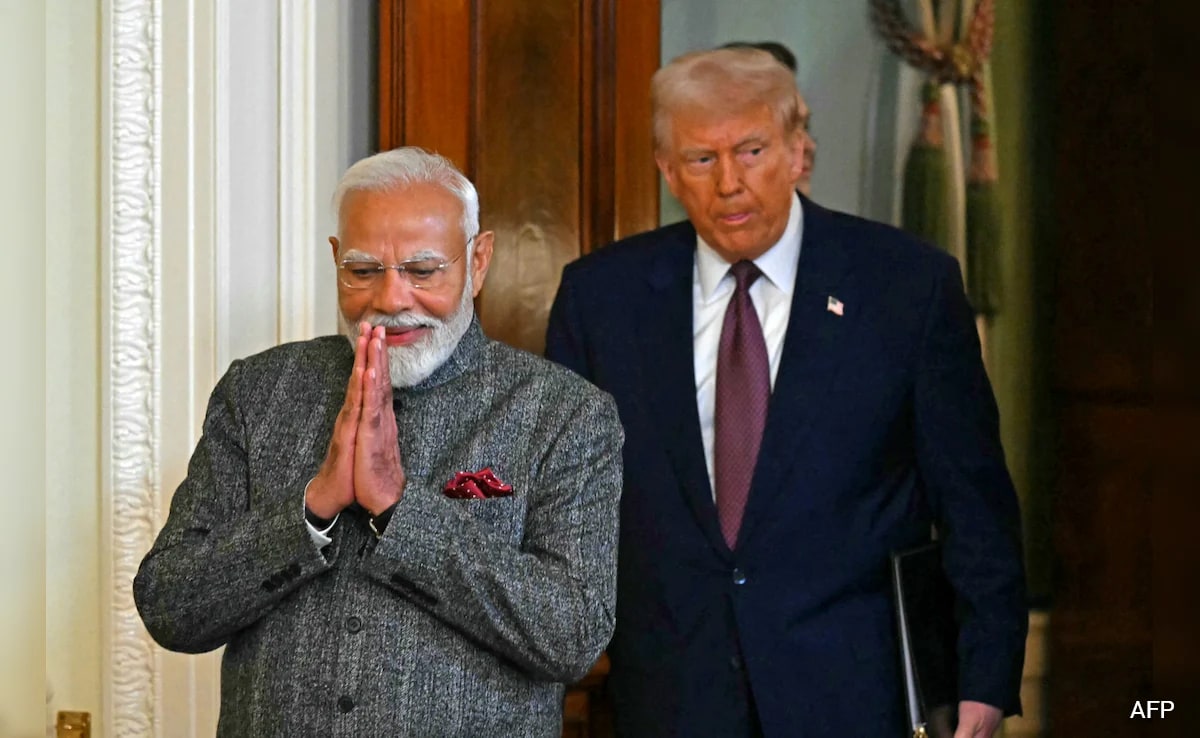
Prime Minister Modi and President Trump spoke on the phone late Monday (File).
The pharma industry is another potential big gainer.
India is the world's largest exporter of cheap generic drugs that are critical in markets like the US, where branded medications are often prohibitively expensive for lower classes. Generic drug makers faced tariffs up to 26 per cent. Once these are dropped export potential could rise by US$10 billion.
The seafood industry is another that can expect gains as exports to the US - down 20 per cent, by some estimates, on the back of effective tariffs of nearly 60 per cent , which included dumping duties - rebound. This is a big one for India, valued at over US$850 million even after the downturn.
NDTV Explains | How US Deal Gives India Advantage Over China, Pakistan
There is significant room for growth; as US seafood exports waned, those to China, the EU, and other markets increased by an estimated 16 per cent to US$4.87 billion in April-October 2025.
Overall, the lifting of restrictions is expected to not only return trade to pre-tariff levels but also boost that value, up from US$188 billion in FY23 to over US$300 billion-mark in the near term.
There is still much that is unclear - and that lack of clarity has left the opposition fuming - about this deal, including the start date for the new rates and the deadline to stop buying Russian oil.
Prime Minister Narendra Modi has, though, 'thanked' his 'dear friend President Trump'.
The deal, Trump also claimed, includes a 'commitment' by India to buy over US$500 billion in American energy, tech, coal, and agricultural products, though, again, there is no clarity.
And the India-EU deal
On January 27, 24 hours after India celebrated its 77th Republic Day, European leaders sat down with the Prime Minister in Delhi to sign off on a long-stalled free trade agreement.
Today is a day that will be remembered forever, marked indelibly in our shared history.
— Narendra Modi (@narendramodi) January 27, 2026
European Council President António Costa and European Commission President Ursula von der Leyen and I are delighted to announce the conclusion of the historic India-EU Free Trade Agreement.… pic.twitter.com/yaSlPm2b2L
Two decades in the making, the India-EU trade deal is expected to boost bilateral trade by 41 to 65 per cent, a study by the Germany-based Kiel Institute for World Economy said last week, though this is assuming hassle-free enforcement of the FTA at a time of rising global trade fragmentation.
NDTV Explains | Tariffs To Market Access: How India-EU Deal Will Help Exports
And the headline figure here is zero, as in Brussels will levy zero tax on 99.5 per cent of Indian exports - including leather goods and jewellery over seven years, with some estimating it could unlock US$75 billion in exports and doubling bilateral trade to US$272 billion by 2032.
NDTV Explains | In India-EU Trade Pact, $572 Billion Boost To Pharma, MedTech
Other highlights for India include cheaper access to European car manufacturers.
Delhi agreed to slash tariffs from 110 per cent to just 10 per cent, albeit over a five-year period to protect domestic manufacturers. India also slashed tariffs on alcoholic beverages like wines from 150 per cent to 75 per cent, with immediate effect, and an assurance to lower it eventually to 20 per cent.
Tariffs on spirits will be lowered to 40 per cent, the EU said, which separately, aslo agreed financial support of US$590 million over the next two years to help India in cutting greenhouse gas emissions.
India-EU trade stood at US$136.5 billion in the fiscal year through March 2025, compared to US$132 billion of trade between India and the US, and $128 billion between India and China.
-
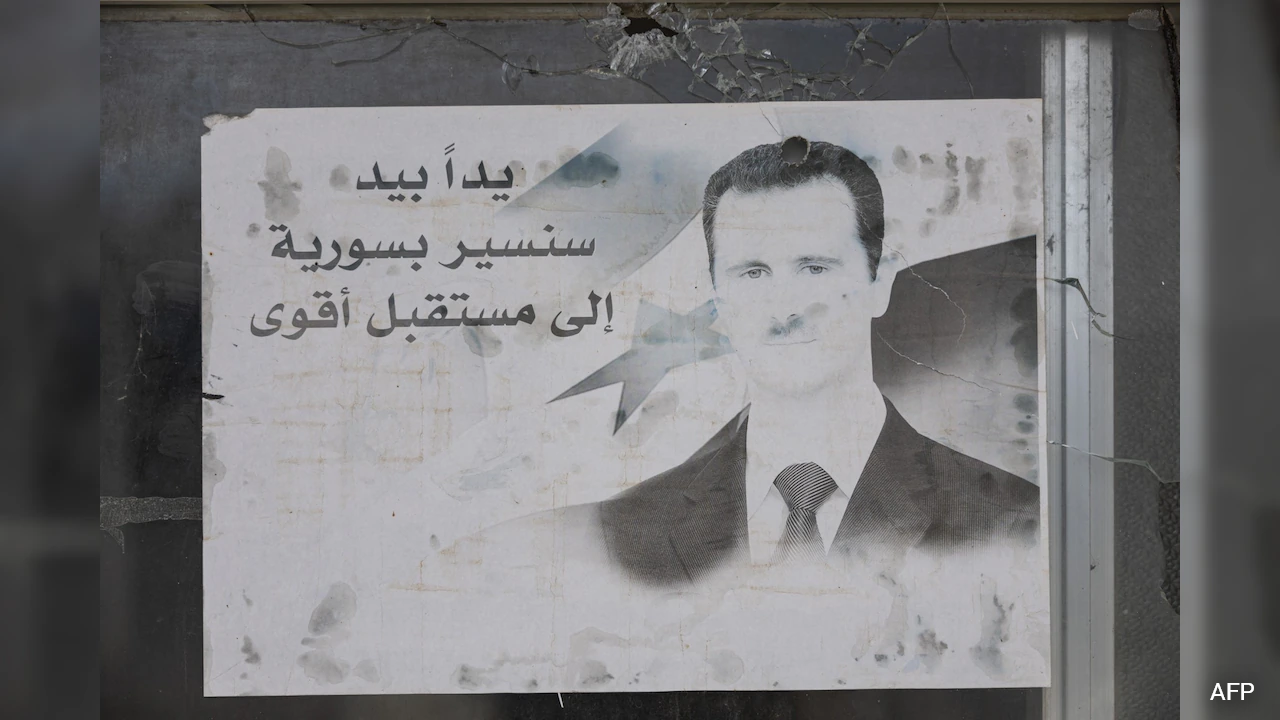
Al-Assad Faces Gallows In Damascus. In Russia, He Remains A Protected Guest

A court in Damascus sentenced Syria's ousted president Bashar al-Assad and his brother, Maher al-Assad, in absentia for murder, torture and crimes against humanity committed before and during Syria's 14-year civil war that left about half a million people dead.
-
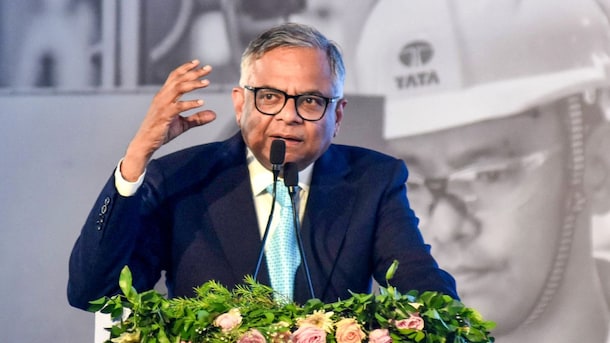
One Company, 40-Year Career: The N Chandrasekaran Story
N Chandrasekaran, a former chief executive of Tata Consulting Services (TCS), took over as chairman of Tata Sons in 2017 following a bitter boardroom battle that led to the ouster of Cyrus Mistry.
-
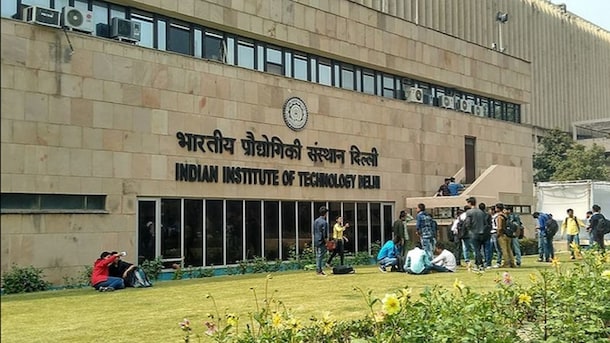
Opinion | The Great IIT Dream Is Cracking: Why Even Top Degree-Holders Are Unable To Find Jobs
Across several top IITs, roughly 30-40% of registered students had not found jobs by the final weeks of the 2024-25 cycle.
-
Opinion | Pakistan Might Just Have Signed Itself Into A Difficult Trap With Its 'Saudi' Deal
The Saudi-Pak-Turkey agreement gives Saudi Arabia a shield. But for Pakistan, it could quickly become a strategic nightmare
-
Opinion | Google Is Turning The Internet Into Its Own Prison, And Nobody Can Do Anything About It
The company that once sent us across the web now wants to keep us trapped inside its own walls.
-
Opinion | Three Adversaries Become 4: Why The Saudi-Turkey-Pak Deal Is A Headache For India
With Turkey already in Islamabad's corner and Saudi Arabia now signing up to a mutual-defence pact, Pakistan's bilateral rivalry with India may now become a much wider strategic equation.
-
Opinion | Pakistan's Kashmir 'Story' Is Now Collapsing Under The Weight Of Its Own Contradictions
Pakistan spent decades internationalising the Kashmir issue. With the PoK uprising, that has come back not only to bite it, but to expose its false narratives
-
Opinion | 86 Votes, 1 Warning: Is India Turning Into Collateral Damage In US' War On Russia?
Washington wants to sever Russian energy income, but India could end up paying the price for it
-
Opinion | Saudi Arabia Has Money, Missiles, And America. Why Is It Still So Scared?
What the NATO-like pact essentially points to, under its modest packaging of 'Islamic brotherhood', are growing fears of the Saudi Kingdom.
-
Learning Is Free Online, So Why Are Parents Paying Lakhs For Education?
Homeschooling is likely to grow in urban India, particularly among families frustrated with rote learning, school pressure and the race for marks.