





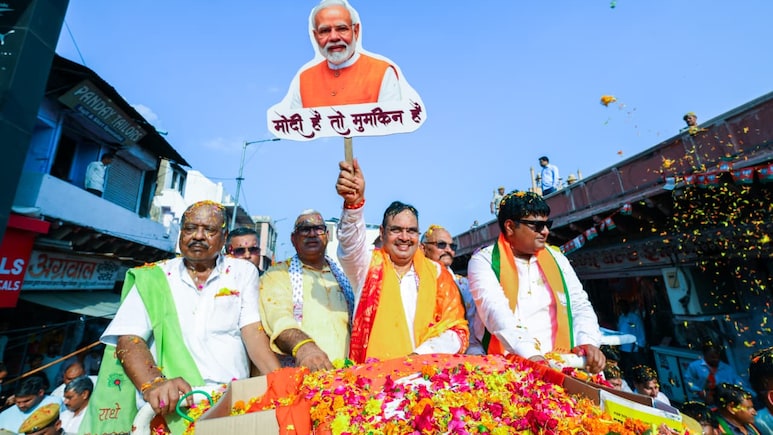
309 urban local bodies are going to the polls together for the first time in Rajasthan. Not only is this in keeping with the BJP's broader election strategy of “one nation, one election”, but it has also become an unusually high-stakes electoral battle, especially for the BJP in the state. The elections to all the local bodies are scheduled to be held in two phases, September 9 and September 11.
The Jaipur Municipal Corporation (JMC) will participate in the second phase of the elections, while the other 18 urban local bodies within Jaipur district will cast their votes in the first phase. The counting of votes is slated for September 14.
This is the first time ever that the entire urban local body election has been compressed into one large statewide political contest. Earlier, the municipal election cycles were staggered and spanned many months, notably in 2020 and 2021, extending up to a year and a half and keeping the model code of conduct active for a long span.
In this election, at stake are 309 urban local bodies, with 10,245 wards and 1.4 crore voters, and the results of this election will offer a clear read of the political mood in Rajasthan, making it a litmus test not only for the BJP but also for the Congress.
A Mid-Term Test For Bhajan Lal Sharma
It's two and a half years since the Bhajan Lal government took charge, with a cabinet of largely first-time ministers. The chief minister himself is a first-time MLA, and it will be a political bellwether test for this new, first-time government to check its popularity and see how it has fared with the urban electorate two and a half years into governance, especially since the urban electorate is traditionally considered BJP voters.
The visit of B.L. Santosh, the party's general secretary, bang in the middle of the elections has galvanised the BJP's machinery. The Chief Minister has hit the campaign trail with some high-voltage roadshows, while Lok Sabha MPs and senior ministers like Arjun Ram Meghwal, Bhupendra Yadav, Gajendra Singh Shekhawat and Bhagirath Choudhary have been clearly visible on the campaign raths alongside the Chief Minister, indicating that several political reputations are at stake in this local body poll.
Senior central leaders have been camping in the state for nearly a month, overseeing the progress of candidates, reaching out to rebels and keeping the doors of negotiation open with independents who may come too close for comfort, and who, in the future, could prove crucial in helping the party form boards and corporations across all 309 urban local bodies, big and small.
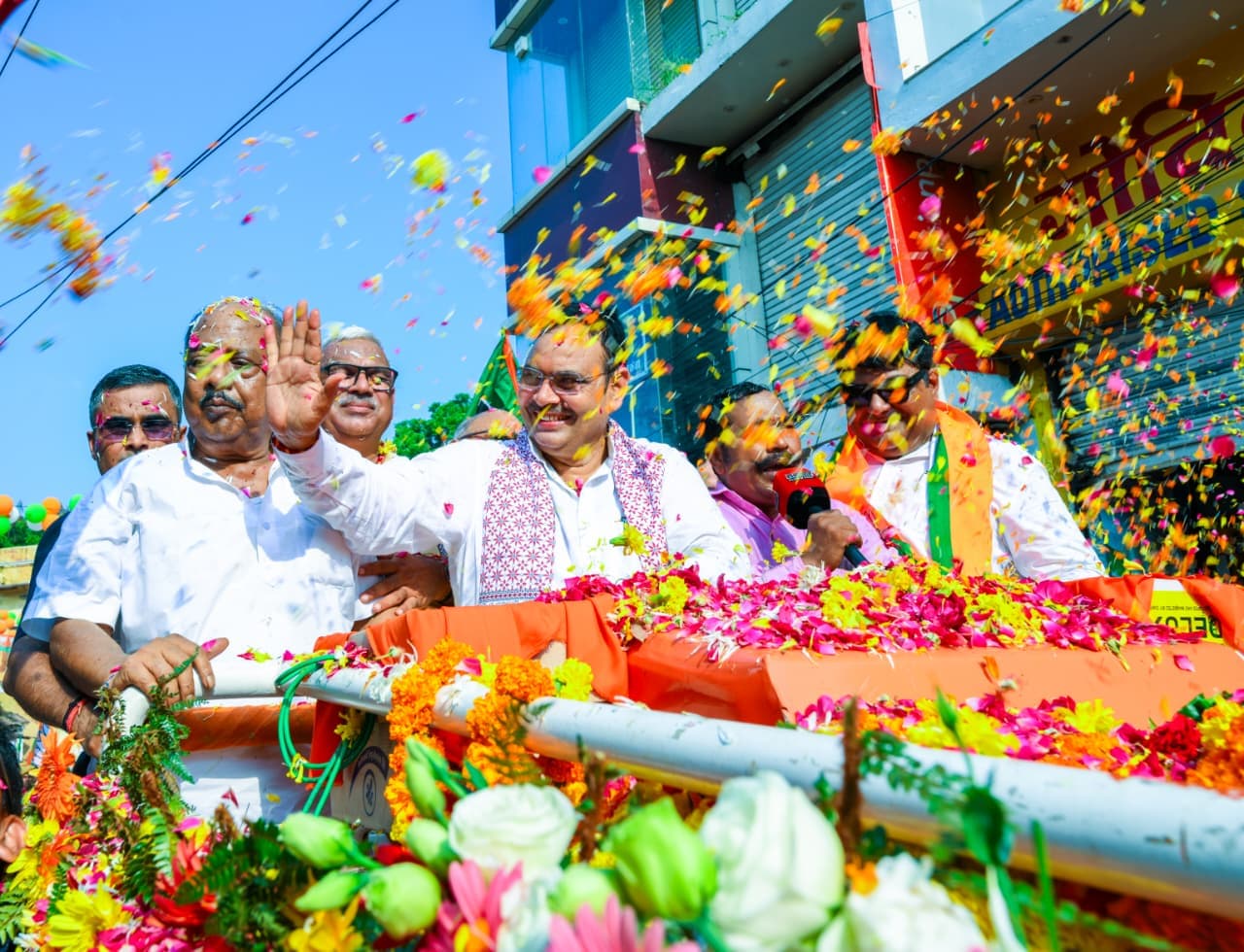
Senior central leaders have been camping in the state for nearly a month.
The results of these polls will crucially indicate to the BJP their popularity not only with the urban voters, but also whether, after the Jantar Mantar protests, there has been a larger electoral shift in the voting population. The BJP's ability to anticipate and reach out to independents and form the boards in the 309 urban local bodies will also be a test of how well the party organisation and cadre are working on the ground.
The Gen Z Factor
Clearly, the backdrop of the Jantar Mantar protests has made outreach to the Gen Z voter crucial for not only the BJP but also the Congress.
Young voters between the ages of 18 and 25 account for around 14.7 per cent of the electorate, while voters aged 26 to 35 make up another 25.4 per cent. This means voters under the age of 35 could have a significant impact on the election results.
Nearly one in two candidates is under 40 across the political spectrum.
Recognising the size of this young voter base, both the BJP and Congress have given greater space to younger faces in their ticket distribution. According to available ticket data, roughly one in every two candidates fielded by the two major parties is aged 40 or below.
The BJP has fielded around 51 per cent young candidates, compared with 49 per cent for the Congress.
In major cities including Jaipur, Jodhpur, Udaipur, Ajmer and Kota, both parties have also placed their bets on younger candidates.
Across these major municipal corporations, an assessment of 510 ward tickets shows that the BJP and Congress have together fielded 70 Gen Z candidates. These candidates are between 21 and 29 years old.
From Television To The Campaign Trail
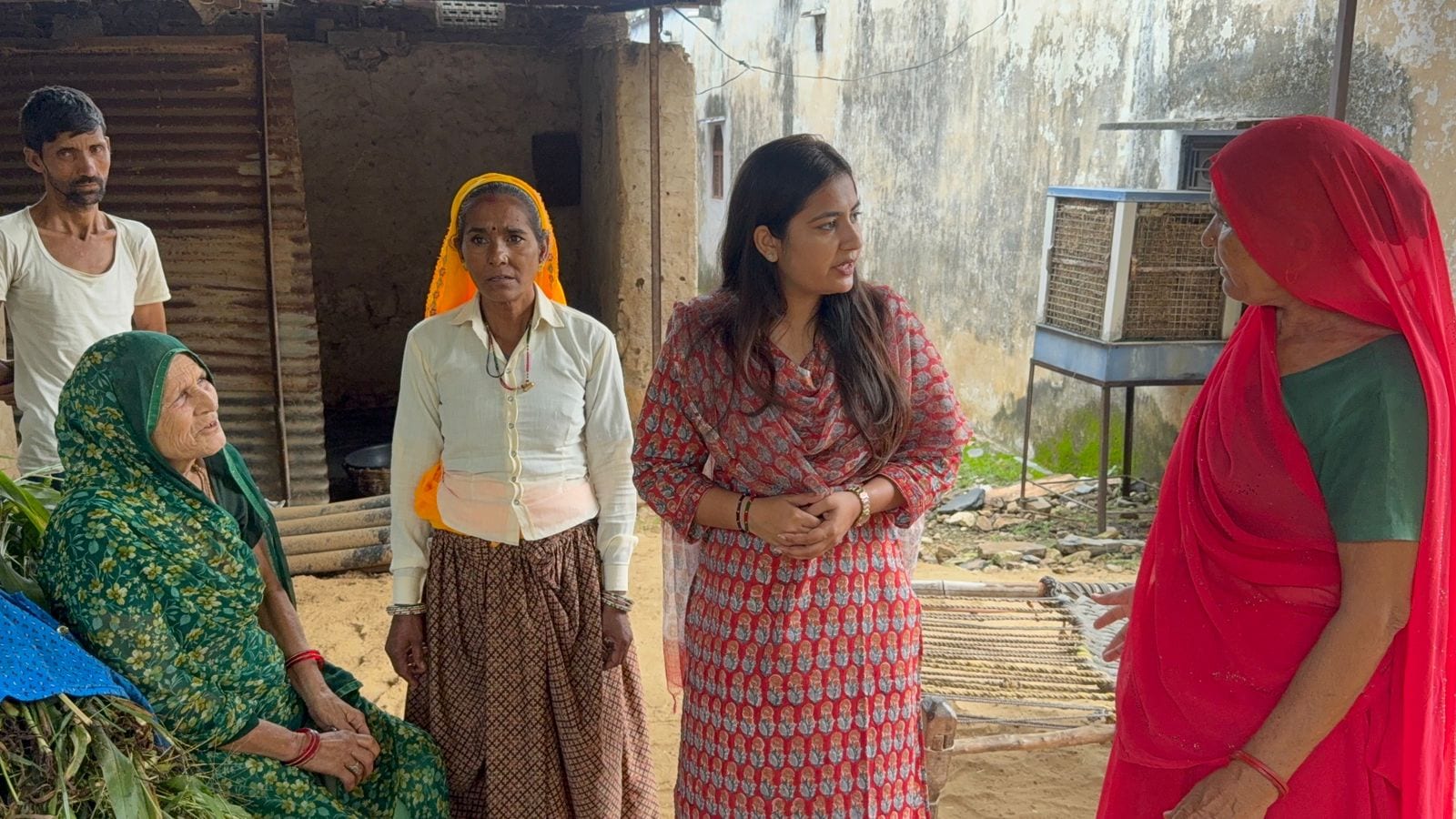
Like 21-year-old Neha Joshi, a student of journalism, the face of two popular regional channels and now the BJP candidate from rural Thanagazi in Alwar. As she strides out meeting voters in a comfortable salwar kurta and sturdy walking shoes, she seems completely at ease, whether it's sitting at a charpoy with village elders or in a cowshed with women as they cut and stack fodder.
“I thought I must begin with myself if I wanted to talk about change. Why talk about the MP and the MLA? We too can change things, especially here on the ground. My team and I know best what is required,” says Neha, for whom this is a far cry from the hustle of daily news reporting.
In the outskirts of Jodhpur is a small semi-rural suburb, Jhalamand. Twenty-one-year-old Saraswati Prajapat is the Congress's candidate from Ward No. 51. She was studying for the IAS exams before she stepped into the election fray.
“I will continue preparing for the IAS exams, but I thought I must use this opportunity of this seat being reserved for a woman candidate. I am influenced by the Gen Z protest that happened in Delhi. I think the youth of this country must step into democracy and the democratic process, and we must talk about issues like education. That, for me, is the most important issue in this election, the education of girls and the youth,” said Prajapat, who plans to continue studying for the civil services irrespective of the results of this election.
Congress Tries A Gen Z Reset
Taking a cue from the sentiments of the Jantar Mantar protests, the Congress too has launched its “GEN ZEE FOR CHANGE” campaign right in the midst of the urban local body polls in Rajasthan.
The party has formed state-level and district-level committees comprising young professionals, including IIT alumni, data analysts, legal experts and even sportspeople, to reach out to young voters through digital platforms.
Along with traditional campaign methods, both parties are relying on reels and Instagram, the language of the urban youth, to win the crucial youth vote bank.
But in contrast with the BJP, the Congress's senior leaders like Sachin Pilot and Ashok Gehlot have largely kept away from the election campaign, leaving it to local district-level leaders and party MLAs to manage the show.
Ashok Gehlot went so far as to insist that “sifarish” should not work in the polls, not even his own, and asked for 50 per cent of the tickets to be given to young candidates.
But for the Congress, the results of this election will be equally important.
It will be an opportunity to test whether the political mood that emerged from the Jantar Mantar protests can be converted into votes, particularly among a young urban electorate. It will also be an indicator of whether anti-incumbency against the Bhajan Lal government has set in or not, and whether the Congress can simply and complacently rely on anti-government sentiment for the assembly elections in 2028, or whether it will have to formulate a political narrative that goes beyond betting on the revolving door of politics traditional to Rajasthan.
So while the ballot paper may say municipal election, the political question is much larger: is Rajasthan's urban voter still firmly with the BJP, is the Congress beginning to claw back lost ground, and is a new generation of voters and politicians beginning to reshape the state's political landscape?
That is what makes this Rajasthan's first real One State, One Election moment.
Track Latest News Live on NDTV.com and get news updates from India and around the world

