





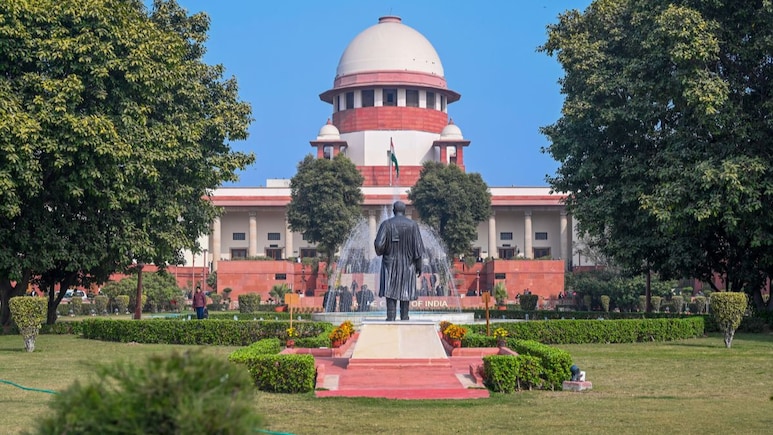
The Supreme Court on Tuesday called on 17 states and union territories to identify the number of special courts needed to ensure trials in UAPA, i.e., the anti-terror law, cases are conducted on a daily basis and to ensure they are completed under all circumstances" within a year.
A bench led by Chief Justice Surya Kant said the judiciary is facing extreme hardship across the country and called for a new system, or revisions to current practices, to ease the burden.
The Supreme Court had taken suo motu cognition in the matter of creation of special and exclusive courts, to tackle pendency of trials in cases under statutes like UAPA and MCOCA.
"State govts shall identify how many exclusive courts are required to be established for conducting trials in UAPA-related matters on day-to-day basis, with categorical commitment that each trial shall be completed in all circumstances within a year," the court said.
This shall be placed on record within four weeks, the bench, which included Justice Joymalya Bagchi, said.
The order also urged High Courts to take necessary steps to ensure the appointment of adequate staff for effective functioning of these proposed special courts.
It further directed India's anti-terror investigator, the National Investigation Agency and premier federal investigative body, the Central Bureau of Investigation, as well as any other such agency, central or state, to ensure at least one dedicated prosecutor is assigned to each court.
In cases where there is a shortage, the court directed state and union territories to notify Special Public Prosecutors, or SPPs, in consultation with the concerned High Court.
The court further observed the views of High Courts are required on this issue and accordingly ordered issuance of notice to the Registrars General of 17 states seeking their responses.
Additional Solicitor General Aishwarya Bhati and Additional Solicitor General SD Sanjay, besides the advocate-generals of 17 states and UTs to which notice had earlier been issued, were in court today.
As a pilot project, keeping in view commitment made by the central government in a January 2026 memo, all 17 agreed to set up one exclusive court to deal with NIA/UAPA matters.
Financial assistance in this matter will be offered by the centre.
Prior to today's order the court had repeatedly stressed the need for dedicated courts to exclusively handle cases under special statutes like UAPA and MCOCA.
In September 2025 the court had suggested an increase in cadre strength of judicial officers instead of earmarking of cases within existing strength, as the latter would increase the burden on other courts. And in November, it called on the central government to develop a pan-India mechanism for disposal of special cases and trials within six months through dedicated courts.
Track Latest News Live on NDTV.com and get news updates from India and around the world

