





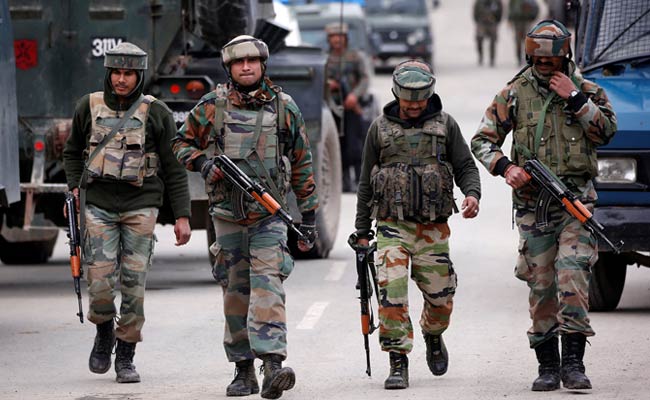
For the Indian Army, 2025 will be remembered as a decisive phase in India's counter-terror and deterrence posture, with Operation Sindoor emerging as the defining military action against Pakistan-sponsored terrorism and cross-border aggression. Launched in May 2025 in the aftermath of the Pahalgam terror attack, Operation Sindoor showcased India's resolve, precision strike capability and escalating dominance along the Line of Control (LoC), while parallel counter-terror operations in Jammu and Kashmir (J&K) resulted in the elimination of several terrorists and the disruption of infiltration networks.
According to official Indian Army data, Operation Sindoor was conceived, planned and executed under tight operational control at the highest level. The Military Operations Branch undertook the entire planning process, while real-time execution was monitored from the Directorate General of Military Operations' Ops Room, with the Chief of Defence Staff and the chiefs of all three services present. This rare tri-service coordination underscored the seriousness of India's response and its intent to impose costs without triggering uncontrolled escalation.
The operation focused on dismantling terror infrastructure across the border. In swift, calibrated strikes, nine terrorist camps were destroyed, seven by the Indian Army using ground-based firepower and two by the Indian Air Force through precision air strikes. Officials described the strikes as time-bound and intelligence-driven, aimed at degrading terror launch capabilities rather than targeting civilian or military installations. The message was unambiguous: terror proxies would invite direct consequences.
Pakistan's attempted retaliation over the following nights only reinforced India's preparedness. Between May 7 and 10, Pakistan attempted to target both military and civilian assets using armed drones. Each of these incursions was successfully neutralised by Indian Army air defence units, demonstrating the effectiveness of India's integrated counter-unmanned aerial system (UAS) grid and layered air defence architecture. No casualties or damage were reported, marking a significant operational success in modern battlefield air defence.
Simultaneously, sustained action along the LoC delivered another blow to terror networks. More than a dozen terror launch pads were destroyed using ground-based weapons, choking infiltration routes and disrupting logistics pipelines that feed militancy in Jammu and Kashmir. These actions directly supported counter-terror operations within the Union Territory, where security forces neutralised multiple terrorists during the year and prevented several infiltration attempts, contributing to improved local security conditions.
The cumulative pressure compelled Pakistan's military leadership to seek de-escalation. On May 10, the Director General of Military Operations of the Indian Army was approached by his Pakistani counterpart, leading to an understanding to cease firing and military action along the LoC. Indian officials, however, underlined that the ceasefire was a consequence of deterrence achieved, not restraint imposed.
Operation Sindoor also reflected the Indian Army's broader transformation in 2025, marked by enhanced precision firepower, rapid decision-making and technological integration. The operational lessons fed into the Army's ongoing push towards unmanned systems, long-range fires and real-time intelligence fusion, ensuring that counter-terror and counter-infiltration operations remain proactive rather than reactive.
Beyond the immediate tactical gains, Operation Sindoor reinforced India's strategic messaging: terror attacks would no longer be met with diplomatic protests alone, but with visible, credible military responses. As the Indian Army concluded a year of major milestones, the success of Operation Sindoor stood out as a clear demonstration of resolve, capability and control-sending a strong signal to adversaries and reassurance to the nation.
With terror infrastructure degraded, infiltration routes disrupted and multiple terrorists eliminated in J&K, 2025 marked a turning point in India's fight against cross-border terrorism one defined not just by retaliation, but by sustained deterrence.
Track Latest News Live on NDTV.com and get news updates from India and around the world

