





Union Home Minister Amit Shah declared that the Prime Minister Narendra Modi-led government is resolved to eliminate the Maoist movement before March 31. The statement comes even as India's counter-Left Wing Exremism strategy - combining security enforcement, inclusive development, and community engagement - has delivered success.
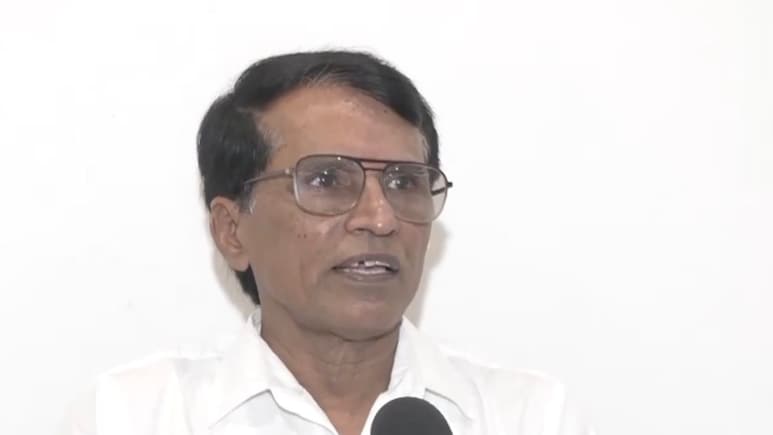
In an exclusive conversation with NDTV, Sonu Bhupathi, a former member of the Politburo of the Communist Party of India (Maoist) and once one of the country's most dangerous Maoists, spoke about the impact of demonetisation on the Maoist movement, his new life away from the jungle and why he wants to be part of India's 2047 Viksit Bharat goal.
Last year, on October 15, Mallojula Venugopal Rao alias Bhupathi, along with over 60 of his associates, surrendered in Gadchiroli in the presence of Maharashtra Chief Minister Devendra Fadnavis, laying down their weapons to embrace the Indian Constitution.
Impact Of Demonetisation On Maoism
During the conversation, Bhupathi, who has been living in a police camp since his surrender, said he is well-aware of the movie Dhurandhar and noted that he has seen parts of it on YouTube. When asked about the depiction of demonetisation in the film, Bhupathi admitted it was accurate.
"The impact shown in the film is true. It affected us. Our organisation suffered a blow of approximately Rs 25-30 crore. People would take notes from us promising to exchange them, only to disappear. We had to rely on the public for basic supplies. While this amount is nothing compared to the national economy, for us, it was a massive setback," he told NDTV.
"Someone took Rs 1 crore and vanished. You need money even for basic things, like innerwear," he explained.
From Maoist Rebels To Joining India's Workforce
Bhupathi praised the rehabilitation efforts for surrendered cadres. Under the initiatives of the Maharashtra government and Lloyd Metals and Energy, former Maoists are now working at a steel factory in Konsari and various mining projects in Gadchiroli.
When asked how he felt about that former female cadres now singing Gondi folk songs about a "new dawn" and a "new life" while going to work, Bhupathi remarked, "It feels great to hear this. What we are thinking - going to the people with the Constitution - they are already doing. They are thinking about their children's future. They are driving big vehicles and working. These people have become our pathfinders. We will join them shoulder-to-shoulder to serve the public."
A significant highlight is that former Maoists have been allotted shares in the steel plant. Many now say, "I am not a servant; I own a stake in this company." Bhupathi responded enthusiastically, "This is a wonderful start. Today they are stakeholders; tomorrow they will be proprietors. That is our dream."
Development And End Of Maoist Movement
Bhupathi acknowledged that the armed struggle had reached a dead end. Speaking on development in the region, he said, "The people of India should get development facilities. Once they have that, there is no need for Maoism."
He also told NDTV he believes in India's 2047 Viksit Bharat goal. "The declaration of the date of end of Naxalism by March 31 is a good thing. If our problems are also solved, it will be a very good thing. That's my request to the Central government because we also have a lot of problems. You asked what my view towards the 2047 Viksit Bharat goal for India is. Once I am in the mainstream outside, I will also definitely contribute," Bhupathi said.
"We failed in our movement and there was no way forward. We couldn't reach the public anymore. Therefore, I realised it is better to give up arms," Bhupathi explained, while talking about why Maoists like him decided to surrender.
He noted that the multi-dimensional strategy against Maoists and the increase in police posts and camps acted as a major barrier to their operations, leading to its eventual failure.
Leadership Vacuum Led To Maoist Organisational Collapse
When asked about the current leadership of the Maoist party following the surrender of leaders like Devuji and Papa Rao, Bhupathi suggested the organisation is collapsing. He mentioned that while there might be a member in Jharkhand named Biswa, the leading cadres are surrendering across Odisha and other regions. He noted that after Basavraju, there is effectively no General Secretary, citing Devuji's own admission that he did not hold the post.
Top CPI (Maoist) leader Nambala Keshavrao alias Basavaraju is among the 27 Maoists who were killed in an encounter with security forces in Chhattisgarh's Narayanpur district in May 2025. The encounter, which lasted for over 50 hours, took place along the Narayanpur-Bijapur border.
Basavaraju was formerly the head of the Central Military Commission and later became the General Secretary, the highest position in the Maoist hierarchy. He was wanted by the National Investigation Agency (NIA) and police forces in Telangana and Andhra Pradesh and a bounty of Rs 1.5 crore had been placed on him.
Regarding the missing leader Ganapathy, Bhupathi claimed no one knows his whereabouts, as such information is strictly restricted.
Reverse Vasectomy For New Beginnings And Family
Bhupathi issued a heartfelt appeal to the remaining cadres to surrender and work under the Constitution. Interestingly, the police administration is also assisting surrendered members who wish to start families by facilitating reverse vasectomy surgeries.
"We have sent men to doctors, and 15 people have undergone the operation. Whatever happened to us has happened, but these people are young. They want to move their families forward," Bhupathi said.
Reflecting on his personal life, he shared the emotional experience of visiting his elderly brother in his village after surrendering and expressed his desire to spend the rest of his life in Gadchiroli. "The situation has changed," concluded Bhupati, "The only option to reach the people of this country is to embrace the Indian Constitution."
Track Latest News Live on NDTV.com and get news updates from India and around the world

