





- Congress withdrew its Baramati bypoll candidate to honour Ajit Pawar's death and support his wife
- The initial decision to contest signaled Congress's ideological stand against the BJP-led alliance
- Congress gained moral capital by showing willingness for balanced, responsible political decisions
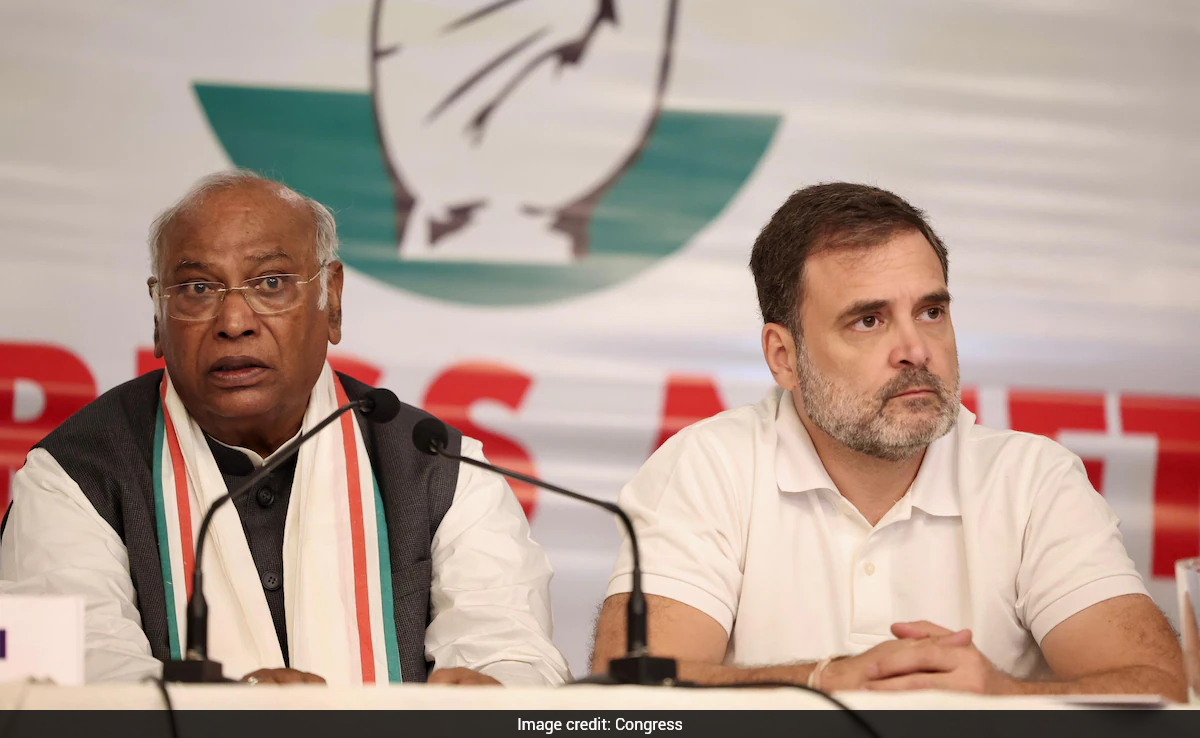
Two weeks before the Baramati bypoll elections, Congress withdrew its candidate as a 'mark of respect' for Ajit Pawar - who died in a plane crash late January, paving the way for his wife, Sunetra Pawar, to win the election unopposed.
The voting for the bypoll had been scheduled for April 23.
The Grand Old Party's move may appear superficially to be a political retreat, but upon closer analysis, it is a part of a well-planned and multi-layered strategy. The decision, taken under the leadership of Harshwardhan Sapkal, was made keeping in mind both the current political situation and future electoral dynamics.
By fielding a candidate in Baramati, the Congress had initially signalled clearly that it would not back down from its ideological stance against the BJP-led 'Mahayuti' alliance. Despite the Nationalist Congress Party (NCP) joining the Mahayuti, the Congress's decision to contest the bypoll sent a message that its politics is based on the principle of 'no compromise on ideology'.
According to political analysts, the move was crucial in activating the Congress' core voters and workers.
However, the rapidly changing events that followed made the election far more complex than just a political contest. The meeting between Rohit Pawar and Harshwardhan Sapkal, Supriya Sule's reference to their long-standing political ties, and Chhagan Bhujbal's emotional appeal increased both moral and political pressure on the Congress. Meanwhile, Chief Minister Devendra Fadnavis' phone call, in which he appealed for an unopposed election, proved crucial.
The series of events presented the Congress with a complex choice - on one hand, to continue the ideological struggle, while on the other, keeping in mind Maharashtra's political culture, sensitivity, and tradition of accommodation.
Ultimately, Congress chose a "negotiated exit" - a path in which it retreated while maintaining its political relevance.
From a political perspective, the Congress gained significant moral capital through this decision. The party sought to convey the message that it does not solely practice confrontational politics, but is also capable of making balanced and responsible decisions as the circumstances dictate. This is why this decision is also being seen as an image-building exercise.
An important aspect of the entire development was the way in which the Congress turned the negative atmosphere created by Parth Pawar's controversial statement about the party being in its favour. The dialogue and clarification initiated by Rohit Pawar gave the Congress a moral advantage, allowing the party to gain narrative control.
Experts believe that the move by Congress was taken with the 2029 assembly elections in mind. Instead of direct confrontation in a traditionally strong constituency like Baramati, gradually building political space, maintaining relationships, and garnering sympathy - all the elements point to a long-term strategy.
Overall, the Congress's comeback in the Baramati by-election emerges not as a simple electoral decision but as a political communication masterstroke.
Track Latest News Live on NDTV.com and get news updates from India and around the world

