





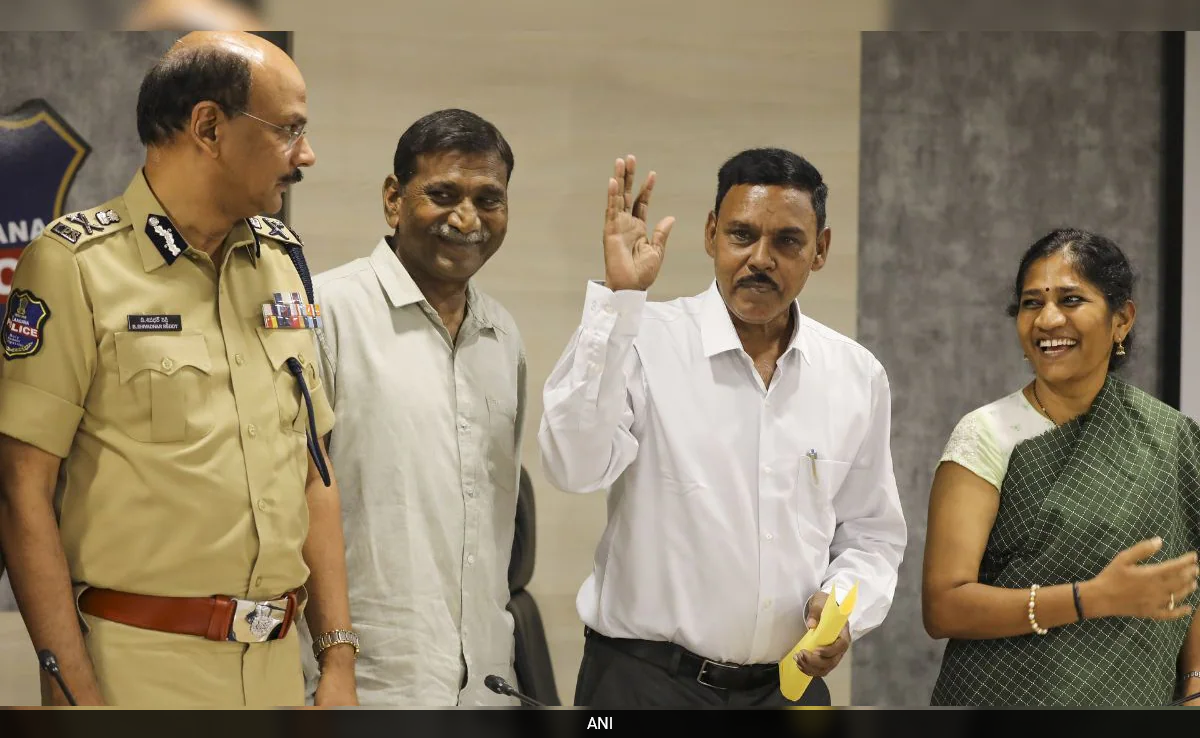
The surrender of two high-ranking CPI (Maoist) members -- Central Committee Member Pilluri Prasad Rao, known by the aliases Chandranna and Somanna, and State Committee Member Bandi Prakash, alias Prabath -- marks a significant victory for security forces and a substantial ideological and structural blow to the Left-Wing Extremists. It also means a critical weakening of their command structure and ideological commitment, sources said.
The two surrendered Maoists were veteran members -- Chandranna had spent 45 years and Prakash 42 years in the Left-Wing outfit.
Chandranna was a long-standing member of the Central Committee and a highly sought-after leader, previously reported to carry a large bounty on his head. High-ranking members are experts at coordinating operations, procuring arms and managing political and financial affairs across multiple states. Thus Chandranna's surrender creates a critical vacuum at the apex of the organisation, sources said.
As a State Committee Member, Bandi Prakash was central to ground-level strategy and recruitment in his region.
The surrenders follow a pattern of high-ranking Maoists choosing to lay down arms citing disillusionment or responding to government peace appeals and rehabilitation packages. So a fracture within the movement's ideological core often becomes inevitable, sources said.
Senior Maoists have institutional memory, organisational blueprints, and deep knowledge of jungle terrain and safe havens. Sources said they become assets to security agencies when it comes to dismantling infrastructure, finding arms caches, and tracking the locations of other key functionaries.
Visuals of top Maoists joining the mainstream also act as a powerful deterrent to new recruitment, particularly among tribal youth, and demoralise the existing cadres.
The surrenders came amid a long, intense campaign by the Union Home Ministry and coordinated state police forces aimed at dismantling Maoist strongholds across central and eastern India.
The government has adopted a two-pronged strategy: Aggressive security operations coupled with lucrative surrender and rehabilitation policies.
The twin pressure has led to a significant overall decrease in LWE-related violence and has encouraged more cadres to choose to return to the mainstream.
Experts suggest the surrender of such high-profile Maoists demonstrate the success of this strategy, cementing the view that the Maoist movement in India is entering its final, most vulnerable phase.

