





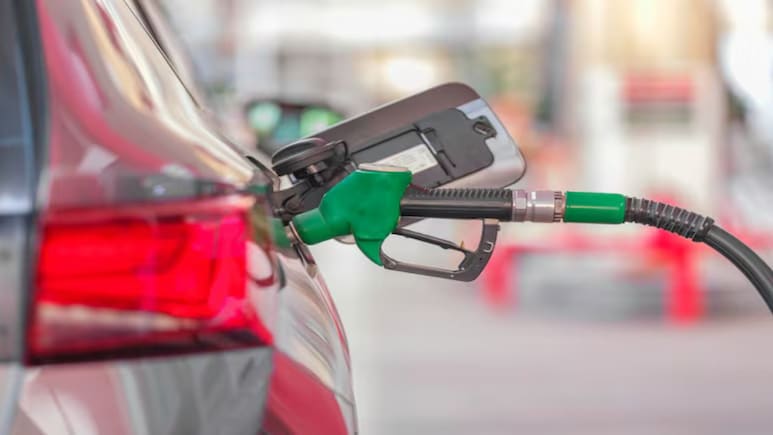
The government has exempted higher ethanol-blended petrol grades from central excise duty to prevent double taxation on fuel blending activities, according to official notifications.
The Central Board of Indirect Taxes and Customs (CBIC) issued notifications exempting ethanol blended petrol (EBP) grades E22, E25, E27 and E30 - containing 22 per cent, 25 per cent, 27 per cent and 30 per cent ethanol, respectively - from applicable central excise duties, subject to excise duty having already been paid on petrol and GST having been paid on the ethanol used for blending.
"Ethanol blending with petrol is a manufacturing activity which can be subjected to excise duty. Petrol bears excise duty, and ethanol bears GST at their respective stages. When the two are blended, the resulting product may attract excise duty once again on the full quantity," an official statement said.
For ethanol blends of up to 20 per cent, excise duty on the blended petrol was exempted by the Ministry of Finance. The exemption ensures that the duties already paid are not charged a second time on the blend.
Government sources said the move is intended solely to remove a provision under the Central Excise law that could otherwise treat ethanol blending as a manufacturing activity and result in excise duty being levied a second time on the blended fuel.
"The objective is to avoid any incidence of double taxation," a government source said.
The exemption mirrors the tax treatment already available to existing ethanol-blended petrol grades such as E5, E10 and E20, and does not amount to a reduction in excise duty on petrol sold for domestic consumption, officials said.
The notifications came into force on June 10, the date of their publication in the Official Gazette.
Officials said the tax exemption is a regulatory measure that would facilitate the introduction of higher ethanol blends in the future if required, but does not by itself signal any immediate rollout of E22, E25, E27 or E30 fuels in the retail market.
The move, they said, should not be interpreted as an immediate rollout of higher ethanol blends in the retail market. The exemption is a regulatory requirement because blending ethanol with petrol at fuel depots is considered a manufacturing activity that could otherwise attract excise duty.
BIS standards for higher ethanol blends (E22, E25, E27 and E30) have recently been issued in May 2026. The same excise duty waiver has now been extended to E22, E25, E27 and E30 vide notification dated June 10, 2026.
"This is a preliminary prerequisite for higher blends, but doesn't convey anything about roll out of higher blends, which will only be done after extensive testing and consultation," the statement said. "The sole purpose of this notification is to avoid double levy of excise duty on ethanol-blended petrol." The extension of the tax waiver to E22 (blend of 22 per cent ethanol and 78 per cent petrol), E25, E27 and E30 blends is a preliminary step that would facilitate any future introduction of higher ethanol-content fuels, officials said, adding any rollout would be subject to extensive testing and consultations before implementation.
India has accelerated ethanol blending in petrol as part of efforts to reduce crude oil imports, cut emissions and support the agricultural sector. Ethanol blending by state-run oil marketing companies has risen from 1.53 per cent in the ethanol supply year (ESY) 2014-15 to 20 per cent in ESY 2025-26, according to the statement.
The programme has generated payments of about Rs 1.62 lakh crore to farmers since 2014-15, while helping save more than Rs 1.91 lakh crore in foreign exchange through reduced crude oil imports. It has also resulted in crude oil substitution of about 31 million tonnes and reduced carbon dioxide emissions by an estimated 93.1 million tonnes, it added.
(Except for the headline, this story has not been edited by NDTV staff and is published from a syndicated feed.)
Track Latest News Live on NDTV.com and get news updates from India and around the world

