





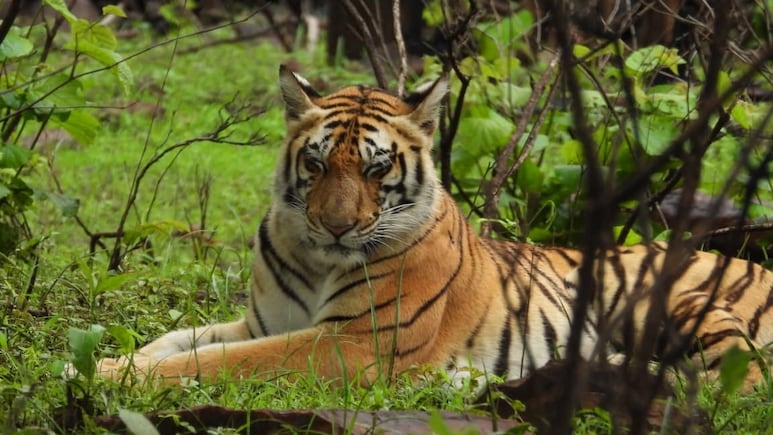
- Madhya Pradesh reported 50 human deaths from wild animal attacks in early 2026
- Tigers caused 22 fatalities, mostly in Mahakoshal and Bandhavgarh regions
- Human-wildlife conflict peaks during tendu leaf and mahua flower collection season
Madhya Pradesh has long worn its wildlife numbers as a badge of honour. It has the highest tiger population in India, the country's largest leopard population and some of its most celebrated forests. But behind this conservation success story, a disturbing parallel crisis is unfolding. In the first eight months of 2026, at least 50 people have died in wild animal attacks across the state. During roughly the same period, more than 45 tigers have also died.
According to the latest statistics available with the Madhya Pradesh Forest Department, tigers have caused the highest number of human fatalities this year. Of the 50 people killed, 22 died in tiger attacks, eight were killed by wild boars, seven by elephants and four by sloth bears, while one death was attributed to a leopard. At least 16 of the victims were girls and women, while the remaining were boys and men.
The timing of the deaths reveals an even more worrying pattern. As many as 30 of the 50 fatalities occurred in just three months. Seven people were killed in March, 13 in April and another 10 in May. These are also the months when large numbers of villagers, particularly tribal communities, enter or move along forest areas to collect tendu leaves and mahua flowers, bringing them into much closer contact with wildlife.
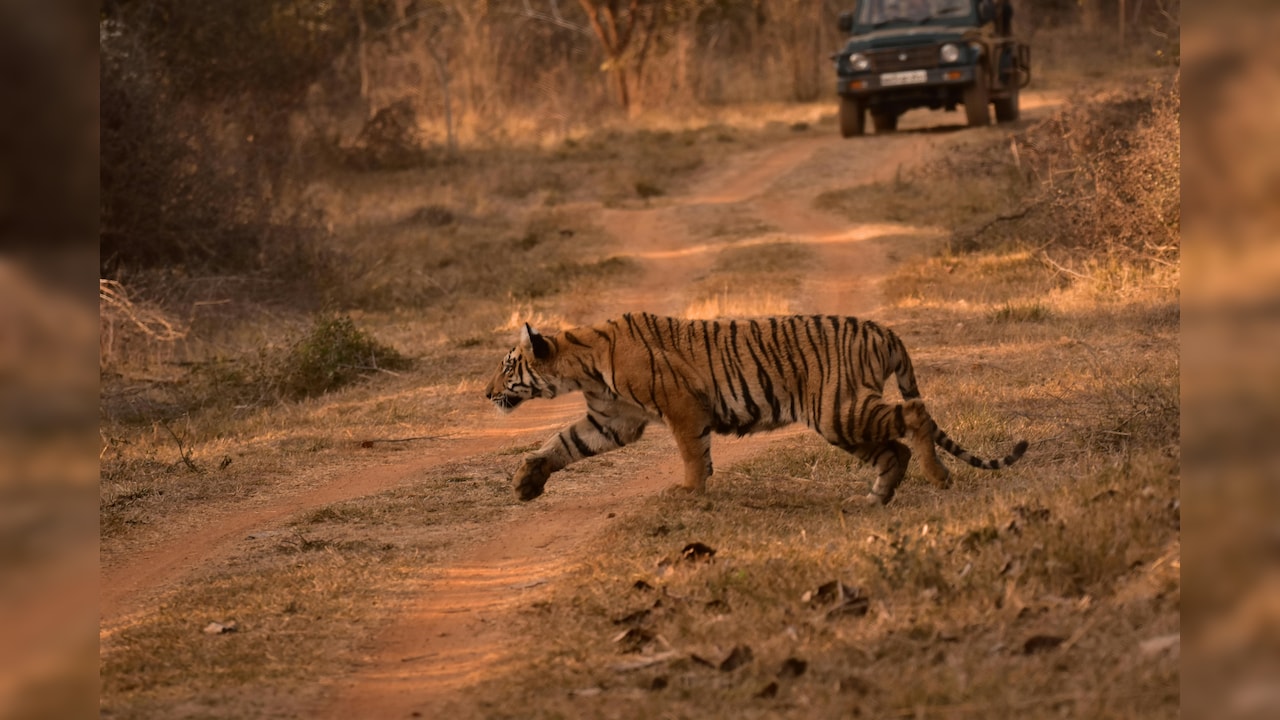
The geography of the tiger attacks is equally significant. Of the 22 people killed by tigers, 14 died in the densely forested Mahakoshal region, particularly in and around Seoni. The region is popularly associated with the forests that inspired the world of Mowgli in Rudyard Kipling's The Jungle Book. Seven more tiger-related deaths were reported from Bandhavgarh Tiger Reserve and adjoining areas in eastern Madhya Pradesh, which support one of the densest tiger populations in the state.
The conflict is not restricted to tigers. Eight people have been killed by wild boars across different parts of Madhya Pradesh. Seven deaths caused by elephants were reported largely from eastern districts bordering Chhattisgarh, including Anuppur, Sidhi and Shahdol. Chhattisgarh has emerged as an important route for wild elephants moving into Madhya Pradesh. Three of the four deaths attributed to sloth bear attacks were also reported from eastern districts adjoining Chhattisgarh, including Sidhi and Shahdol.
The latest deaths are part of a much larger and persistent pattern. According to Forest Department data, 406 people were killed in wild animal attacks in Madhya Pradesh between 2020-21 and 2024-25. The state recorded 90 deaths in 2020-21, 80 in 2021-22, 86 in 2022-23, 79 in 2023-24 and 71 in 2024-25. During the same five-year period, 5,804 people were injured in wild animal attacks and 72,627 cases of livestock loss were recorded.
The financial cost of the conflict has also been mounting. Madhya Pradesh paid more than Rs 88.38 crore as compensation for human deaths and livestock losses between 2020-21 and 2024-25. The compensation payout crossed Rs 20.05 crore in 2024-25 alone, while more than Rs 19.71 crore was paid in 2022-23.
But compensation does not explain why the deaths continue.
Forest Department sources point to an expanding geography of what officials describe as "conflict zones", areas where human settlements, farms and everyday livelihood activities increasingly overlap with wildlife movement. Madhya Pradesh today has more tigers than any other state in the country, the highest number of leopards, extensive sloth bear habitats and a growing elephant presence in its eastern districts. At the same time, villages, agricultural fields, highways, railway lines and other infrastructure increasingly intersect forests and wildlife corridors.
Contrary to the popular perception that most attacks happen deep inside forests, officials and wildlife experts say many encounters take place along forest fringes. Villagers enter these areas to collect firewood, graze cattle, gather tendu leaves and mahua flowers or cultivate fields adjoining forests. At the same time, animals moving beyond protected areas in search of territory, prey and water increasingly find themselves in human-dominated landscapes.
This has created a troubling paradox for India's conservation story.
The rise in conflict is, at least partly, linked to the success of wildlife conservation itself. Madhya Pradesh's tiger population increased to 785 in the 2022 national tiger estimation and is now estimated by officials and experts to be around 1,000. But while the number of tigers has increased dramatically, the forests available to them have not expanded at the same pace.
An adult male tiger can require a territory of roughly 50 to 100 square kilometres, depending on the habitat, prey availability and competition. Madhya Pradesh's nine tiger reserves together cover around 16,233 sq km, including core and buffer landscapes. Tigers, however, do not remain confined within administrative boundaries. Young animals pushed out by dominant adults disperse in search of territory, sometimes travelling long distances through territorial forests, agricultural fields, village fringes and fragmented corridors.
The result is becoming increasingly visible on the ground. In April, two people were killed in tiger attacks within just 13 days in and around Pench Tiger Reserve. One of the victims was 30-year-old Dinesh Sevatkar, who had entered a forest area near a water body around dusk, an area frequently used by tigers. He was mauled to death.
His death triggered an extraordinary eruption of public anger.
Hundreds of villagers stormed parts of the reserve, dismantled gates, damaged vehicles and allegedly set parts of the forest on fire. Earlier that month, another villager collecting mahua flowers during the pre-dawn hours had been killed in the Kumbhapani buffer area. Pench has witnessed multiple human fatalities in tiger attacks this year, while similar conflicts have surfaced in and around Bandhavgarh and Satpura.
These incidents point to a problem far deeper than individual tiger attacks. In several forest-fringe communities, resentment is growing over the price local populations are being asked to pay for conservation. For a villager whose livelihood depends on entering or working near forests, the tiger is not merely India's national animal or a symbol of conservation success. It can also represent an everyday risk.
But the crisis has another side. The tigers are dying too.
More than 45 tiger deaths have been reported in Madhya Pradesh during the first eight months of 2026. Tiger deaths can result from natural causes, territorial fights, disease and old age, but they can also be caused by road and railway accidents, electrocution, poisoning and poaching. The unusually high number once again raises questions about whether Madhya Pradesh's expanding tiger population is colliding not only with people, but with an increasingly fragmented and dangerous landscape.
The questions become more serious in light of previous findings. NDTV had earlier reported, based on RTI documents, that 88 tiger death cases from 2020 and 2021 across India remained unresolved or under scrutiny, with the cause of death not conclusively established in the records examined. The cases were spread across several tiger-bearing states, including Madhya Pradesh, Maharashtra, Chhattisgarh, Assam, Karnataka, Uttar Pradesh and Uttarakhand. But instead of answers, the National Tiger Conservation Authority (NTCA) is preparing to shut these cases forever.
Madhya Pradesh had one of the most worrying backlogs, including cases from major tiger landscapes such as Bandhavgarh, Kanha and Panna, areas considered among India's most important breeding grounds for the big cat. Some records concerning tiger deaths and seizures continued to remain under scrutiny, raising questions over investigation, monitoring and accountability even inside landscapes that are supposed to provide the highest degree of protection.
Madhya Pradesh is therefore confronting two crises at the same time. Its tiger population has grown, but the space available for animals to disperse safely remains under pressure. Villagers continue to depend on the same forests for livelihoods. Roads, railway lines, farms and settlements increasingly cut across wildlife movement routes. Tigers move out looking for territory and prey, while people move in looking for mahua, tendu leaves, firewood and grazing land.
Track Latest News Live on NDTV.com and get news updates from India and around the world

