





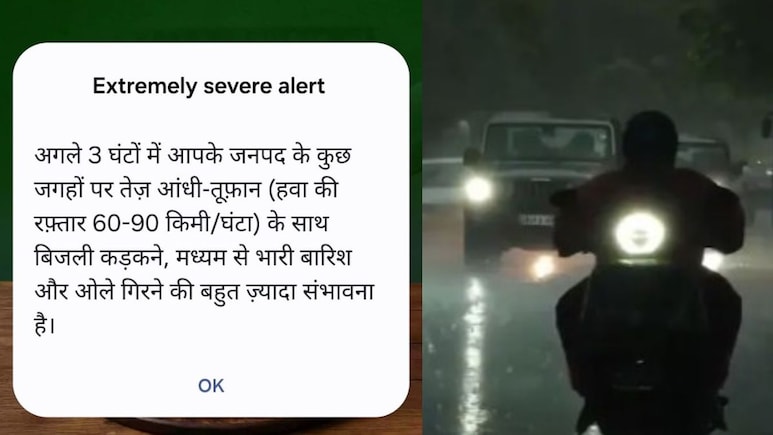
- Mobile phones in Noida received late-night weather alerts via the Cell Broadcast System
- Alerts warned residents of rain, hail, wind, and thunderstorms in specific areas
- Experts and users raised concerns about overuse and lack of detailed information in alerts
It is close to midnight. All mobile phones in Noida and the surrounding areas ring out in unison. The ringtone is alarming, and phones are vibrating violently. The alert renders devices useless until users acknowledge it. The message isn't about some earth-shattering emergency, but a severe weather warning sent through the Government of India's Cell Broadcast System.
Many alerts were sent through the new system on Thursday night, warning lakhs of residents against rain, hail, and high-speed wind. One alert was sent at 1 am, when most of them were either sleeping or preparing to doze off.
In Modi Nagar, around 25 kilometres from neighbouring Ghaziabad, similar alerts were sent warning residents against "moderate rainfall accompanied by moderate thunderstorm and lightning".
Several social media users have questioned the government, asking whether the system should be used for anything but emergencies.
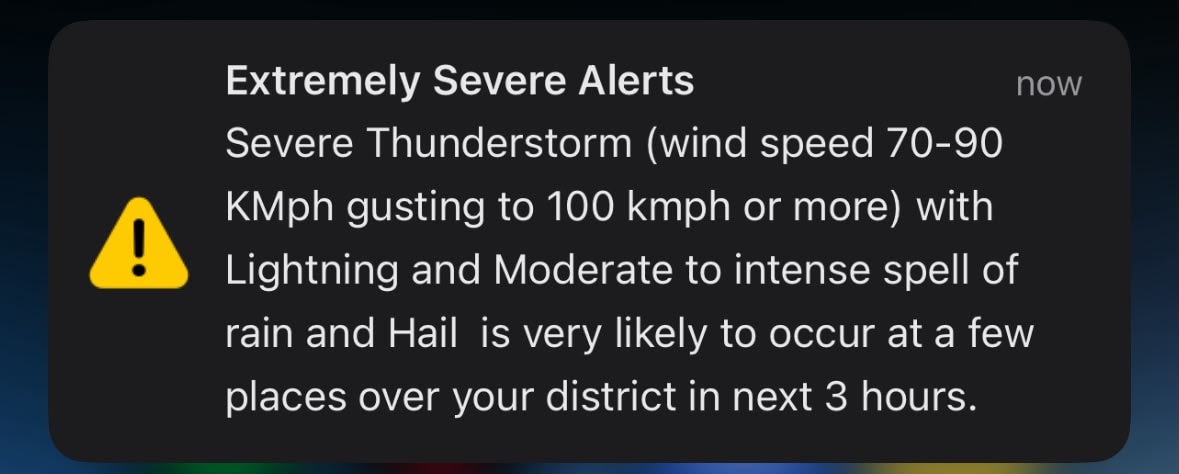
"It has become extremely important to calibrate the new emergency alert system implemented in the country with real-time events. The emergency alert system needs to be fine-tuned, as it has some flaws. The emergency alert message sent last night did not specify the amount of rain expected in which area of the district or which specific area might experience strong winds," said Dr V Shashidhar Reddy, former Vice Chairman of the National Disaster Management Authority.
Also read: Got An "Extremely Severe Alert" On Your Phone? Here's What It Is
He believes that further research is needed to improve the existing system and make it more effective.
Activating the emergency alarm system every time a bad weather forecast is issued could make the emergency alert system less effective and reduce the public's seriousness about it, social media users argued.
Furthermore, such alerts could induce anxiety and disturb the recipients unnecessarily.
According to guidelines from the Federal Disaster Management Agency (FEMA) of the United States, the world's largest disaster management organisation, emergency management officials should develop a proper warning and information strategy based on incident-specific guidelines, affected areas, projected timelines, current conditions and availability of field resources.
Features of the Cell Broadcast System
Union Minister Jyotiraditya Scindia launched the 'Cell Broadcast System' on May 2, 2026. The technology was developed by the Centre for Development of Telematics (C-DOT), which operates under the Department of Telecommunications (DoT). It was developed in collaboration with the National Disaster Management Authority (NDMA) and the Ministry of Home Affairs (MHA).
The Cell Broadcast System provides precise geo-targeting capabilities, allowing alerts to be sent to individual cell towers or clusters, or extended to larger areas if needed. These messages reach users directly within seconds, without any waiting or queuing. Designed for high reliability, the system remains unaffected even by network congestion, ensuring uninterrupted communication during a crisis. It reaches all mobile users in the targeted area, including those roaming. Importantly, users cannot turn off these alerts.
Track Latest News Live on NDTV.com and get news updates from India and around the world

