





At the heart of Binnakandi in Assam's Hojai district stands a sprawling mansion, its tall black gate guarded round-the-clock. This fortress is AIUDF chief Badruddin Ajmal's family home – their political stronghold and a symbol of the perfume baron's legacy in a constituency that did not exist before delimitation in 2023 and will vote in a critical Assembly election on April 9.
Carved out from the old Jamunamukh segment, Binnakandi falls within the Kaziranga parliamentary constituency and has over 2.6 lakh eligible voters, a majority of whom have voted for the Ajmal family – Badruddin, his brother Sirajuddin, or his son Abdur Rehman – since 2006. On Monday the 2026 race for that seat took shape with the filing of nomination papers.
The All India United Democratic Front leader must beat the Assam Jatiya Parishad's Rejaul Karim Chowdhury, the son of former Jamunamukh MLA Khalilur Rahman Chowdhury; and Sahabuddin Mazumdar of the Asom Gana Parishad to retain the family bastion. This will be a critical election for Ajmal and his party.
Ajmal's last chance?
At 74 his political career is in its twilight and needs a jumpstart after a crushing defeat in the 2024 Lok Sabha poll; the Congress' Rakibul Hussain beat him by over 10 lakh votes in Dhubri.
Ajmal's vote share dipped below 20 per cent as voters complained of stalled development. In the three previous elections – all of which he won, he never polled below 42 per cent.
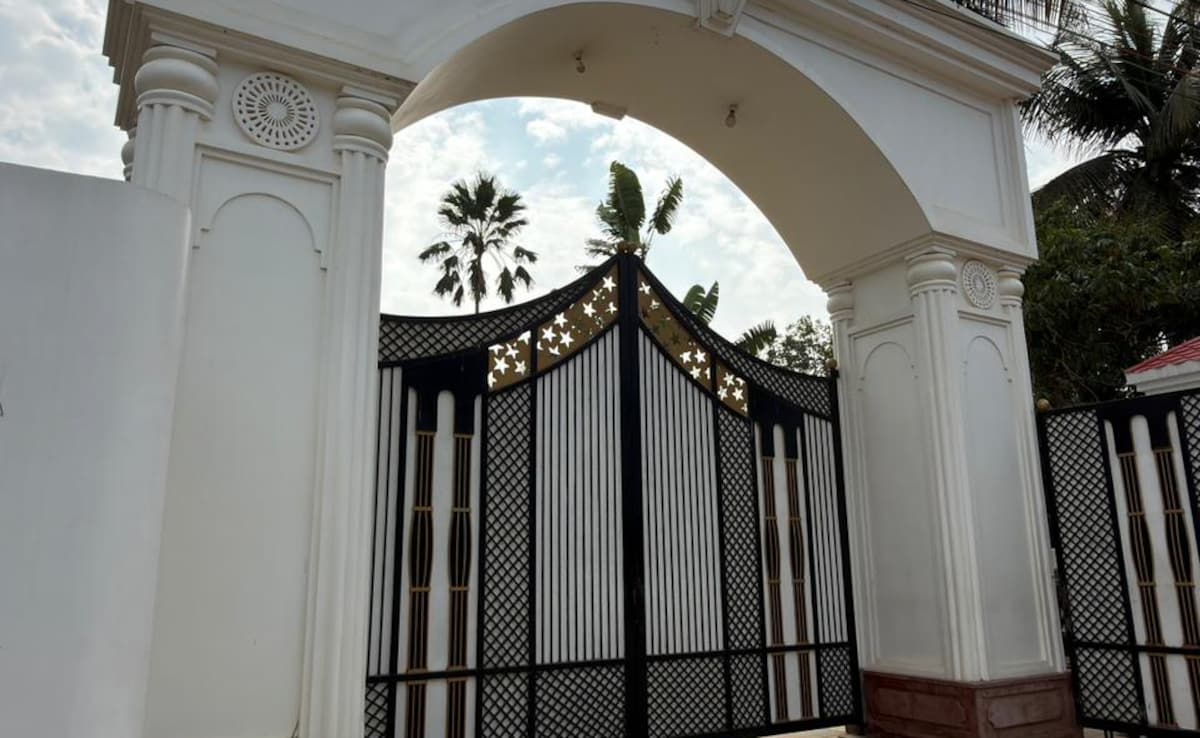
The big black gate outside Ajmal's family home in Binnakandi.
But the pre-defeat electoral record is quite impressive; apart from dominating the old Jamunamukh constituency, the Ajmal family won from South Salmara twice in four polls.
Power rotated seamlessly between the three Ajmals – father, son, and brother.
The nomination rally for the Binnakandi seat drew massive crowds, suggesting the family still has significant political capital and that the AIUDF could still play a role at the state level.
But on-ground views about his politics and leadership are split sharply, on the one hand praised as 'messianic philanthropy' and on the other slammed as 'identity peddling'.
The AIUDF, then and now
Once seen as a decisive force in Assam's electoral arithmetic, the AIUDF now finds itself battling for survival. It has long been seen as a political base for Bengali-speaking Muslims, referred to derisively by the ruling BJP as 'Miyas'. But they constitute 30+ per cent of the state.
For nearly two decades, the AIUDF built its strength on a consolidated minority vote base, particularly across Lower Assam districts like Dhubri, Barpeta and Goalpara, Jamunamukh, Hojai, and Nagaon, and the Muslim-dominated pockets of Southern Assam's Barak Valley.
Meanwhile, across the Chowdhury is projecting confidence. He has argued anti-incumbency – driven by the 'prolonged failure of regional development' – will tilt the scales in his favour.
"AIUDF has been here for 20 years and has ruined the constituency. They live in Dubai and get others to run things here. The roads are in bad shape, and their politics is purely communal."
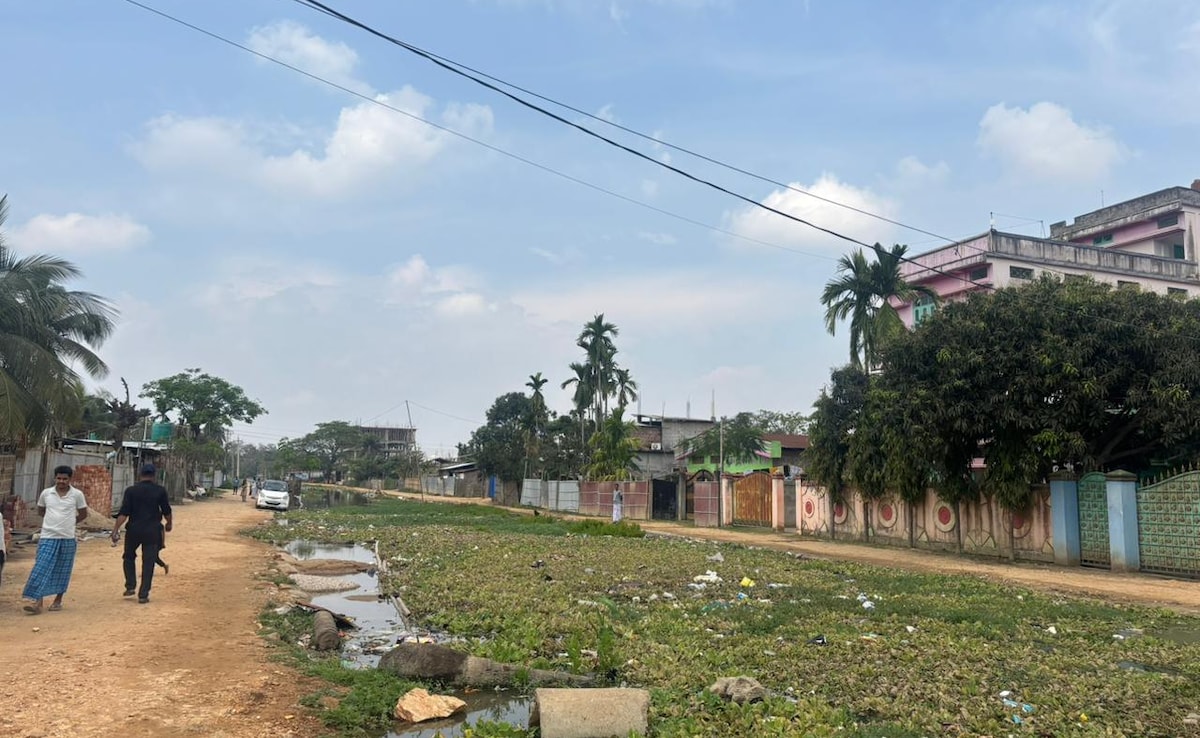
Ajmal's rivals allege a lack of development in the area
"They show up during elections and distribute money to the poor. If I win, we will focus on the youth and their future. There is widespread corruption here. Ajmal hardly visits," he told NDTV.
NDTV found those views echoed by a section of voters.
Haji Zaman, 20, said: "I believe whoever wins should focus on development and education. The mistakes of past leaders shouldn't be repeated. Ajmal sahab set up several educational institutions, but these aren't affordable for everyone, it feels more like a business."
Another voter, Indris Ali, said: "Whichever government comes to power should prioritise development. We have voted for different parties and supported them… but they don't come back to check on us. Nobody cares… basic issues like roads remain neglected."
A defiant Ajmal
But Ajmal remains upbeat and insists the AIUDF will win over 25 seats this time.
The party has never won more than 18 seats; that came in the 2011 election.
On the loss in Dhubri, he maintains the result reflected a 'lack of awareness' among voters influenced by Congress leaders' talk of a 'mahagathbandhan', or 'grand alliance'.
To win those 25 seats, however, he must convince voters he hasn't lost touch with reality.
There are still many who love and support him. "Ajmal is a good leader. His loss in Dhubri was unfortunate but everyone in Binnakandi likes him. His brother did a lot of work in the Jamunamukh constituency and we hope he (Ajmal) will do good work here," Moinuddin said.
Hussain Ahmed shared similar sentiments; "He is our leader and will always be."
The 2024 defeat
At its peak the AIUDF was a force in the 126-member Assembly, winning 18 seats in the 2011 election, 13 in 2016, and 16 in 2021. That extended to Lok Sabha elections too, till 2024.
The Dhubri defeat did more than remove Ajmal from Parliament.
It altered the perception of the AIUDF's electoral strength. After the 2024 federal election its overall vote share dropped by over 60 per cent to 3.13 and it won zero seats.
For a party that claims to represent Assam's minority voice, it was a setback.
The challenge
This shift has to be seen in the context of a larger political realignment.
The Congress, an AIUDF ally for the 2021 state poll, has since distanced itself and ruled out any alliance going into this election. That decision has reshaped the opposition space.
What was once a combined vote bank is now split, creating triangular contests in several constituencies where margins are often narrow and outcomes highly sensitive to vote division.
Simultaneously there are visible signs of organisational strain, ranging from internal rifts, MLA suspensions, and speculation about leaders moving to other parties, including the AGP.
This comes alongside weaker performances in local elections, in which the party has struggled to match the organisational and on-ground depth of the ruling BJP or even the Congress.
This year the AIUDF is contesting only 27 seats in minority-dominated constituencies across Lower Assam, Central Assam, and parts of the Barak Valley. This is the first time it will not contest all 126, though it has insisted it can turn a committed support base into wins.
But the arithmetic is more complex now.
Earlier success depended on consolidation. Its current challenge lies in fragmentation.
In many constituencies, minority voters number in lakhs but their votes are no longer uniformly aligned. Even a split of a few percentage points between the AIDUF and its former ally, the Congress, can tilt results in favour of the BJP in this first-past-the-post system.
This election will test whether Ajmal's personal clout can outlast the visible decline of his party, whether a fractured support base can be stitched back together, and whether a force that once shaped Assam's electoral arithmetic can still matter in a rapidly shifting political landscape.
NDTV is now available on WhatsApp channels. Click on the link to get all the latest updates from NDTV on your chat.
Track Latest News Live on NDTV.com and get news updates from India and around the world

