





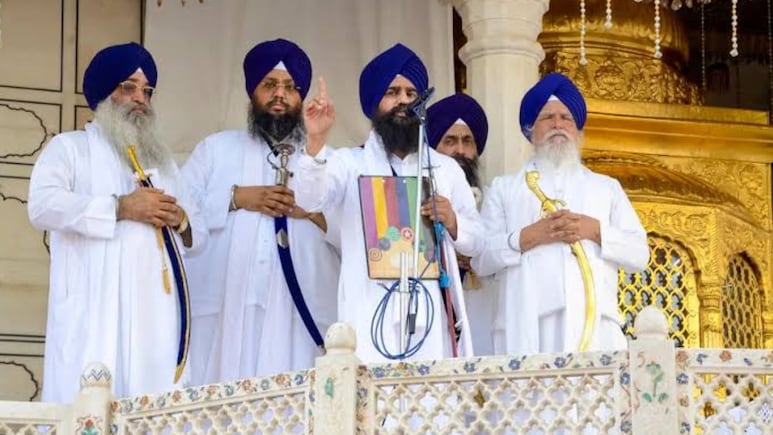
Several Punjab MLAs have admitted before the Akal Takht, the highest Sikh body, that they had not read the proposed Anti-Sacrilege Bill. Akal Takht Jathedar Giani Kuldeep Singh Gargaj has asked the Punjab government to put the legislation on hold for a month to allow the lawmakers and stakeholders to study it before it is introduced in the Assembly.
Giani Gargaj said the proposed law concerns deeply held religious sentiments and should not be rushed through the legislative process. The upcoming month should be used for wider consultations with religious bodies, legal experts, and representatives of different sections of society before the Bill is taken up, he added.
The Jathedar stressed the admission by legislators that they had not examined the draft underscored the need for more deliberation.
"The Bill concerns an issue of immense religious and social importance. Every legislator must be fully aware of its contents before any decision is taken," he said while urging the government to defer the process by one month.
He maintained that the lawmakers should be given adequate time to understand every provision of the proposed legislation before debating or voting on it in the Punjab Assembly.
The demand received support from opposition leaders, who questioned the pace at which the law was being brought forward.
Leader of Opposition Partap Singh Bajwa said legislators had not been given sufficient time to study the draft Bill in detail. He argued that laws dealing with sensitive religious matters require thorough discussion and careful scrutiny before being passed.
Senior Congress leader Pargat Singh echoed similar concerns, saying MLAs across party lines should have enough time to examine the legal and constitutional aspects of the proposed legislation. He added that wider consultations would help remove ambiguities and ensure that any law enacted withstands judicial scrutiny.
Congress MLA Sukhpal Singh Khaira also backed the demand for additional time, saying MLAs should not be expected to legislate on such an important issue without properly reading and understanding the Bill. He stressed that transparency and detailed debate are essential in a democratic legislature.
The Anti-Sacrilege Bill has emerged as a major political flashpoint in Punjab, with religious organisations and political parties closely watching the government's next move. While there is broad agreement on the need to protect religious sentiments, differences remain over the legal framework, implementation and constitutional implications of the proposed law.
Speaker Kultar Sandhawan has assured that they would hold a debate on all amendments asked to be made in the bills. The coming weeks are expected to determine whether the government proceeds with the Bill as planned or opts for wider consultations before placing it in the assembly.
Track Latest News Live on NDTV.com and get news updates from India and around the world

