





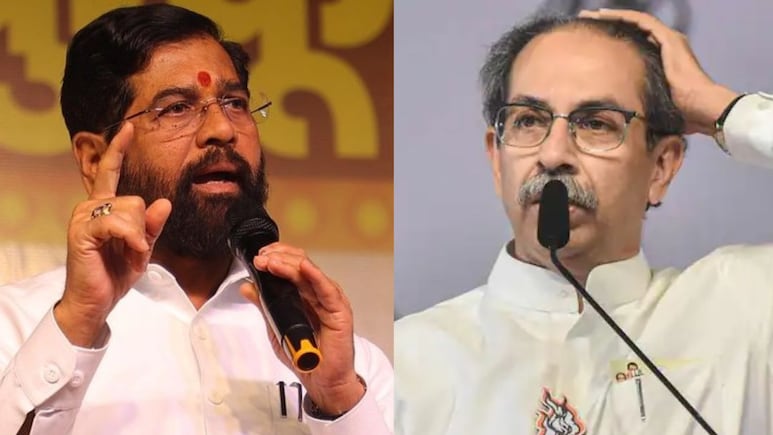
The Shiv Sena (UBT), still reeling from the rebellion by six of its Lok Sabha MPs, may be headed for another setback. Following the merger of these MPs into the Shiv Sena led by Chief Minister Eknath Shinde, there is a strong possibility the party could lose the office allotted to it in the Parliament complex.
Once the Speaker formally approves the merger, only four MPs will remain in the Shiv Sena (UBT) parliamentary party. Typically, office space is allocated only to parties with five or more MPs.
Its participation in all-party meetings convened to discuss key issues could also be affected, as parties with fewer than five MPs are generally not invited to such meetings.
At present, the Shiv Sena (UBT) parliamentary party office is located in Room No. 128A of the Samvidhan Sadan (the old Parliament building). It is adjacent to the room that once served as the office of the undivided Shiv Sena. After the party split in June 2022, both factions shared the space for a few months.
In February 2023, the Election Commission recognised the Shinde-led faction as the “real Shiv Sena” and allotted it the ‘bow and arrow' symbol. Subsequently, Rahul Shewale, leader of the Shinde faction in the Lok Sabha, wrote to the Secretariat staking claim to the parliamentary office.
Citing the Election Commission's decision, the Lok Sabha Secretariat allotted Room No. 128 to the Shinde faction in February 2023. As a result, the Uddhav Thackeray-led faction lost access to the original office and was later assigned Room No. 128A within Parliament.
What are the rules?
The allocation of office space to political parties within Parliament is determined primarily by their numerical strength, along with the discretionary powers of the Lok Sabha Speaker and the Rajya Sabha Chairman.
There is no fixed statutory rule governing this process. Instead, it is based on long-standing parliamentary conventions, guidelines, and the practices of the House Committee.
The number of Members of Parliament is the key criterion. Parties with a larger number of MPs are allotted bigger or more prominent spaces, in proportion to their strength in both Houses.
Preference is also given to recognised national and regional parties. National parties such as the BJP and the Congress are mandatorily allotted office space within the Parliament complex.
Regional parties with more than five MPs - such as the DMK, Trinamool Congress, and Samajwadi Party - are also allocated space, with the size and prominence depending on their parliamentary strength.
Track Latest News Live on NDTV.com and get news updates from India and around the world

