





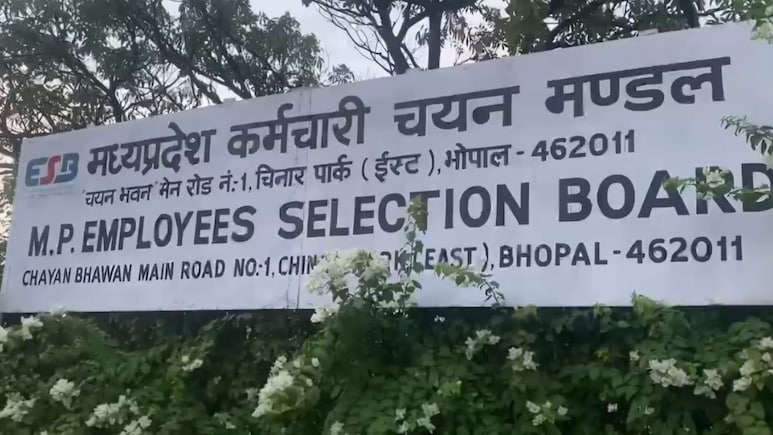
- Screens flickered and monitors were switched during the Excise Constable Exam 2024 in Madhya Pradesh
- Twelve candidates showed suspicious answering patterns flagged by the Employees Selection Board
- CCTV footage captured possible external help and monitor replacements before the exams
Screens were switched. Seats were set. Monitors flickered. And in the final minutes, answers rained down with surgical precision. What unfolded inside an examination lab in Ratlam during the Excise Constable Recruitment Examination 2024 is now being described as one of the most serious digital irregularity cases in Madhya Pradesh since the Vyapam scandal shook the state's recruitment system.
NDTV has accessed internal documents, data analysis reports, and complaint copies prepared by the Madhya Pradesh Employees Selection Board (ESB) that detail how 12 candidates were flagged for what investigators describe as a highly suspicious and statistically abnormal answering pattern at a single examination centre in Ratlam. The documents reveal a sequence of events that investigators say cannot be dismissed as coincidence.
According to the ESB's internal IT analysis, multiple candidates allegedly had their computer monitors replaced minutes before they entered the lab. In some cases, system checks were conducted during the examination window. The data logs show that several of the flagged candidates rapidly scrolled through the entire question paper within the first 10 to 15 minutes, visiting all sections without attempting answers. Then, after a period of relative inactivity, the final segment of the exam saw an extraordinary spike in correct responses. The board's time-based analysis system marked these patterns as "high strike rate" anomalies.
ESB's complaint, filed by Principal System Analyst Praneet Sijaria, led to a Zero FIR under Section 318(4) of the Bharatiya Nyaya Sanhita and was later transferred to Ratlam police for investigation. The complaint, copies of which are with NDTV, states that CCTV footage allegedly captured not just candidate activity but also the presence of another individual attempting to facilitate unfair advantage inside the lab. Based on this digital and visual evidence, ESB cancelled the candidature of all 12 candidates and recommended criminal proceedings.
The geographic clustering intensified suspicion. From a single Ratlam centre, candidates from Bhind, Morena, Haryana and Uttar Pradesh suddenly emerged among high scorers. When results were compiled, ESB's automated review reportedly triggered alerts. What followed was an overnight forensic sweep of digital logs. Scroll patterns were reconstructed. Question navigation timelines were mapped. Accuracy spikes were statistically tested. The resulting internal report, accessed by NDTV, repeatedly uses the term "pattern consistency" across the 12 cases.
In the case of Ashutosh from Bhind, investigators allege that his system monitor was replaced minutes before he entered the lab, with CCTV capturing a brief black flicker on screen. His question navigation pattern reportedly showed rapid early scanning followed by concentrated answering. Vivek Sharma of Morena allegedly displayed a similar pattern, with all questions visited within the first 15 minutes, a behaviour that officials say is highly unusual in a competitive exam setting. Kuldeep from Sonipat, Haryana, is accused of having his system accessed between registration and lab entry, followed by the now-familiar full paper scan and late surge answering model.
Subhash Singh of Bhind allegedly had his monitor changed before seating and was briefly not found at his desk during part of the exam. His answer log reportedly showed a sudden spike in accuracy between specific question segments. Dayashankar Kushwah of Morena is said to have scanned early sections rapidly and then demonstrated a high strike rate in later segments. Ravi Kumar from Agra initially showed a low strike rate before an abrupt precision surge in the latter half. Anil Kumar of Bhind allegedly exhibited CCTV timing inconsistencies along with what investigators describe as a possible external coordination anomaly, followed again by a concentrated high strike rate in selected question blocks.
Shailendra Bohre of Bhind allegedly left the lab mid exam and returned shortly before a system check by technical staff, eventually scoring 88 marks. Ankit Singh, also from Bhind, reportedly had his monitor replaced before entry, visited all questions in the first section and then registered a high strike rate, scoring 86 marks. Sanjeet from Jind, Haryana allegedly underwent repeated monitor checks before a final minute replacement, after which he followed the same scan then answer pattern. Pushpendra of Bhind showed no answers in certain sections but a sharp high strike rate in selected middle segments. Ashu Gupta, again from Bhind, reportedly had CCTV timestamp irregularities linked to his system activity, with allegations of monitor replacement and technical staff presence, eventually scoring 85 marks.
The documents suggest that this was not merely an instance of aggressive guessing or last-minute confidence. ESB's report argues that the timing patterns, answer sequencing and synchronised behaviour indicate possible technical compromise or coordinated assistance. Investigators are examining whether screen manipulation, external answer relay or insider facilitation may have played a role. The FIR explicitly mentions a second person visible in CCTV footage, raising the possibility that the alleged manipulation extended beyond the candidates themselves.
The comparison with Vyapam is unavoidable. That scandal exposed deep systemic vulnerabilities in recruitment processes across Madhya Pradesh and left a lasting dent in public trust. Nearly a decade later, the Ratlam episode threatens to reopen those wounds. The difference this time is technological. Where earlier controversies revolved around impersonation, leaked papers and middlemen networks, this case, if proven, represents a shift to algorithmic footprints, digital behaviour analytics, and screen-level interference.
ESB maintains that the cancellations were based on data-driven evidence and that further investigation will determine the full extent of the alleged manipulation. Ratlam police are now probing the role of examination centre staff, technical personnel and any possible external links. The candidates have the opportunity to respond to the allegations as the legal process unfolds.
For thousands of aspirants who spend years preparing for government jobs, the implications are severe. Recruitment examinations are not just tests, they are gateways to economic mobility and social security. Any breach, real or perceived, strikes at the heart of merit-based selection. As investigators scan CCTV frames, server logs and time-stamped answer entries, one question looms large: Was this an isolated digital breach at a single centre, or a warning sign of deeper vulnerabilities within the recruitment infrastructure? In Ratlam, under the glare of computer screens and surveillance cameras, a recruitment exam may have turned into a digital battleground. And in a state still marked by the memory of Vyapam, even a flicker on a monitor is enough to reignite fears of a system under strain.
Track Latest News Live on NDTV.com and get news updates from India and around the world

