

)
Many people tend to have an intense craving for something sweet after eating a full meal. The time period within which this can happen is approximately 1-3 hours after a meal, and there are causes behind this. The Current Nutrient Reports suggest that a rise and fall in your blood sugar is behind this, and it is important to know that occasional cravings for sweets are normal. Blood sugar regulation, meal composition and gut-brain signalling are the main reasons behind why you tend to reach for something sweet after a full meal. The exact nutritional balance of your plate, components of your meal, and function of the gut and brain pathways are possibly behind why you may be craving too many sweets after a meal.
Is It Normal To Crave Sugar After A Meal?
It is normal to crave sugar after a meal, as people are influenced by access to food, their blood sugar regulation, and the timing of their eating patterns. As per the Harvard Nutrition Sources, the interconnected nature of your plate; what you eat, when you eat, and how much you eat is behind your cravings.
Your brain and gut pathways that can get activated when you eat something sweet make your brain release dopamine, and this forms a learned eating behaviour.
Breaking this pattern is necessary to strike a balance between your cravings and what your body actually needs to function.
Dr Ankur Jain, Consultant Gastroenterologist, Max Healthcare, Dwarka, explains why your blood sugar may spike and crash, leading to intense sugar cravings.
Blood Sugar Spikes And Crashes May Trigger Sugar Cravings
When your blood sugar spikes and crashes too suddenly, your sugar cravings are higher. If you happen to digest food quickly, or your blood sugar rises too quickly and drops suddenly, then sugar cravings can spike.
The brain can respond quickly by reaching for the closest food source that could provide an energy release. Certain foods can make this worse, as their nutritional and blood sugar impact causes a high blood sugar spike. These foods can be:
- White bread
- Sugary cereals
- Sweetened beverages
- Desserts
A crash in blood sugar can cause sugar cravings, such as changes in blood glucose levels, which could influence the cravings for sweets after lunch or dinner.
Are You Eating Enough Protein At Meals?
The intake of proper protein spread throughout the day is needed to regulate blood sugar levels. The Nutrients Journal suggests that protein is needed to slow down the digestion process, keep you full for longer, and reduce cravings.
Those who are looking to build muscle tend to make a common protein mistake where they eat most of their protein during dinner time, which can cause an imbalance. The maximum amount of protein should be eaten at breakfast, and half of the amount should be distributed throughout lunch and dinner.
For instance, eating a breakfast of eggs needs to be followed up with a lunch of paneer and fatty fish for dinner. Such a sequence can balance your protein levels.
An adequate amount of protein could help in controlling sugar cravings, as it plays a vital role in maintaining muscle protein.
Fibre Could Be The Missing Ingredient
Your intake of fibre could also be having an impact on your blood sugar levels, as it slows down glucose absorption. The Foods Journal points to the ability of soluble fibre to be able to slow down carbohydrate digestion and glucose absorption.
For instance, vegetables, fruits and whole grains need to be a part of your daily diet and can be swapped for processed foods when cravings arise.
Your daily fibre intake can impact your blood sugar levels and even become the reason for your risk of developing serious lifestyle diseases such as prediabetes.
What Role Does the Gut Play in Sugar Cravings?
The health of your gut also plays a role in controlling sugar cravings, as your gut environment and appetite could be behind it. The Frontiers of Neuroscience Journal suggests that the gut directly communicates with your brain through a network known as the gut-brain axis. The direct impact of the gut-brain axis is on your fullness, mood, and food-seeking behaviour.
The exact balance of your gut bacteria can also have an impact on your cravings for sugar. This needs to be prioritised for better gut health and also to control cravings.
Poor Sleep And Stress Can Intensify Sugar Cravings
A mixture of poor sleep and stress can intensify sugar cravings, as stress hormones can activate the brain's pathways. These are primarily related to the hormones that increase hunger cravings and keep you full.
People who are emotional eaters tend to eat more when they are stressed. For instance, if you crave a tub of ice cream after a stressful day at the office or a study session, then you need to reevaluate and manage your stress levels.
When your body and brain are stressed or tired, then your cravings for sugar increase. The pathways behind this have been researched. The Healthcare Journal has found this to be true, as your brain establishes an eating pattern that is regularly enforced by your daily dietary choices.
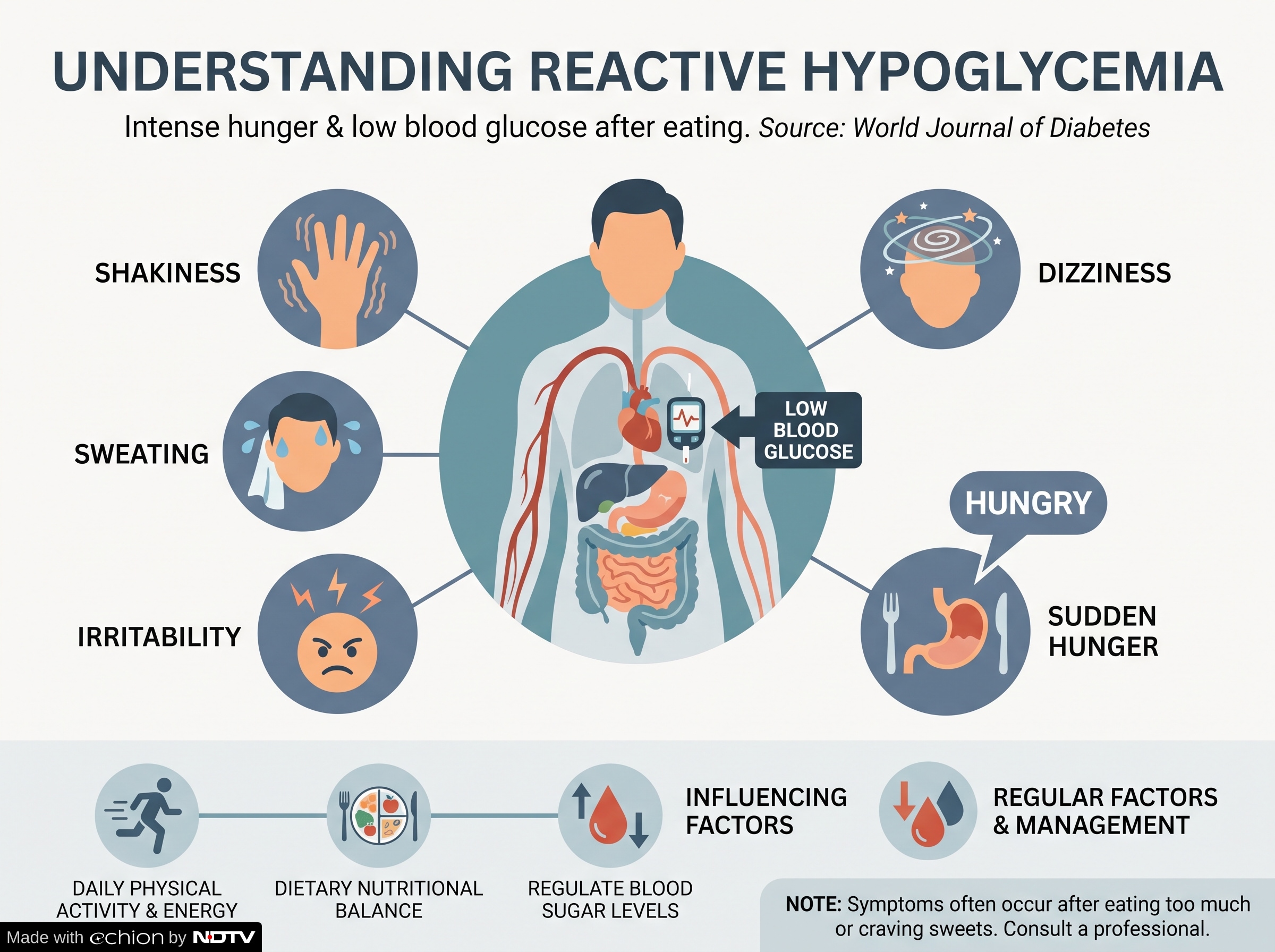
Could It Be Reactive Hypoglycemia?
Hypoglycaemia, or low blood glucose, could make you intensely hungry, and those who have a fast digestion tend to suffer from this issue. The World Journal of Diabetes has pinpointed that reactive hypoglycaemia could cause symptoms such as:
- Shakiness
- Sweating
- Irritability
- Dizziness
- Sudden hunger
Note: Your daily physical activity, energy expenditure, and your dietary nutritional balance can influence your hunger patterns.
If you are someone who feels shaky and starts sweating after eating too much and craving sweets, then you need to regulate your blood sugar levels.
When Should You See A Doctor?
A doctor should be consulted if you experience any of the signs:
- Frequent intense cravings
- Gaining too much or losing weight too quickly
- Prediabetes or being at high diabetes risk
- Symptoms of low blood sugar
- If your cravings occur when you are tired or dizzy
Sugar cravings after meals are sometimes common, but if they happen too frequently, then they can be a health issue.
Disclaimer: This content including advice provides generic information only. It is in no way a substitute for a qualified medical opinion. Always consult a specialist or your own doctor for more information. NDTV does not claim responsibility for this information.