

)
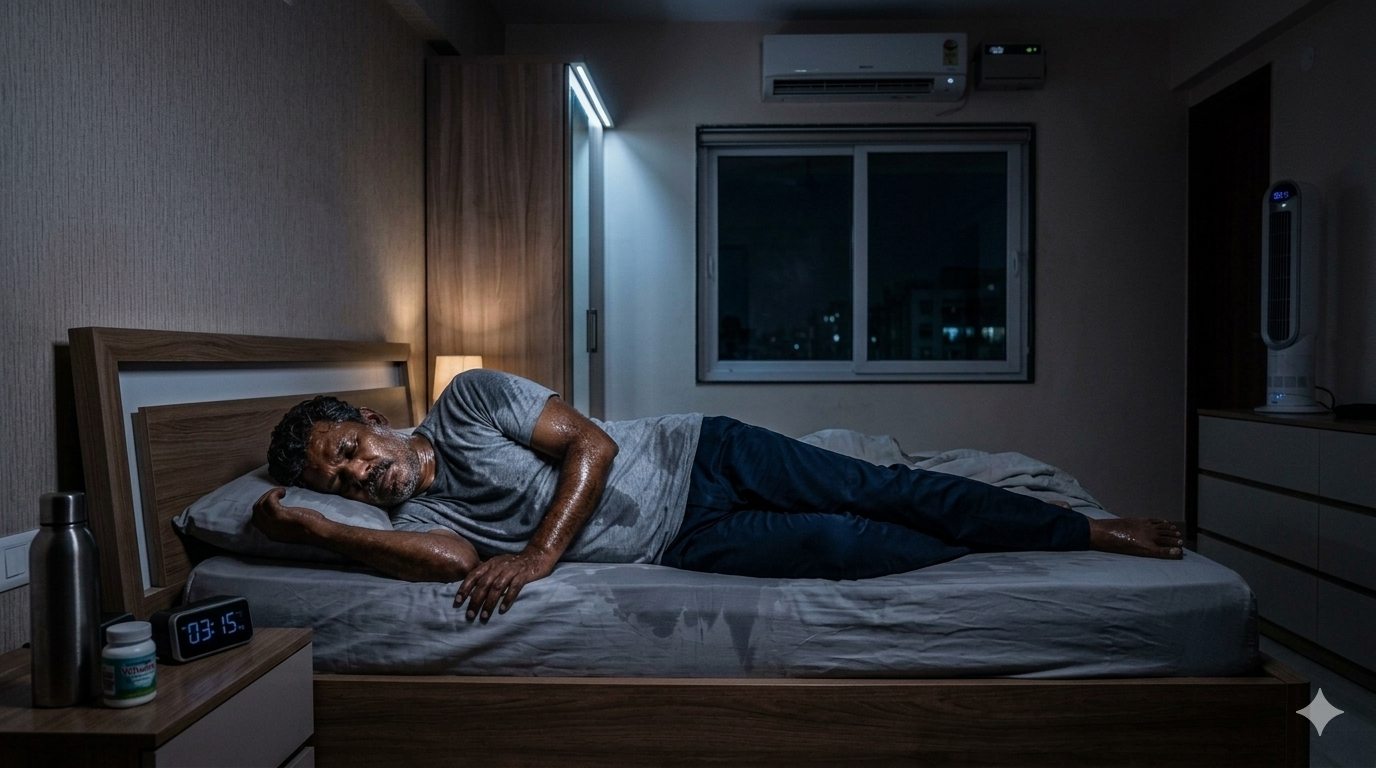
Night sweats are not just warm and uncomfortable - they're a common symptom where you wake up drenched in sweat, often soaking your clothes and bedsheets. This can happen even in a cool room, disrupting your sleep and leaving you fatigued the next day. Unlike regular sweating from heat or exercise, night sweats signal your body's temperature regulation going haywire. This can happen due to underlying health issues. When you understand the cause of nighttime sweating, it can help you take necessary action, either by tweaking your lifestyle or seeking medical attention.
In some cases, night sweats can happen due to benign factors like spicy meals or heavy blankets. However, if you have persistent night sweats, it can be a sign of infections, hormonal shifts, or stress. Here, take a look at some of the conditions that can cause nighttime sweating.
Causes Of Nighttime Sweating
1. Infections
Infections are a top cause of night sweats, as the body fights off germs by raising its temperature. Tuberculosis (TB) often leads to drenching sweats at night, along with cough, fever, and weight loss. The condition is more common in crowded areas but treatable with antibiotics. Other infections like HIV, endocarditis (heart valve infection), osteomyelitis (bone infection), abscesses, fungal issues, or mononucleosis can also cause repeated sweats, especially if you're feverish. If sweats come with chills or fatigue, see a doctor and get your blood work or imaging done.
2. Hormonal Changes (Menopause)
Menopause or perimenopause causes hot flashes and night sweats due to dropping estrogen levels, which mess with the body''s thermostat. Women in their 40s or 50s often wake up sweating heavily, sometimes with heart palpitations or mood swings. These 'hot flushes' last minutes but happen nightly, disrupting sleep. Hormone therapy, cooling gels, or lifestyle tweaks like avoiding triggers (spicy food, caffeine) can help manage them. Pregnancy or premenstrual syndrome (PMS) can mimic this in younger women through similar hormone shifts.
3. Cancers
Certain cancers, like lymphoma (Hodgkin or non-Hodgkin) and leukemia, trigger night sweats as the body battles abnormal cells. These 'B symptoms' include unexplained sweats, fever, and weight loss, often worsening at night. Leukemia might add bruising or fatigue, while lymphoma causes swollen lymph nodes. Early detection through biopsies or scans improves outcomes, so persistent sweats with lumps or tiredness warrant urgent check-ups.
4. Hyperthyroidism
An overactive thyroid (hyperthyroidism) speeds up metabolism, raising body heat and causing excess sweating, even at night. You might notice rapid heartbeat, tremors, weight loss despite eating more, anxiety, or fatigue. The thyroid gland in the neck overproduces hormones, disrupting sleep. Blood tests can confirm it, and treatments like medications or surgery help resolve the issue.
5. Anxiety and Stress
Mental health issues like anxiety, stress, or PTSD activate the 'fight or flight' response, flooding the body with adrenaline that spikes sweat production day and night. Nighttime worry or panic attacks can make you wake up drenched, often with a racing heart or restlessness. Chronic stress worsens it, creating a cycle of poor sleep. Therapy, relaxation techniques (deep breathing, yoga), or medicines can also help calm the nervous system and reduce episodes.
6. Low Blood Sugar (Hypoglycemia)
In diabetes or prediabetes, low nighttime blood sugar (hypoglycemia) causes adrenaline release to raise glucose, causing sweats, shakiness, or confusion. It hits after insulin doses, skipped meals, or exercise. Symptoms include headaches or nightmares upon waking. Checking blood sugar levels and eating a bedtime snack can help prevent it.
7. GERD or Sleep Apnoea
Gastroesophageal reflux disease (GERD) lets stomach acid rise at night, irritating the oesophagus and triggering sweats with discomfort or coughing. Sleep apnoea, where breathing pauses, stresses the body, raising heart rate and causing sweat. GERD worsens when lying down, and apnoea adds to snoring or daytime sleepiness.
Disclaimer: This content including advice provides generic information only. It is in no way a substitute for a qualified medical opinion. Always consult a specialist or your own doctor for more information. NDTV does not claim responsibility for this information.