

)
Physiotherapy is a healthcare profession that helps restore quality of life after an injury. This preventive step in the medical treatment cycle is needed for proper recovery, as timely specialists are needed to restore movement issues. From physical function to mobility, the field of physiotherapy works on a much-needed aspect for a patient and plays an important role in their recovery phase. The recovery stage can be frustrating as patients want to get better, but their body has been injured and needs a set of controlled exercises that could restore their healthy state. The Nature Journal has pointed to the need for preventive physiotherapy to identify movement issues before they turn into pain and cause disability.
What Is Preventive Physiotherapy?
Dr Dharam Pandey, Physiotherapy, ShardaCare - Healthcity, explains the profession and why it is needed for most people. He says, "Physiotherapy shouldn't be an idea you only consider following an injury, surgery or ongoing aches and pains. It's rapidly becoming an integral part of preventive healthcare, and this has become a particularly important idea at the moment, where we're increasingly living more physically demanding, but also perhaps more inactive, lifestyles."
Dr Dharam Pandey highlights, "Standing or sitting for long hours, bad posture, performing the same movement repeatedly, and a sudden escalation in activity levels can start to take their toll on our body."
"Preventive physiotherapy, essentially, refers to identifying those early issues that haven't quite made it to a stage of being 'painful' yet. A physiotherapist is well-equipped to scan an individual, looking at muscle strength, balance, flexibility and their general patterns of movement. Following an assessment, a simple programme of exercises or postural improvements could be recommended," explains Dr Dharam Pandey.
Why Physiotherapy Is No Longer Just About Treating Injuries
Dr Dharam Pandey explains, "Preventive physiotherapy doesn't mean we expect people to attend clinics regularly."
He adds, "In many circumstances the exercise regime should only take a few minutes per day and will aim at strengthening weak areas of the body and addressing issues with posture." It's intended as a complement to physical activity, not a substitute for it!"
Dr Dharam Pandey highlights, "The wider benefit is how physiotherapists approach the management of our wellbeing."
"People can attend for some analysis and advice without it actually becoming necessary for there to be any sort of pain to begin with. Ultimately, with preventive health the idea is often that fixing the small things early prevents larger problems developing later, explains Dr Dharam Pandey.
How A Preventive Physiotherapy Assessment Works
The Physiotherapy Journal suggests that a physiotherapist performs an assessment which is not reserved for those who are injured, but those with occupational job hazards can also suffer from health issues that need to be corrected.
This follows a sequence that needs to be followed for correcting your posture and improving your strength and flexibility.
Postural Assessment
The posture during sitting for prolonged hours at a desk and the way you stand are analysed by a medical professional. If there are problems with the alignment of your spine, neck, and shoulders, and it is affecting your movement, then a preventive physiotherapist intervenes and offers solutions.
Movement Screening
If there are mobility issues, it could be detected by any imbalances that are presented while the moving assessment is being performed. Then, a preventive physiotherapist can note down the differences and offer solutions.
Strength and Flexibility Evaluation
The assessment involves assessing your weak areas that need to be improved to make your posture better. If identified at the right time, it could become a way to prevent mobility issues even before symptoms of serious musculoskeletal issues present themselves.
Balance Assessment
This is important for older adults as their core gets weaker as they age. A preventive physiotherapist can suggest simple exercises that could improve their core and enhance their balance, making their quality of life better.
Who Can Benefit From Preventive Physiotherapy?
The maximum benefit for preventive physiotherapy is for people who have sedentary jobs as well as people who are more prone to physical injuries. The categories of people who can improve their quality of life by making use of preventive physiotherapy are as follows:
- Office workers who sit for long hours and often complain of neck and back strain.
- Posture issues are also common among office workers as they face occupational hazards that need to be proactively addressed.
- Athletes and fitness enthusiasts who use their muscles and live highly competitive lifestyles can benefit the most from this.
- In older adults, preventive physiotherapy could prevent falls, improve balance, and enhance mobility.
- People who spend long hours doing repetitive jobs, such as healthcare professionals, drivers, teachers and factory workers.
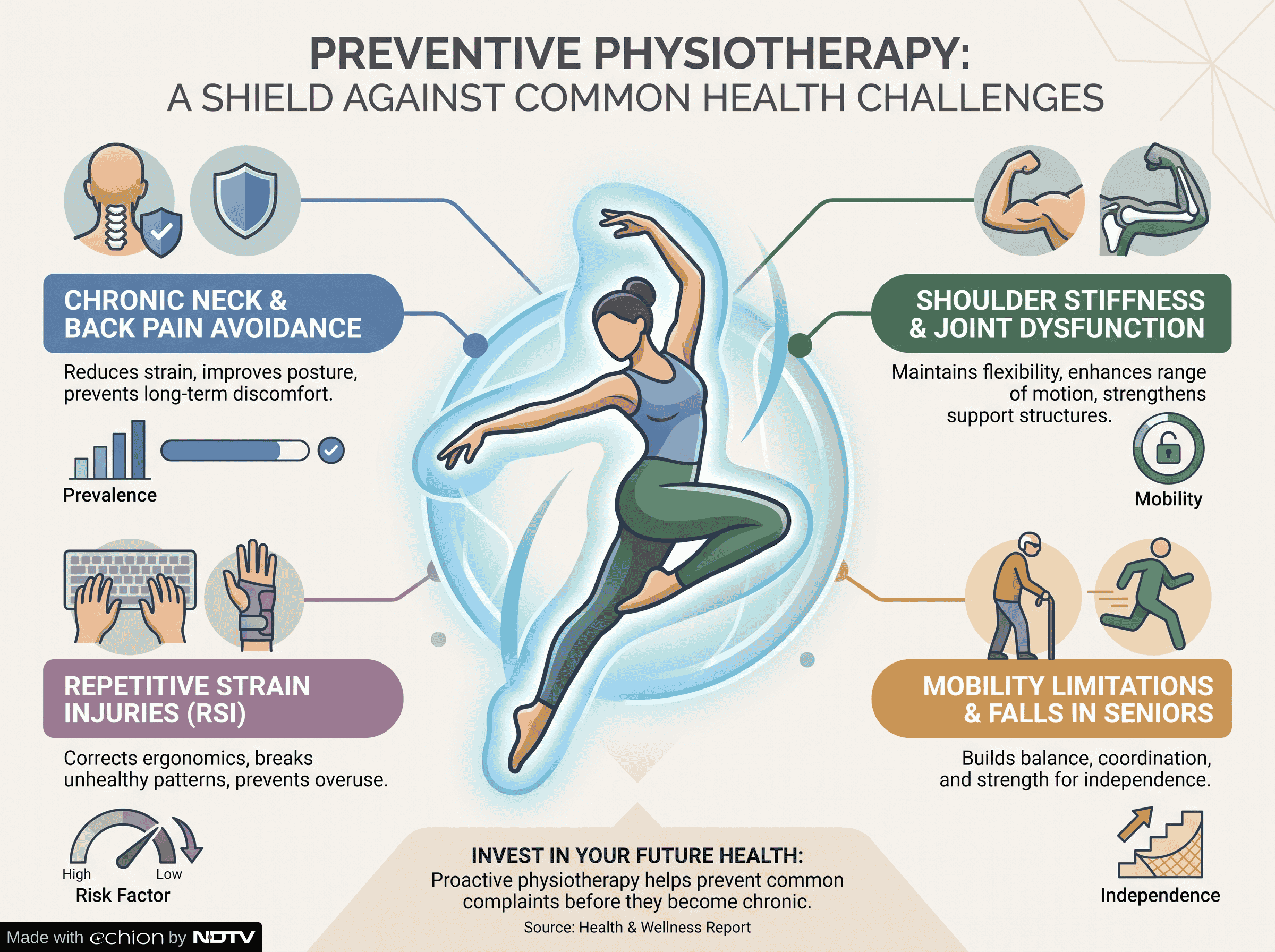
Common Problems Preventive Physiotherapy Can Help Avoid
The use of preventive physiotherapy can be extended to avoiding the following common health complaints:
- Chronic neck pain
- Lower back pain
- Shoulder stiffness
- Repetitive strain injuries
- Joint dysfunction
- Mobility limitations
- Falls in seniors
- Sports injuries
When Should You Consider Seeing A Physiotherapist?
A preventive physiotherapist should be seen by people who present with any of the following symptoms, as it could lead to serious mobility-related issues. Here are the signs that you need to be aware of:
- Persistent stiffness
- Poor posture
- Reduced flexibility
- Recurring minor aches
- Balance concerns
- Repeated sports injuries
A preventive physiotherapist should be consulted to avoid serious health issues that have long-term health impacts.
Also Read: 5 Strength Moves Indian Women Need To Prevent Shoulder And Neck Pain From Long Work Hours
Disclaimer: This content including advice provides generic information only. It is in no way a substitute for a qualified medical opinion. Always consult a specialist or your own doctor for more information. NDTV does not claim responsibility for this information.