

)
Social media has evolved beyond just trending music and memes. It has now become a significant source of income. While it might be challenging for individuals from the 80s to understand the concept of social media influencing, it is now one of the highest-paying professions today. People from all backgrounds are striving to build online communities that passionately follow their content. Interestingly, this trend is not limited to Generation Z, individuals of all ages and professions are deeply invested in building their niches.
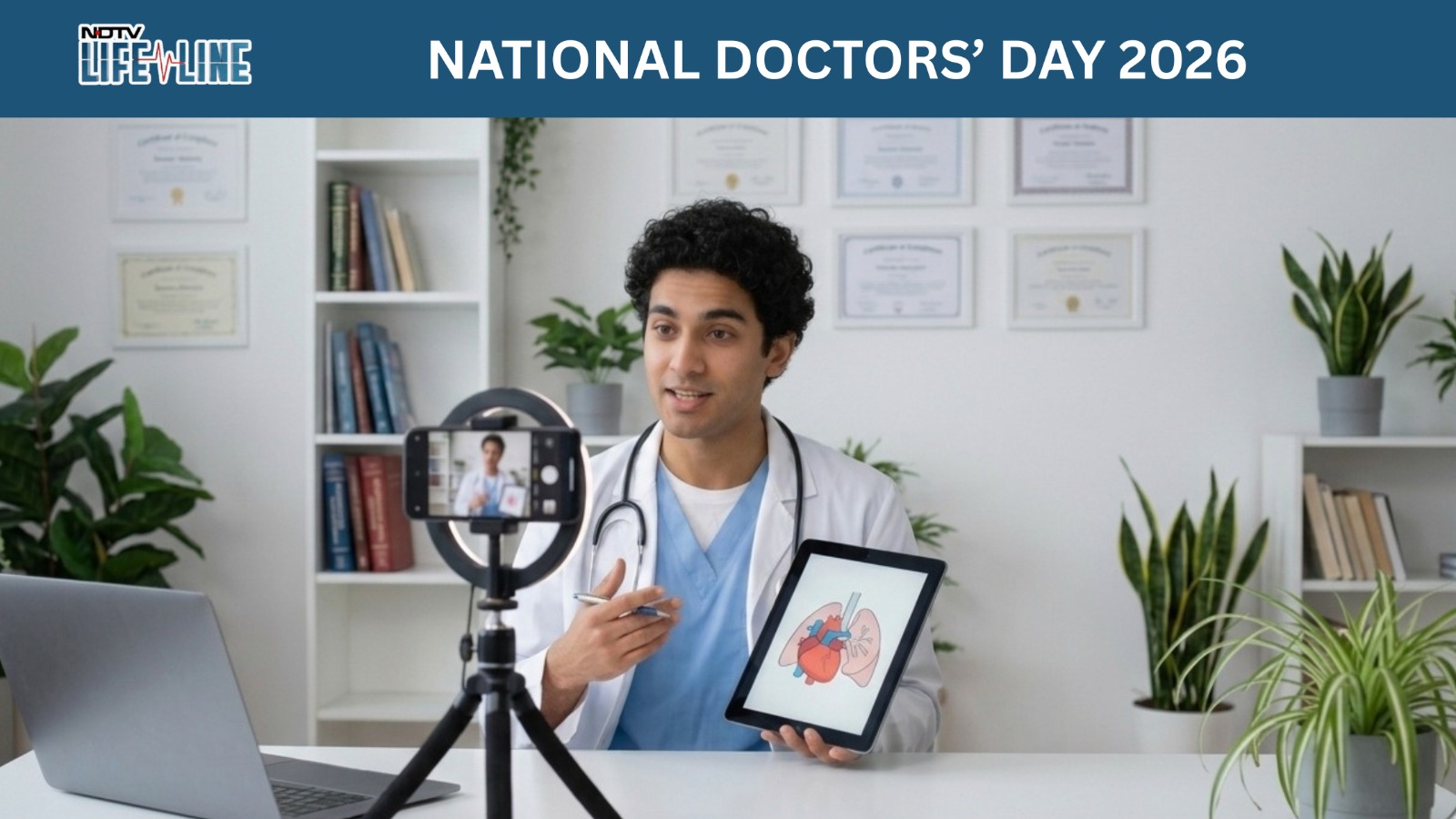
Recently, doctors-who are often seen as lifesavers working long hours in clinics or hospitals-have begun to enter the realm of social media influencing. They are making time to create reels, participate in podcasts, and share their daily routines. These medical professionals are becoming as active as popular influencers, sharing content with one common goal: to provide credible information.
As millions of users rely on algorithms and viral feeds for medical advice, qualified healthcare professionals are stepping beyond traditional clinical boundaries and embracing digital platforms to ensure that evidence-based science remains accessible.
"Doctors are becoming influencers because influencers are becoming doctors"
-as said by many doctors on social media.
The impact of social media influencing continues to grow day by day. From food choices to workout trends, online content can quickly reshape personal decisions through just a short video. However, the source of that information is crucial; not many individuals take the time to check a creator's background and often accept information without question.
This is where doctor-influencers come into play. They are sharing their valuable and authentic knowledge for free, helping individuals make informed health choices while distinguishing facts from fiction.
Dr. Vishal Gabale (@health.with.vg), a diabetologist and metabolic medicine expert with 1.1 million followers on Instagram, says that "doctors are not influencers, we are medical educators."
"Healthcare has changed because the way people consume information has changed. Earlier, people asked their family doctor or read books. Today, the first place they search is Instagram, YouTube, AI Chatbots or Google."
"If qualified doctors don't occupy that space, someone else will-and that information may not always be accurate," says Dr. Gabale.
Meeting patients where they are
Dr. Gabale further clarifies that doctors are not joining social media platforms to become famous. They are trying to reach people where they already are.
Modern patients default to searching their symptoms online before ever booking a physical consultation. Doctors are moving to social spaces to make accurate health information the easiest thing to find.
"If one short video helps someone recognise the symptoms of a stroke, understand diabetes, or stop believing a myth, we've already made a positive impact," he adds.
The pros and cons
The biggest advantage is accessibility. A single viral post explaining a health concept can educate more people simultaneously.
"One doctor in a clinic can educate a few hundred patients a month. One educational video can educate millions. That's preventive healthcare at scale"
Additionally, seeing a physician participate in online trends, share behind-the-scenes clinic realities, or discuss daily routines removes the rigid barrier between doctor and patient, fostering deeper trust.
At the same time, there are challenges.
"Social media often rewards sensational content more than accurate content. Medicine is complex, but algorithms prefer simple and dramatic answers. There's also a risk that people start treating educational content as personal medical advice."
"So social media is an excellent tool, but only when it's used responsibly," Dr. Gabale adds.
Effective tool, but should not replace medical advice
"Every day, millions of people get health advice from social media. What to eat. What supplements to take. How to reverse diseases. The problem isn't that people are sharing their experiences. The problem starts when opinions start sounding like medical advice," writes Dr. Pal Manickam, a famous Gastroenterologist, in an Instagram post.
Social media is an effective tool to spread information, but "only if we understand its limitations," says Dr. Gabale.
"A social media post can educate, but it cannot diagnose or treat an individual patient. Its role should be to increase awareness, encourage healthy habits, help people recognise warning signs, and motivate them to seek medical care when needed."
"It should never replace a proper consultation," adds Dr. Gabale.
Misinformation is taking over authentic information
Doctors are continuously trying to combat rampant health misinformation and reclaim medical authority from unqualified content creators. Doctors use short-form videos to debunk inaccurate health hacks, self-diagnosis errors driven by online symptom checkers, and misleading medical claims.
"We doctors today spend a significant part of our consultations correcting myths patients have picked up online."
"Medicine isn't just knowledge. It's years of training, pattern recognition, clinical judgment, and experience treating thousands of patients. What works for one person may help another or harm them. Health advice isn't dangerous because it's wrong 100% of the time. It's dangerous because it can be right for some people and harmful for others," Dr. Manickam adds.
In China, the "No Degree, No Advice" policy restricts non-qualified individuals from providing medical and health-related advice online. The policy mandates that anyone posting content about professional fields, specifically medicine, health, finance, law, and education, must hold verified, formal qualifications.
Also read: Can AI Replace Doctors? Experts Say The Future Of Medicine Is Human Plus Machine
The impact of brand endorsements
Social media influencing centers around brand endorsements. Influencers with large followings promote various products, often claiming they are effective and provide overnight results. However, many of these paid partnerships may not deliver accurate results and can potentially do more harm than good.
"Today, celebrities with enormous influence openly promote pan masala, betting apps, sugary drinks, and many products that have little or no health benefit. Despite regulations, these endorsements continue to reach millions."
"Doctors who have built a digital presence are also public figures-but with one important difference: their influence comes from credibility and medical training, not just popularity," says Dr. Gabale.
"The current rules rightly say that doctors should not use their professional status to commercially endorse products. I completely agree that a doctor should never recommend something simply because the payment is attractive. If the size of the cheque becomes more important than the quality of the evidence, that's ethically wrong and should never happen"
"However, I also think there's room for discussion. If a product has strong scientific evidence, has been properly evaluated for safety and efficacy, and a doctor would genuinely recommend it to their own patients even without any financial relationship, should there be a transparent framework that allows evidence-based recommendations? I think that's a conversation worth having," he adds.
"The principle should always remain the same: Evidence first. Patient welfare first. Payment last. If those priorities are ever reversed, the endorsement should not happen," Dr. Gabale states.
"Research and evidence -based endorsement provides consumers with knowledge; otherwise, misrepresentation of the endorsed brand may result in individuals using products that are unwarranted and inappropriate. Honesty and patient interests should take precedence over the commercial interests of the endorsing entity," says Dr. Chandani Jain Gupta, MBBS and MD, Dermatologist and Aesthetic Physician at Elantis Healthcare, New Delhi.
Also read: Physicians Heal Thyself? Indian Doctors Share Toll Of Hidden Health Burdens
What should doctors take care of before using social media as a communication tool?
Dr. Gabale mentions that doctors should remember that once they post online, they're not just representing themselves, they're representing the medical profession.
He further shares the following principles to follow:
- Always let science guide the content, not algorithms
- Verify evidence before posting
- Never compromise patient confidentiality
- Clearly disclose any financial relationships or conflicts of interest
- Never give individualised treatment advice without proper evaluation
- Be willing to update your opinion when new evidence emerges, because medicine constantly evolves
"I believe doctors should not be on social media to become celebrities. They should be there because misinformation spreads faster than medical journals, and patients deserve to hear from qualified professionals."
"If we use these platforms with integrity, evidence, transparency, and empathy, social media can become one of the most powerful public health interventions of our generation," Dr. Gabale concludes.
Disclaimer: This content including advice provides generic information only. It is in no way a substitute for a qualified medical opinion. Always consult a specialist or your own doctor for more information. NDTV does not claim responsibility for this information.