

)
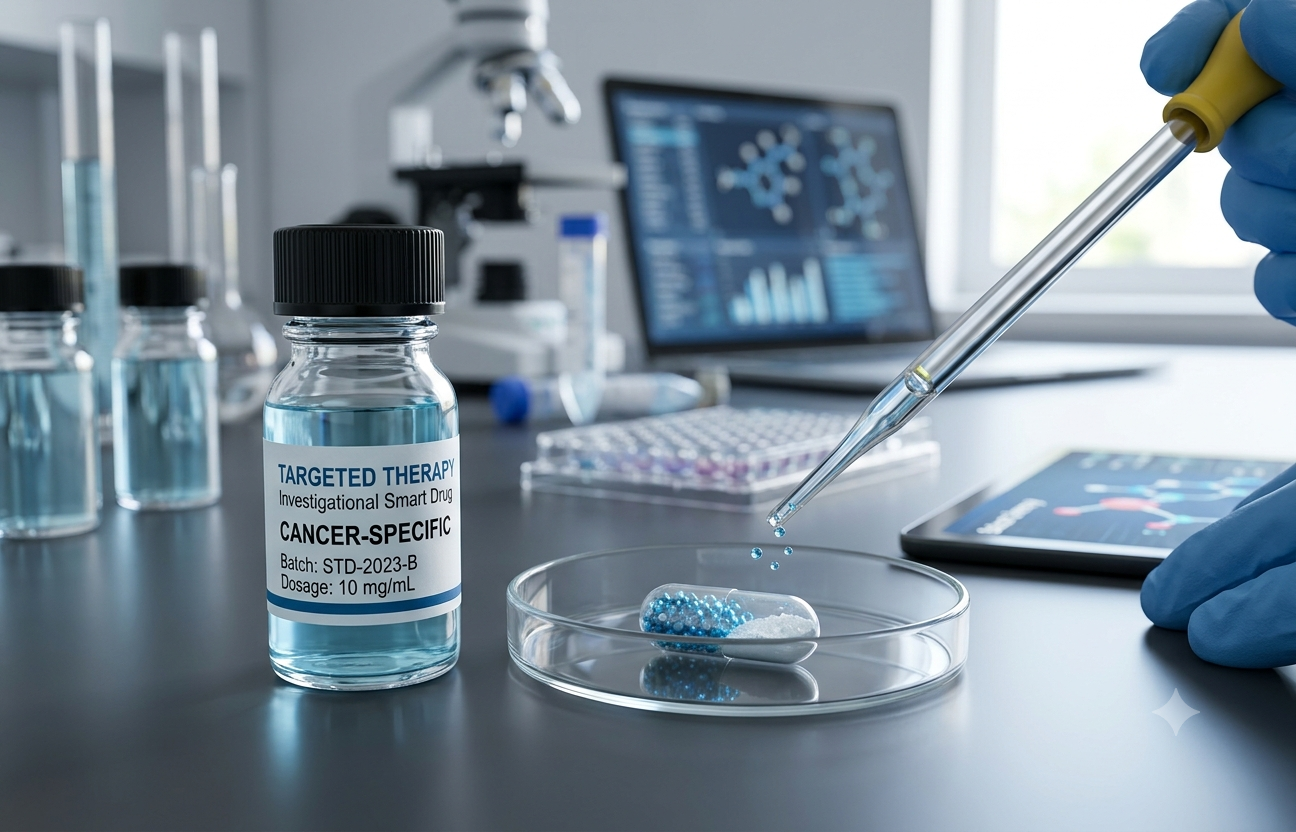
Indian scientists have developed a potential 'smart' cancer drug designed to activate inside cancer cells while largely sparing healthy cells-an approach that could potentially reduce the toxicity associated with chemotherapy. Called RK-251, the experimental drug showed strong anticancer activity against triple-negative breast cancer cells in preclinical tests, while having a much lower effect on non-cancerous cells. Researchers say the approach could also help tackle cancer treatment resistance. However, the drug has not yet been tested in humans, and clinical trials will be needed to establish its safety and effectiveness.
The research was led by scientists from the Institute of Advanced Study in Science and Technology (IASST), under the Department of Science and Technology, along with researchers from the Indian Institute of Technology (IIT), Guwahati.
How RK-251 Is Designed To Work
RK-251 has been developed as a prodrug, a compound that is administered in a relatively inactive form and is converted into an active drug under specific conditions inside the body.
The researchers have designed it to exploit a feature commonly found at higher levels in cancer cells: reactive oxygen species, or ROS.
According to the study, high levels of ROS inside cancer cells trigger RK-251 to release NBDHEX, an anticancer compound. NBDHEX then acts on proteins that help cancer cells survive and develop resistance to treatment.
The idea is to make the drug active primarily in the environment of cancer cells, rather than exposing healthy and cancerous cells to the same active compound.
In preclinical experiments, RK-251 showed strong activity against MDA-MB-231 triple-negative breast cancer cells, while causing substantially less effect on non-cancerous cells.
Researchers also tested the compound in zebrafish embryos. They reported no obvious signs of toxicity and observed the expected fluorescence in the presence of ROS.
Why Chemotherapy Can Cause Side Effects
Chemotherapy remains an important part of cancer treatment because it can kill cancer cells, slow their growth and, in some cases, help cure the disease.
But many chemotherapy drugs work by attacking rapidly dividing cells. The problem is that some healthy cells also divide rapidly.
This can result in side effects such as nausea, fatigue, hair loss, mouth sores, low blood counts and an increased risk of infections. The severity varies depending on the drug, dosage, cancer type and individual patient.
Researchers have therefore been exploring ways to make cancer treatment more selective, including targeted therapies, immunotherapies and other precision approaches.
Treatment Resistance Remains Another Major Challenge
A tumour can contain different populations of cancer cells. Some may already be less sensitive to treatment, while others can acquire changes that allow them to survive. These cells can subsequently multiply, potentially causing the cancer to return or continue progressing.
RK-251 is being investigated as an approach that could address both issues, selectively activating an anticancer compound inside cancer cells while targeting mechanisms involved in cancer-cell survival and resistance.
India's Growing Cancer Burden
The research comes against the backdrop of a significant cancer burden in India.
According to the 2024 report of the World Health Organisation's International Agency for Research on Cancer (WHO-IARC), India recorded 15.6 lakh new cancer cases in 2024. Around 33 lakh people diagnosed during the previous five years were living with cancer in India in 2024.
Tobacco-related cancers accounted for the largest broad category, while gastrointestinal cancers and breast cancer also represented substantial portions of the projected burden.
As the number of people requiring cancer treatment rises, researchers are increasingly looking at ways to improve not only survival but also the tolerability of treatment.
A drug that can preferentially target tumour cells while limiting damage to healthy tissue could potentially reduce treatment-related toxicity. An approach that also targets mechanisms linked to resistance could have further significance for cancers that no longer respond adequately to existing therapies.
But RK-251 is still an experimental drug, it is not a replacement for chemotherapy.
The findings so far come from laboratory and preclinical studies. Human clinical trials will be needed to determine whether the drug is safe, what dose can be given to patients, how effective it is and whether its proposed ability to spare healthy cells translates into a meaningful reduction in treatment-related side effects.
For now, the research offers an early indication that activating an anticancer drug specifically within the biochemical environment of tumour cells could be a promising direction for future cancer treatment.
Also Read: Breast Cancer: Why Early Detection Is Still the Biggest Challenge In India
Disclaimer: This content including advice provides generic information only. It is in no way a substitute for a qualified medical opinion. Always consult a specialist or your own doctor for more information. NDTV does not claim responsibility for this information.