

)
Tamil Nadu has reported more than 16,000 dengue cases so far this year, prompting renewed concern as monsoon conditions create favourable breeding conditions for Aedes mosquitoes. But the State Directorate of Public Health and Preventive Medicine has said the current spread is neither unusual nor at an alarming level.
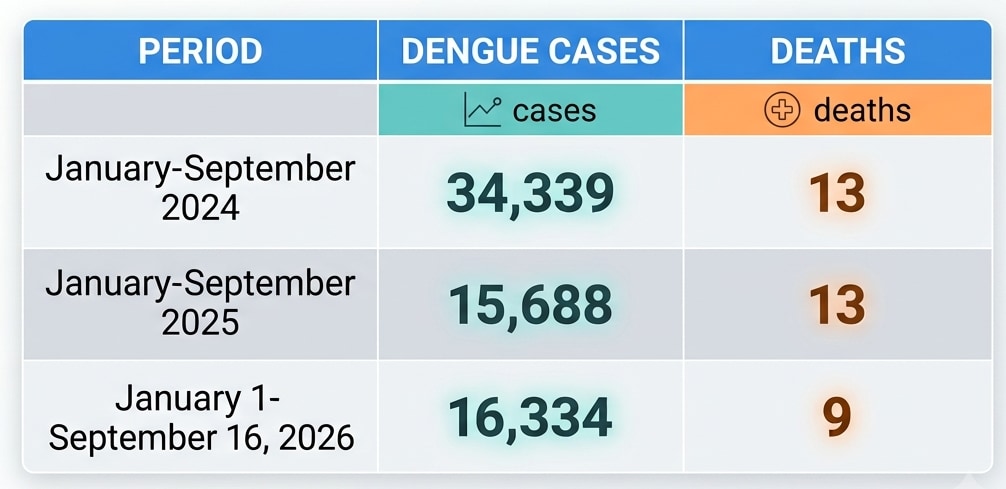
According to the Directorate's September 17 statement, Tamil Nadu recorded 16,334 dengue cases and nine deaths between January 1 and September 16, 2026. For comparison, the State reported 15,688 cases and 13 deaths during the corresponding January-September period in 2025. The number was substantially higher in the same period of 2024, when 34,339 cases and 13 deaths were reported.
The health department has nevertheless cautioned that dengue transmission could increase in the coming months. October to December can provide conditions favourable for Aedes mosquito breeding, making continued surveillance and prevention important.
The latest update comes days after reports suggested a rise in fever and dengue concerns in Chennai, while highlighting an important distinction: not every fever with body pain during the rainy season is dengue.
Tamil Nadu dengue cases: What do the latest numbers show?
The State's latest figures show that dengue transmission is continuing, but the current numbers do not represent an unprecedented increase when compared with recent years.
The Directorate said seasonal variations in dengue cases occur naturally during the monsoon because changes in rainfall, humidity and other climatic conditions can influence mosquito breeding.
The comparison is also important because dengue transmission can fluctuate substantially from year to year. The State's current figure is slightly higher than the corresponding 2025 count, but remains considerably below the January-September 2024 figure. The department has therefore described the present spread as neither unusual nor alarming.
The National Centre for Disease Control's dengue manual notes that India is endemic for dengue and that cases are reported every year, with outbreaks occurring periodically in several States, including Tamil Nadu.
Why can dengue cases rise during the monsoon?
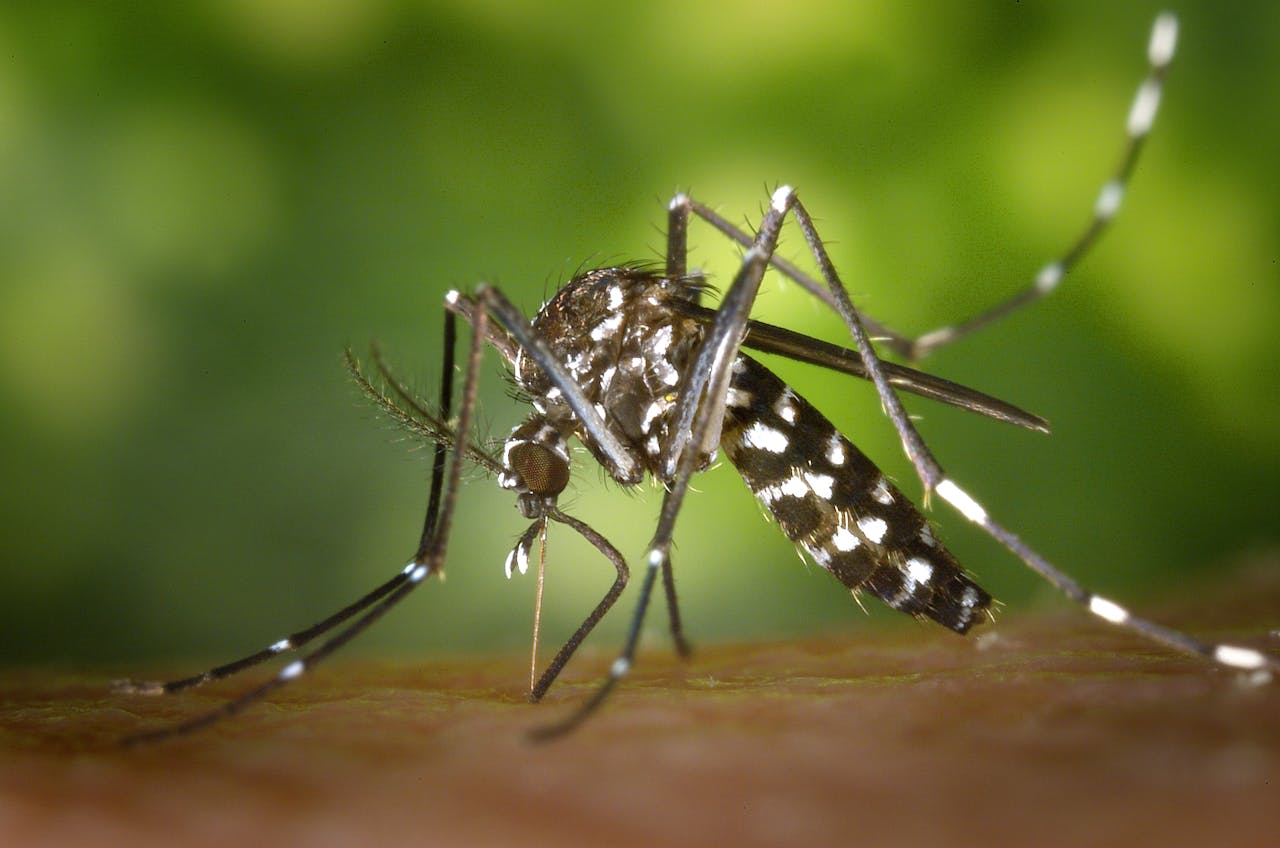
Dengue is transmitted primarily by infected female Aedes aegypti mosquitoes. These mosquitoes can breed in relatively small collections of stagnant water around homes and human settlements.
Rainfall can leave water accumulated in discarded containers, tyres, flowerpot trays, coconut shells, coolers, buckets and other objects. If such water remains undisturbed, it can become a breeding site.
WHO notes that dengue transmission is influenced by environmental conditions, with high temperature and humidity favouring mosquito survival and transmission.
This is why the Tamil Nadu health department has specifically warned that conditions favourable for mosquito breeding may increase between October and December. The State is continuing surveillance, vector-control measures and source reduction activities during this period.
What is Tamil Nadu doing to control dengue?
According to the Directorate, officers have been deployed across Tamil Nadu to coordinate dengue prevention and control measures. Fever wards have also been established to monitor patients and facilitate timely treatment.
The State is undertaking larval control and source reduction, which means identifying and eliminating places where mosquitoes can breed.
The public has also been asked to remove stagnant water in and around homes and pay particular attention to unused plastic containers, old tyres, flowerpots, coconut shells and other objects capable of holding rainwater.
This community-level effort is important because dengue prevention cannot depend only on hospital treatment after someone becomes sick. Reducing mosquito breeding sites cuts down opportunities for transmission in the first place.
Fever does not automatically mean dengue
Fever accompanied by body pain, headache, weakness, vomiting or other symptoms can occur with several infections. Malaria, typhoid, influenza and other viral or bacterial infections can produce overlapping symptoms. WHO's 2025 clinical guidelines also emphasise that several arboviral diseases can present similarly in their early stages, making clinical differentiation difficult without appropriate assessment.
Dengue commonly causes high fever, headache, pain behind the eyes, muscle and joint pain, nausea, vomiting and sometimes a rash. Symptoms generally begin four to 10 days after infection and may last two to seven days.
People should therefore avoid assuming that every fever during the monsoon is dengue or starting medicines without medical advice.
When does dengue require urgent medical attention?
Most people with dengue recover without developing severe disease. However, dengue can deteriorate rapidly, and the period when fever begins to subside does not necessarily mean the danger has passed.
WHO identifies severe abdominal pain, persistent vomiting, rapid breathing, bleeding from the nose or gums, blood in vomit or stool, marked weakness, restlessness, excessive thirst and pale or cold skin as warning signs requiring immediate medical attention.
The NCDC's dengue manual similarly lists bleeding, abdominal pain, refusal or inability to eat and drink, drowsiness or abnormal behaviour, breathing difficulty, cold extremities and reduced urine output among danger signs requiring prompt clinical attention.
The CDC also warns that severe dengue can begin around the time the fever disappears. Warning signs can develop quickly and may require hospital-based care.
This is particularly important for families caring for someone with suspected or confirmed dengue: improvement in fever alone should not be treated as proof that the illness has completely passed.
Also Read: Dengue Cases Spike In Chennai: When Should You See A Doctor?
What should people do if they develop fever?
Anyone with persistent or worsening fever should seek medical advice rather than relying on symptoms alone to diagnose dengue.
Adequate fluid intake, rest and monitoring are important in uncomplicated illness. Doctors may recommend blood tests depending on the stage of illness, symptoms and clinical assessment.
People should also avoid self-medicating with antibiotics unless a doctor recommends them for a suspected or confirmed bacterial infection. Dengue itself has no specific antiviral treatment, and treatment is primarily supportive. WHO advises using paracetamol for fever and pain when appropriate, while avoiding aspirin and ibuprofen because they can increase bleeding risk.
Tamil Nadu's latest dengue numbers warrant continued surveillance and prevention, but the State's own January-September comparison shows that the current spread is not unprecedented. With 16,334 cases and nine deaths reported up to September 16, the immediate message from health authorities is one of vigilance rather than panic.
That distinction matters as the State enters months that can favour mosquito breeding. Removing stagnant water, cooperating with local mosquito-control measures and seeking medical advice for persistent or worsening fever remain central to reducing dengue-related illness.
For individuals who develop suspected dengue, the most important point is to watch not just the fever but the overall clinical picture. Severe abdominal pain, persistent vomiting, bleeding, breathing difficulty, confusion, marked weakness or reduced urine output should prompt urgent medical care.
Disclaimer: This content including advice provides generic information only. It is in no way a substitute for a qualified medical opinion. Always consult a specialist or your own doctor for more information. NDTV does not claim responsibility for this information.