


Imagine have severe headache, continuously for a year and not approaching a doctor for it.
That is the status of access to mental health care says a Startup 'Amaha' which has revealed details of the findings from a study that paint a very gloomy picture of access to mental health care in the county.
More than half (53%) of respondents to Amaha's Mental Health Report 2026 lived with mental health concerns for over a year before seeking professional care.
The report also found that 94.9% reported two or more concerns simultaneously, highlighting the complexity of the challenges people may face before accessing support.
Titled The Amaha Mental Health Report 2026: Understanding the Journey to Care in India, the report drew on responses from 13,825 people who completed assessments before beginning care with Amaha between October 2025 and September 2026. It explored the period before people enter formal care, including whom they turn to first, how they cope with distress and how long they wait before seeking professional support.
"India's progress in mental health must be judged by whether people can get timely, effective care, not simply by how openly we talk about it. These are the accounts of people who reached us, they help people make sense of what they are experiencing, recognise the support they need, and help them find their way to care... Finding treatment should not become another test of a person's resilience.... Says Dr. Amit Malik, Psychiatrist, Founder and CEO of Amaha.
Delays In Seeking Mental Healthcare
Only 11.3% of respondents accessed professional care within a month of experiencing mental health concerns. Before seeking support, many turned to informal or self-directed approaches. Most spoke to friend, some tried self help.
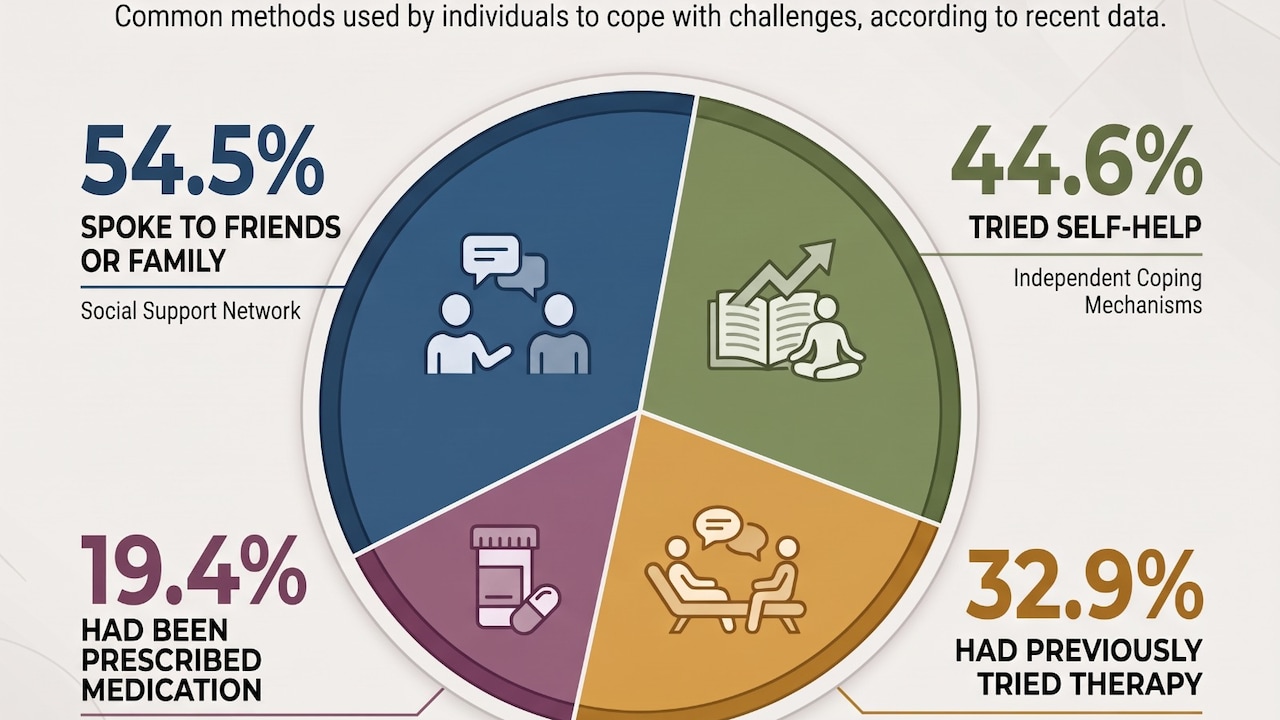
The findings highlight the range of ways people attempt to manage their concerns before accessing, or returning to, professional care.
Alcohol As A Coping Strategy?
Overall, 15.4% of respondents reported using alcohol or other harmful substances before accessing professional support.
Men were more likely than women to report this coping behaviour across every age group from 18 to 54, with the difference widening in older age groups.
Avoidance And Adaptive Coping
Avoidant coping strategies, including excessive screen time, oversleeping and overworking, were reported by 82.7% of respondents before they accessed care.
Meanwhile, 43.1% reported adaptive strategies such as exercise or journaling.
Respondents could select multiple coping strategies, so these figures are not mutually exclusive.
Self Harm? How Many Thought Of It?
A key finding was that 56.2% of respondents reported experiencing thoughts of self-harm before seeking professional care.
The proportion was higher among students (71.7%) and unemployed respondents (64.7%) than among working professionals (53.2%).
When Initial Concerns Differ From Clinical Assessments
The report also examined differences between the concerns people initially identified and the diagnoses they received following clinical assessment.
Data Points
Within a subset of respondents:
- 33% of those who described themselves as stressed were later diagnosed with depression.
- 10% of those who identified anxiety as a concern were diagnosed with ADHD.
- 32% of those who described repetitive thoughts and behaviours were diagnosed with depression, while 11% were diagnosed with obsessive-compulsive disorder (OCD).
Multiple concerns often occur together, the study says
Respondents reported an average of five concerns each, underscoring the overlapping nature of their experiences before accessing care.
The most commonly reported concerns were:
- Anxiety: 72.1%
- Stress: 67.5%
- Low mood: 58.3%
- Relationship or interpersonal difficulties: 55.6%
- Frequent mood swings: 54.1%
The report also found that 83% of respondents who reported sleep difficulties also reported anxiety.
By the time they accessed care, many respondents were experiencing difficulties managing everyday activities. Only 12.3% said they could manage all their daily tasks, while 27.3% said they could not manage most tasks or any tasks at all.
How Therapy And Psychiatry Complement Each Other?
The report examined how people moved between therapy and psychiatric care.
Around 7% of respondents who began with therapy subsequently consulted a psychiatrist, while 20% of those who began with psychiatry also took up therapy. Among those who started therapy after beginning psychiatric care, 93% did so within their first three psychiatry sessions.
Among people receiving psychiatric care, 56.9% showed improvement by their fourth session, as assessed by clinicians using the Clinical Global Impression (CGI) scale.
Note: These findings reflect the experiences of people who subsequently sought care through Amaha. They should not be interpreted as estimates of the prevalence of self-harm thoughts or mental health concerns in the wider Indian population.
Disclaimer: This content including advice provides generic information only. It is in no way a substitute for a qualified medical opinion. Always consult a specialist or your own doctor for more information. NDTV does not claim responsibility for this information.