

)
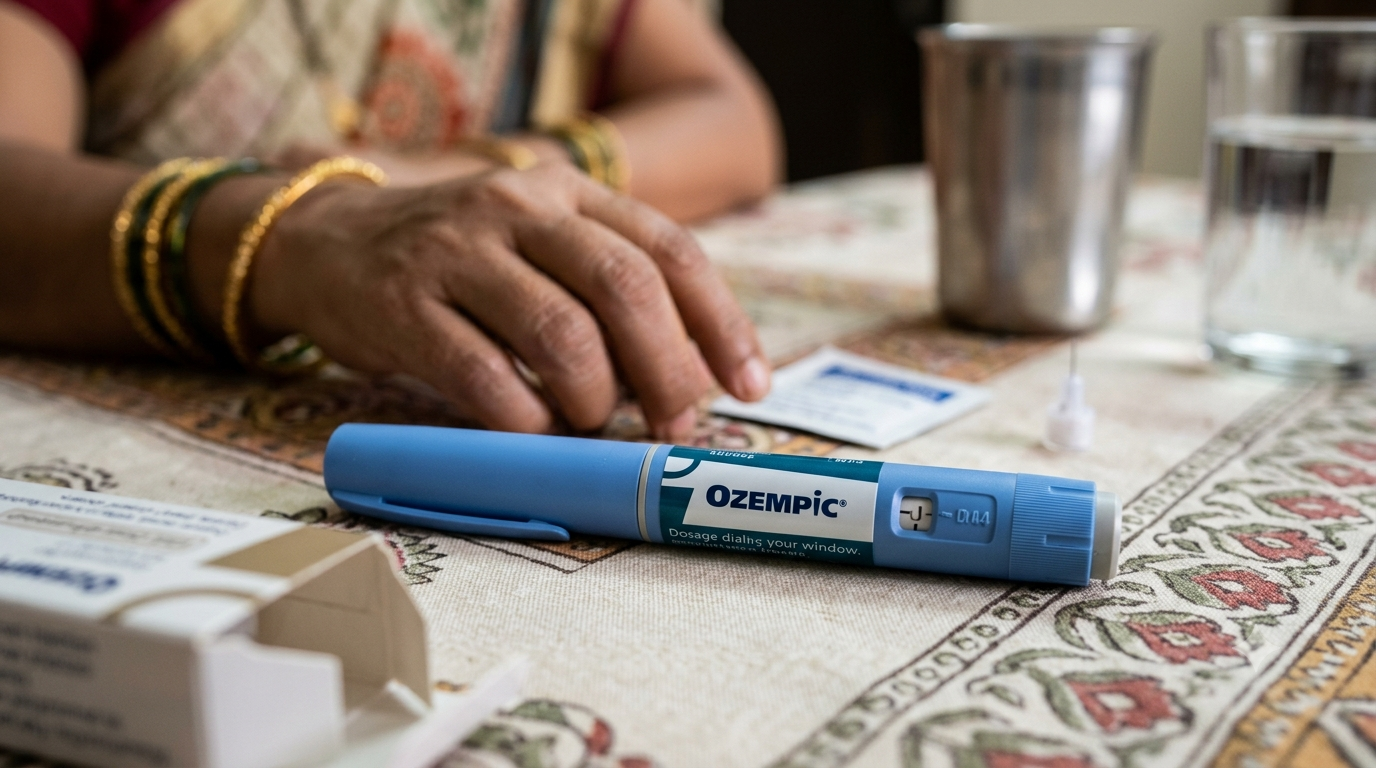
Reports linking popular GLP-1 medicines with a rare form of sudden vision loss have raised concerns among people taking drugs such as Ozempic, Wegovy and Zepbound. However, Indian doctors say patients should not panic or stop these medicines on their own. The condition at the centre of the discussion is non-arteritic anterior ischaemic optic neuropathy (NAION), a rare eye disorder that occurs when the blood supply to the optic nerve is reduced. It can cause sudden, usually painless vision loss in one eye. Some studies have reported an association between semaglutide and NAION, but the evidence is still being evaluated, and an association does not necessarily mean that the medicine directly causes the condition. A large 2025 observational study, for example, found NAION in 0.04 per cent of patients prescribed semaglutide or tirzepatide compared with 0.02 per cent in a matched comparison group over two years. The European Medicines Agency (EMA), meanwhile, has classified NAION as a very rare side effect of semaglutide, meaning it may affect up to 1 in 10,000 people taking the medicine. So, what should patients taking these medicines actually know?
What Is NAION?
NAION is an optic nerve condition caused by inadequate blood flow to the optic nerve. It typically causes sudden, painless visual loss, usually affecting one eye.
Dr V Soma Srinivas, Consultant Endocrinologist, Gleneagles Hospital, Fortis Network Hospitals, Lakdikapool, Hyderabad, explains that NAION is rare and patients taking GLP-1 medicines should not stop treatment without medical advice. "The condition being discussed is NAION (non-arteritic anterior ischemic optic neuropathy), a rare condition caused by reduced blood flow to the optic nerve, which can result in sudden, usually painless vision loss in one eye. Some studies have reported an association between semaglutide, used in medicines such as Ozempic and Wegovy, and NAION. However, the risk estimates vary across studies, and a direct cause-and-effect relationship has not yet been established," he says. NAION itself remains uncommon, affecting approximately 10 in 100,000 people annually.
Does Ozempic Cause Vision Loss?
The answer is more complicated than a simple yes or no. Ozempic and Wegovy contain semaglutide, while Zepbound contains tirzepatide. The regulatory warning from the EMA specifically concerns semaglutide-containing medicines, including Ozempic and Wegovy. In June 2025, the EMA's safety committee concluded that NAION is a very rare side effect of semaglutide after reviewing data from clinical trials, observational studies, post-marketing reports and medical literature. The agency said several large epidemiological studies suggested approximately a two-fold increase in relative risk, corresponding to about one additional case per 10,000 person-years of treatment.
This is important because relative risk and absolute risk are not the same thing. Even where an association has been observed, the overall number of NAION cases remains very small.
Dr Shibal Bhartiya, Ophthalmologist, Glaucoma Surgeon, and Director of Ophthalmology at Marengo Asia Hospitals and Research Collaborator, Mayo Clinic, Florida, says the findings need to be interpreted in context. "The reports linking Ozempic, Wegovy and Zepbound with vision loss need to be interpreted carefully. These medicines have been associated in some observational studies with a rare condition called non-arteritic anterior ischemic optic neuropathy, or NAION, which occurs when blood flow to the optic nerve is reduced. The important point for patients is that an association does not prove that the medicine directly causes the problem. Studies have produced mixed findings, and the absolute number of cases remains very small," she says.
What Did The 2025 Study Find?
A large observational study published in 2025 examined more than 1.5 million eligible patients with type 2 diabetes and, after matching, compared 79,699 people prescribed semaglutide or tirzepatide with 79,699 people receiving other diabetes medicines. Over two years, NAION was diagnosed in 35 patients, or 0.04 per cent, in the semaglutide or tirzepatide group, compared with 19 patients, or 0.02 per cent, in the comparison group. The study reported a hazard ratio of 1.76, although the absolute number of cases was low. The findings therefore point to a possible association that warrants monitoring, rather than establishing that these medicines directly cause NAION in individual patients.
What Has The European Medicines Agency Said?
The EMA has now included NAION as a very rare adverse effect in the product information for semaglutide medicines such as Ozempic and Wegovy. The agency advises patients taking semaglutide to contact their doctor without delay if they experience sudden loss of vision or rapidly worsening eyesight. If NAION is confirmed, the EMA recommends stopping semaglutide treatment. However, this does not mean that everyone taking semaglutide should stop treatment.
Should Patients Stop Ozempic Or Wegovy?
Doctors say patients should not discontinue or change their dose simply because of reports about NAION. Dr Srinivas says GLP-1 medicines have established metabolic and cardiovascular benefits, and treatment decisions should be individualised.
"Patients who are already taking GLP-1 medications should not panic or stop their treatment on their own. These medicines have well-established metabolic and cardiovascular benefits, and any decision to start, continue or modify treatment should be taken in consultation with the treating doctor," he says.
Dr Bhavya Reddy, Consultant - Ophthalmology, Aster Whitefield Hospitals, also stresses the importance of following the prescribed treatment plan. "Patients, therefore, should not discontinue or alter their dosing due to media reports. Instead, they should discuss all their risk factors including diabetes, blood pressure, and eye diseases with their physician. People who take this kind of medications should follow the following advice: stick to their prescriptions, take recommended eye examinations, and never neglect the sudden change in their vision," she says.
"Patients prescribed semaglutide or tirzepatide should discuss their individual risk factors, medical history and eye health with their treating doctor. Regular ophthalmic examinations may be particularly important for people with diabetes or existing retinal disease. These medicines can provide substantial benefits for appropriate patients, but they should be used under medical supervision rather than discontinued because of alarming headlines," explains Dr Pallav Mishra, Director, Internal Medicine, ShardaCare - Healthcity.
Who May Need Extra Eye Monitoring?
Doctors say people with existing eye problems or certain risk factors should discuss their individual situation with their healthcare provider. Dr Srinivas recommends considering a baseline dilated eye examination when starting GLP-1 therapy, particularly to assess for existing diabetic retinopathy and optic nerve-related risk factors. "This is particularly relevant for individuals with a crowded or small-cupped optic disc, which may increase susceptibility to NAION. Patients with pre-existing optic nerve disease or significant retinopathy should discuss their individual risk with their endocrinologist before starting or continuing therapy," he says. People with diabetes should also keep their blood sugar and blood pressure under control and follow recommended eye examinations.
Dr Yogesh Chhabra, Director- Nephrology, Fortis Hospital, Shalimar Bagh, says GLP-1 medicines should be used under medical supervision. "Only under a doctor's supervision and according to a proper dose escalation regimen. Inform your physician about diabetes, diabetic retinopathy, previous issues with eyes/eyes nerves or increased cardiovascular risks. Maintain your diabetes and high blood pressure under control. Undergo necessary regular eye examinations especially if you have diabetes or any other eye disease," he says.
What Are The Warning Signs?
The most important symptom patients should not ignore is a sudden change in vision. NAION can cause sudden, usually painless vision loss in one eye. Patients may also notice rapidly worsening eyesight. Dr Srinivas says anyone experiencing sudden or unexplained vision loss should seek immediate ophthalmological evaluation, regardless of whether they are taking a GLP-1 medicine. Dr Chhabra similarly advises patients not to wait for sudden or rapidly worsening visual symptoms to resolve on their own. "Sudden or rapidly worsening vision problems must be evaluated medically/ophthalmologically urgently; do not just wait for it to go away," he says. The discussion around Ozempic, Wegovy, Zepbound and vision loss needs context. NAION is a rare condition, and current evidence does not establish that these medicines broadly cause blindness.
There is a documented safety signal involving semaglutide, the active ingredient in Ozempic and Wegovy, and the EMA now classifies NAION as a very rare side effect. For patients already taking GLP-1 medicines, doctors advise stopping or changing treatment without speaking to the prescribed physician. Instead, patients should discuss their individual risk factors, undergo recommended eye examinations, and seek urgent medical attention if they develop sudden or rapidly worsening vision changes.
Disclaimer: This content including advice provides generic information only. It is in no way a substitute for a qualified medical opinion. Always consult a specialist or your own doctor for more information. NDTV does not claim responsibility for this information.