

)
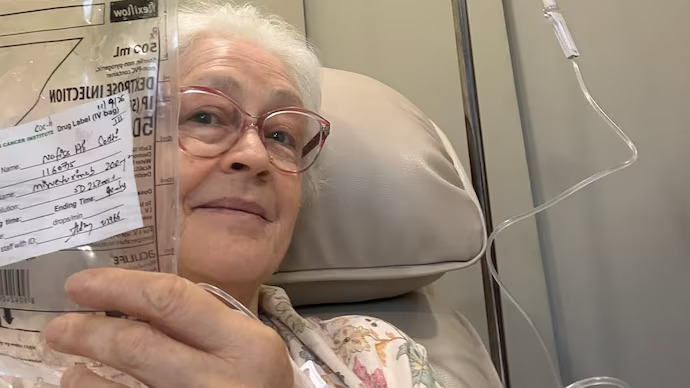
Veteran actor Nafisa Ali Sodhi, 69, has shared another update about her cancer journey, revealing that her treatment has been changed after doctors detected signs of disease progression. The actor, who had announced her third remission only a few months ago, said a recent PET/CT scan showed new cancer deposits on the surface of her liver. Following the scan, she reportedly began targeted therapy. Her update has once again drawn attention to the unpredictable nature of advanced cancer, where the disease may respond to treatment for a period before returning or progressing. Nafisa Ali was diagnosed with ovarian and peritoneal cancer in 2018. While remission can be an important milestone, it does not always mean that cancer can never return. Cancer cells may remain undetected, change over time or develop resistance to a treatment that had previously worked. So, what does it mean when ovarian cancer spreads to the surface of the liver? Does it mean the liver has stopped functioning? And why might treatment need to change after a period of remission?
What Does Cancer On The Liver Surface Mean?
"When ovarian cancer is described as having spread to the liver surface, it generally means that cancer cells have travelled beyond the ovary and deposited on the outer covering of the liver, called the liver capsule," explains Dr Anil Thakwani, Director and Head, Radiation Oncology, ShardaCare, Healthcity.
"This is different from cancer growing deep inside the liver tissue, although both situations indicate advanced disease," he adds. Ovarian cancer often spreads within the abdominal and pelvic cavity before it is detected. Cancer cells can detach from the original tumour and circulate through the fluid inside the abdomen. They may then settle on surfaces such as the peritoneum, intestines and the outer surface of the liver. This pattern is commonly described as peritoneal or surface metastasis and is frequently seen in advanced ovarian cancer. The peritoneum is a thin lining that covers the abdominal organs and the inside of the abdominal wall. When ovarian cancer cells spread across this lining, they may form deposits in different parts of the abdomen.
Does This Mean The Liver Is Failing?
Dr Thakwani explains that cancer deposits on the liver capsule do not automatically mean that the liver has lost its ability to function. "Liver function depends on how extensively the organ itself is involved," he says. The liver may continue to perform its normal functions even when cancer deposits are present on its outer surface. However, the overall impact depends on the number, size and location of the deposits, whether cancer has spread to other organs and the patient's general health. Symptoms can vary from one patient to another. Some people may experience abdominal discomfort, swelling, loss of appetite, nausea, unexplained weight loss, fatigue or changes in bowel habits. In some cases, fluid may collect inside the abdomen. This condition is called ascites and can cause abdominal swelling, heaviness or discomfort.
"When ovarian cancer is described as having spread to the liver surface, it generally means that cancer cells have travelled beyond the ovary and deposited on the outer covering of the liver, called the liver capsule. This is different from cancer growing deep inside the liver tissue, although both situations indicate advanced disease. In ovarian cancer, the tumour often spreads within the abdominal and pelvic cavity before being detected. Cancer cells can detach from the primary tumour and circulate through the abdominal fluid, settling on surfaces such as the peritoneum, intestines and the outer surface of the liver. This pattern of spread is known as peritoneal or surface metastasis and is commonly seen in advanced ovarian cancer," says Dr Anil Thakwani, Director and Head, Radiation Oncology, ShardaCare - Healthcity.
"Stage 4 ovarian cancer indicates that the disease has spread to distant sites or organs outside the immediate abdominal region, depending on the exact location and clinical findings. However, the presence of cancer on the liver surface does not automatically mean that the liver has lost its ability to function. Liver function depends on how extensively the organ itself is involved. Symptoms can vary and may include abdominal swelling or discomfort, loss of appetite, unexplained weight loss, nausea, changes in bowel habits, fatigue and, in some patients, fluid accumulation in the abdomen called ascites," Dr Thakwani adds.
Is Stage 4 Ovarian Cancer Curable?
Stage 4 ovarian cancer is serious and indicates advanced disease. However, it does not automatically mean that treatment is no longer possible. "Stage 4 ovarian cancer indicates that the disease has spread to distant sites or organs outside the immediate abdominal region, depending on the exact location and clinical findings," says Dr Thakwani. Treatment for advanced ovarian cancer is individualised. Depending on the cancer subtype, genetic or molecular profile, previous treatment and overall health, doctors may consider chemotherapy, targeted medicines, maintenance therapy or surgery in selected cases. The objective may be to control the disease, reduce symptoms, slow progression, improve quality of life and, where possible, achieve a longer period of remission.
"Importantly, stage 4 ovarian cancer is serious, but it is not necessarily synonymous with 'no treatment'. Advances in surgery, chemotherapy and targeted therapies have improved the ability to control the disease and manage symptoms in many patients," Dr Thakwani adds.
Why Can Cancer Progress After Remission?
Cancer progression means that the disease has returned, grown or appeared in new areas despite treatment. Dr Kartik Asutkar, Cancer Physician, M|O|C Cancer Care, Thane, explains that cancer is not always a static disease. "Cancer is not always a static disease. The disease can behave differently as the patient progresses through their journey, and that is why treatment strategies need to be reconsidered at various points along the way," he says.
Cancer cells can change biologically over time. Some cells may become less sensitive or resistant to medicines that were previously effective. This does not necessarily mean that the earlier treatment failed. "When patients show signs of progression on imaging, it is crucial to take into account the nature of disease, the past response of the disease to therapy and, where relevant, biology of the tumour before we decide on the next steps," Dr Asutkar explains.
A patient may therefore respond well to one treatment initially, enter remission and later require a different medicine when the disease changes.
Why Are Targeted Therapies Used?
Targeted therapies are medicines designed to act on specific molecules, proteins or pathways involved in cancer growth and survival. "The targeted drugs are specific treatments targeting a certain molecule or pathway that is involved in cancer development," says Dr Asutkar. However, targeted therapy is not suitable for every patient. Doctors usually consider the tumour's biology, genetic or molecular profile, previous treatments, response to therapy and other clinical factors before recommending it.
In ovarian cancer, treatment decisions may depend on whether certain genetic or molecular features are present. These findings can help doctors identify whether a patient may benefit from a particular targeted medicine or maintenance treatment. The treatment may be used alone or in combination with other approaches, depending on the individual case.
Is This A New Liver Cancer?
Cancer deposits on the liver surface in a patient with ovarian or peritoneal cancer do not automatically indicate a new primary liver cancer. "It is also important to highlight that the liver surface deposits observed in Ali's case do not mean she developed a new primary liver cancer. They were characterised as deposits of her ovarian/peritoneal cancer," says Dr Asutkar. A primary liver cancer begins in the liver itself. In contrast, metastatic deposits occur when cancer from another part of the body spreads to the liver or its surrounding surface. This distinction matters because the origin of the cancer influences the treatment approach.
What Happens After A Scan Shows Progression?
When imaging shows new or growing cancer deposits, the treating team may review the patient's medical history, previous treatment response, biopsy or molecular reports and current symptoms. Doctors may also assess whether the disease is limited to one area or has spread more widely. The next step could involve changing medicines, adding targeted treatment, considering surgery in selected situations or focusing on symptom control and supportive care. Dr Asutkar says Nafisa Ali's case highlights the evolving approach to cancer care.
"For patients and families, understanding this distinction matters. Progression means the cancer has changed and that may call for a change in strategy, not an end to the road," he says. Nafisa Ali's reported cancer progression highlights the complex and changing nature of advanced ovarian cancer. Cancer deposits on the surface of the liver usually indicate that ovarian or peritoneal cancer has spread within the abdominal cavity. This is different from developing a new primary liver cancer and does not automatically mean that the liver has stopped functioning. Stage 4 ovarian cancer remains a serious condition, but treatment options may include chemotherapy, targeted medicines, maintenance therapy and surgery in carefully selected patients. A recurrence or progression after remission does not mean that every previous treatment was ineffective. Cancer cells can change over time, which is why doctors may need to reassess the disease and modify the treatment strategy. For patients and families, progression is a reason to review the next step with the oncology team, not necessarily a sign that treatment has come to an end.
Disclaimer: This content including advice provides generic information only. It is in no way a substitute for a qualified medical opinion. Always consult a specialist or your own doctor for more information. NDTV does not claim responsibility for this information.