

)
Poor sleep is a growing health concern that affects the majority of the Indian population. According to the Sleep Foundation, about 46% of people receive less than 6 hours of uninterrupted sleep. This lack of sleep can have a direct impact on your mood, productivity, and physical health. To improve sleep, you don't always need to make complex changes to do so. A simple 10-minute evening routine could be useful for achieving quality rest. Clinical research published in the Frontiers of Psychiatry Journal suggests putting away screens before your designated time when you normally fall asleep. Other habits that are rooted in clinical research can make a difference in achieving quality rest and improve the duration of your sleep as well.
Why Your Evening Habits Matter For Sleep Quality
The evening habits that matter for sleep quality are based on research such as the Annals of N Y Academy of Sciences and Sleep Health suggests that sleep quality is dependent on your body's internal clock or circadian rhythm. Other reasons behinAnother reasoneffect on sleep quality is based on light exposure.
The behaviour during bedtime could also affect sleep quality and needs to be considered for maintaining your sleep latency and duration.
A Simple 10-Minute Evening Routine For Better Sleep
The Journal of Clinical Endocrinology Metabolism points to implementing an evening routine for making your sleep better. This routine needs to include habits that are proven in clinical research.
Minute 1-2: Dim The Lights
Firstly, the first 2 minutes of the evening routine involve dimming the lights to make the sleep environment better. The benefits of doing so can include:
- Supports melatonin release that is responsible for regulating the sleep cycle.
- Reduces stimulation that can make your brain on edge and delay sleep.
- Signals bedtime to the brain and initiates rest mode, making it easier to fall asleep.
Minute 3-4: Put Away Digital Devices
The Frontiers of Psychiatry Journal suggests that putting away digital devices can help reduce blue light exposure before falling asleep. The second step in the evening routine is important, as constant doomscrolling and mental stimulation from your digital device can delay the onset of sleep.
Note: As a golden rule for sound sleep, keeping your digital devices out of the bedroom is important to safeguard your quality of sleep.
Minutes 5-6: Practice Deep Breathing
The Psychophysiology Journal suggests that spending 3 to 4 minutes taking slow and deep breaths could help improve your sleep naturally. This practice of deep breathing can make use of several breathing techniques that exist to calm the nervous system. Here are the techniques that you can use:
- Box breathing involves holding your inhaling for 4 seconds, holding it for 4 seconds, exhaling for 4 seconds, and repeating the process again.
- The 4-7-8 breathing technique makes use of inhaling through the nose for 4 seconds, holding your breath for 7 seconds, and exhaling slowly through the mouth for 8 seconds, and repeating it multiple times.
- Slow diaphragmatic breathing, or belly breathing, involves breathing deeply from the diaphragm instead of taking slow breaths.
Minutes 7-8: Gentle Stretching
The International Journal of Environmental Research and Public Health suggest that doing gentle stretches can improve sleep quality, as they can relax the muscles of the body that can retain tension.
These stretches can be:
- Neck rolls
- Shoulder stretches
- Child's pose
- Seated forward bend
Benefits Of Gentle Stretches
The health benefits of doing gentle stretches can include:
- Releases muscle tension, which can happen as stress levels increase.
- Promotes relaxation that could work as a sleep aid.
Minute 9-10: Write Down Tomorrow's Tasks
If you spend 2 minutes organising your thoughts and making sure that they are written, it can help with:
- Reducing racing thoughts can delay sleep.
- Helps offload mental clutter that could cloud your brain's ability to slow down.
- May lower bedtime anxiety that is responsible for delaying sleep.
Sleep Mistakes That Can Ruin Your Night
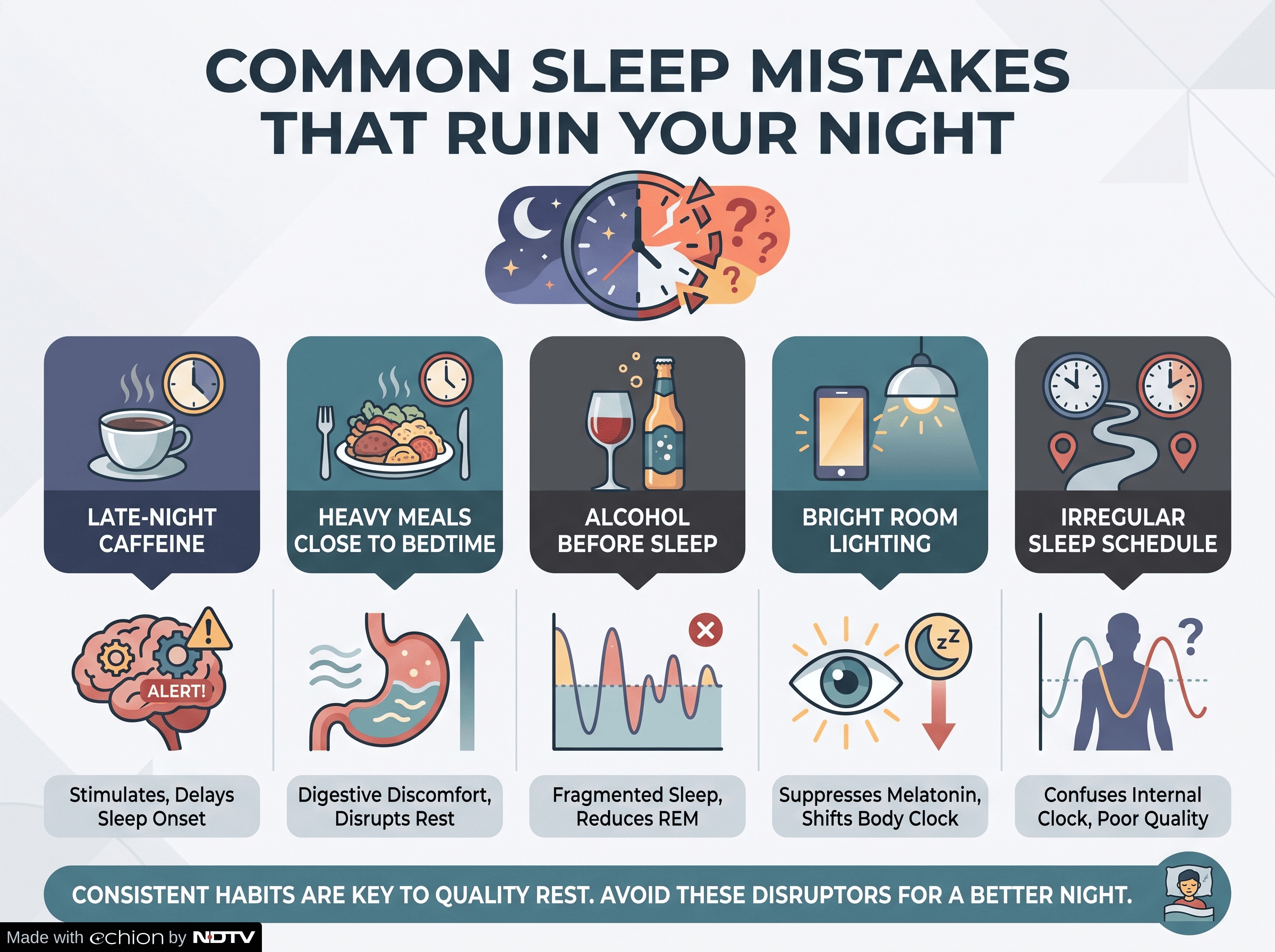
Certain mistakes close to bedtime can ruin your night and affect your quality of sleep. These mistakes can involve:
- Late-night caffeine
- Heavy meals close to bedtime
- Alcohol before sleep
- Bright room lighting
- Irregular sleep schedule
Other Habits That Support Quality Sleep
Behavioural habits that could support sleep quality that are proven in clinical research are:
- Morning sunlight exposure is necessary to balance the internal body clock.
- Physical activity can ensure proper movement of muscles, which can be a way to expel energy needed for a restful sleep.
- Consistent sleep and wake times are necessary to regulate your sleep schedule.
- Limiting daytime naps to make sure that you fall asleep on time.
- A comfortable sleep environment to make falling asleep easier.
When Sleep Problems Need Medical Attention
Sleep deprivation can turn into a medical concern when it comes to:
- Persistent insomnia
- Loud snoring
- Excessive daytime sleepiness
- Morning headaches
- Frequent nighttime awakenings
Note: These warning signs warrant a doctor consultation, tor or sleep specialist consultation as it directly affects quality of life.
Can A 10-Minute Routine Really Improve Sleep?
These clinically proven habits can improve your sleep quality, as they could add to your sleep schedule over time. It is also necessary to practise consistency and maintain a wind-down routine to send a clear signal to your body that it is time to rest.
In order to sleep better at night, you need to focus on establishing a sleep time routine that takes scientifically proven habits into consideration.
Also Read: National Nutrition Week: Add These Foods To Your Diet, And You Shouldn't Need Too Many Supplements
Disclaimer: This content including advice provides generic information only. It is in no way a substitute for a qualified medical opinion. Always consult a specialist or your own doctor for more information. NDTV does not claim responsibility for this information.