

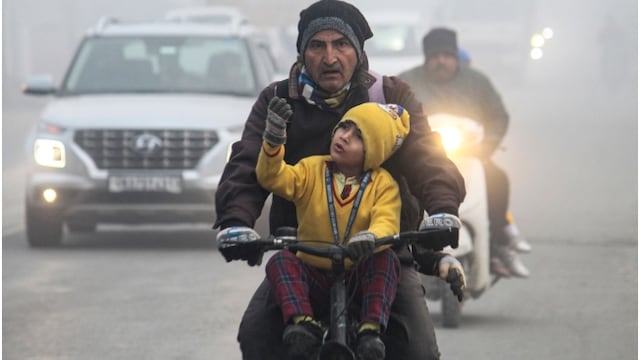
As air pollution levels rise across Delhi and the National Capital Region (NCR), parents often face a difficult question: Should children continue their usual outdoor activities, or is it time to change their routine? For school-going children, staying physically active is important for healthy growth, stronger bones and muscles, cardiovascular fitness, concentration and mental well-being. But when air quality deteriorates, particularly during Delhi's winter pollution season, outdoor exercise can expose children to higher levels of particulate matter and other pollutants. So, should parents stop children from playing outdoors altogether? Not necessarily. The key is to make sensible changes according to the Air Quality Index (AQI), the child's health and the intensity and duration of the activity, says Dr Sapna Yadav, Senior Consultant - Pulmonology & Sleep Medicine, Sarvodaya Hospital, Greater Noida West.
Why Are Children More Vulnerable To Air Pollution?
Children may be more susceptible to the effects of air pollution because their lungs and immune systems are still developing. They also tend to breathe more air relative to their body size and may spend considerable time outdoors playing, running or participating in sports. During vigorous exercise, breathing becomes faster and deeper. This means children may inhale a greater amount of polluted air compared with when they are resting. Fine particulate matter such as PM2.5 can travel deep into the lungs, while other pollutants can irritate the respiratory tract. "Repeated exposure may contribute to coughing, throat irritation, wheezing and worsening of respiratory symptoms in susceptible children," Dr Yadav explains. Children who have asthma, allergies or other respiratory conditions may notice symptoms sooner when pollution levels rise.
Should Parents Check AQI Before Children Play Outdoors?
During periods of severe pollution, checking the AQI should become part of a family's daily routine. The AQI should not be treated simply as a number. It can help parents decide how much outdoor exposure is appropriate on a particular day. When air quality is good or satisfactory, children can generally continue their regular outdoor play and exercise. As air quality worsens, parents can consider shortening outdoor sessions or replacing strenuous exercise with less intensive activities. When pollution reaches very poor or severe levels, outdoor sports, running and other high-intensity activities should ideally be reduced or postponed, particularly for younger children and those with underlying respiratory conditions.
Is Morning Exercise Safer During Pollution?
Parents should not assume that one particular time of day is always safe. Pollution levels can change depending on wind, temperature, traffic, weather conditions and local emissions. Therefore, simply deciding that children will exercise in the morning or evening may not always reduce their exposure. Instead, check the current AQI and local air conditions before children head outdoors. If pollution is high, moving the activity indoors may be a better option regardless of the time of day.
How Does Exercise Intensity Affect Pollution Exposure?
The intensity of exercise matters. A child taking a short, leisurely walk outdoors does not breathe the same amount of air as a child sprinting, playing football or undergoing intensive sports training for an extended period. During vigorous activity, breathing becomes deeper and faster, potentially increasing the amount of polluted air entering the respiratory system. Therefore, on days when pollution levels are elevated, parents can consider replacing strenuous outdoor exercise with lower-intensity activities or moving the workout indoors.
What Can Children Do Indoors?
Poor outdoor air quality does not mean children need to stop being physically active. Parents and schools can introduce indoor alternatives such as:
- Indoor games
- Stretching
- Yoga
- Dance
- Age-appropriate strength exercises
- Indoor physical education activities
Schools can also consider modifying outdoor sports periods, assemblies and other activities when pollution becomes particularly high. The aim is to keep children moving while reducing unnecessary exposure to polluted outdoor air.
Which Symptoms Should Parents Watch Out For?
Parents should teach children to recognise and communicate symptoms that appear during or after outdoor activity. Watch out for:
- Persistent coughing
- Wheezing
- Unusual breathlessness
- Chest tightness
- Burning or irritation in the eyes or throat
- Dizziness
- Unusual fatigue
These symptoms should not simply be dismissed as a normal reaction to exercise. If a child has asthma, parents should follow the treatment and action plan provided by their doctor. Medication should not be started, stopped or changed without medical advice. A child who repeatedly develops breathing difficulties during periods of poor air quality may need to be evaluated by a doctor.
Should Parents Keep Children Indoors All Day?
It is important not to create unnecessary fear around outdoor activity. Children need movement, sunlight, recreation and opportunities to interact with their peers. Keeping them indoors continuously could reduce physical activity and potentially affect their mood and overall well-being. The goal is to find a balance between the benefits of physical activity and the risks of polluted air. Parents can use days with better air quality for longer outdoor activities and shift to indoor options when pollution becomes particularly high.
How Can Parents Reduce Children's Pollution Exposure?
Small changes can help reduce exposure during pollution episodes. Children should avoid unnecessary time near busy roads, traffic intersections and areas where there is visible smoke. When travelling through heavily polluted areas, keeping car windows closed can help reduce exposure. Vehicle ventilation and filtration systems should also be maintained properly. Indoor air quality matters too. Parents should avoid sources of indoor pollution such as:
- Tobacco smoke
- Incense
- Mosquito coils
- Unnecessary burning
Air purifiers may also be considered for indoor spaces when outdoor pollution is high. However, they should complement, rather than replace, efforts to reduce pollution exposure.
Can Children Wear Masks Outdoors?
A properly fitted protective mask can provide additional protection against particulate pollution. Parents should choose an age-appropriate, well-fitting mask and make sure the child can breathe comfortably while wearing it.
However, a mask should not be considered a licence for strenuous outdoor exercise during severe pollution. Younger children may also find it difficult to wear certain types of masks correctly for prolonged periods. Parents should therefore consider the child's age, comfort and ability to use the mask properly.
Parents do not have to choose between keeping children completely indoors and allowing unrestricted outdoor activity. A flexible approach is more practical.
Check the AQI before outdoor play, consider the child's age and health, reduce strenuous activity when pollution is high and shift sports and exercise indoors when conditions become very poor or severe. Schools also have an important role to play by adapting outdoor schedules when air quality deteriorates. Children still need regular physical activity, but during Delhi's pollution episodes, the safest routine is one that keeps them active while minimising unnecessary exposure to polluted air.
Disclaimer: This content including advice provides generic information only. It is in no way a substitute for a qualified medical opinion. Always consult a specialist or your own doctor for more information. NDTV does not claim responsibility for this information.